
The vegetable garden notebook / Crops
Growing rosemary: planting, pots, pruning and winter care
Established rosemary in well-drained soil tolerates drought. A young plant or a pot in full sun may lack water, while a waterlogged root ball in winter can cause the same shrub to decline. Root condition and location matter more than a fixed watering schedule.
Adapt this guidance to your garden’s climate and conditions.
Select the growth habit before reserving space
Culinary rosemary is now named Salvia rosmarinus; labels may still show Rosmarinus officinalis. Upright and prostrate varieties do not occupy the same space. The SNHF describes a shrub that can reach two metres: check the mature size, even if the purchased pot is small. SNHF RHS
Plan a permanent location at the edge of the vegetable garden, away from beds that are turned over each year. Other sun-loving herbs can grow alongside it if they share its drainage needs; this cultivation compatibility does not prove protection of vegetables against pests. Allow space for harvest access and the development of the chosen growth habit. RHS
Plant in full sun, in the ground or in a pot
Choose a site that drains water well, in full sun. Poor, stony or chalky soil suits rosemary. If your soil remains heavy and damp, a pot with drainage holes or a raised bed is an option; a simple hole filled with potting compost in a wet depression does not resolve water drainage. SNHF RHS
Plant preferably in spring, when the soil warms up, and acclimatise a plant grown under cover. Do not plant it deeper than it was growing. The RHS recommends at least 45 cm between plants and a pot at least 30 cm wide and deep: these are starting points to adjust to the mature size, with a well-draining substrate and unobstructed drainage holes. RHS
Water according to establishment and container
Monitor new plantings during dry periods in their first year. A well-rooted plant in the ground requires much less water; in a pot, check the root ball during hot spells, as it can dry out quickly. Assess moisture before watering and allow excess water to drain. No weekly schedule suits all these situations. RHS
The RHS does not recommend routine fertilisation in open ground. A plant established in the same pot for over a year may receive a container-appropriate feed during growth; fertiliser does not correct a waterlogged root ball or an overly shady location. Also avoid covering the pot’s drainage outlet during landscaping or mulching around it. RHS
Prune without relying on old wood
After flowering, lightly trim shoots to maintain a dense shape, staying within leafy sections. Rosemary recovers poorly from severe pruning into bare old wood. A sparse shrub does not automatically regenerate by cutting back to the base. Its flowers, often in spring, are visited by pollinators. RHS SNHF
To renew a still-healthy plant, taking cuttings is quicker than sowing. The SNHF cites spring or late summer; the RHS distinguishes late-spring softwood cuttings from summer semi-ripe cuttings. For the softwood method, follow these steps from the RHS:
- Select a healthy, non-flowering shoot and prepare a cutting of about 5 to 10 cm, cut just below a node.
- Remove the lower leaves and insert the base into a compost formulated for cuttings, with the first leaves above the substrate.
- Water to settle the mix, then keep in good light without scorching sun, in a propagator or under a clear cover, monitoring humidity. Ventilate and check: the substrate should remain moist, without allowing the base to rot.
- Once rooting is established, gradually acclimatise the cuttings to conditions outside the propagator or cover before potting them individually. Do not decide on this transition based on a single date.
Sowing takes longer before the first harvests; this cutting method does not involve planting a dry branch in the soil. SNHF, RHS
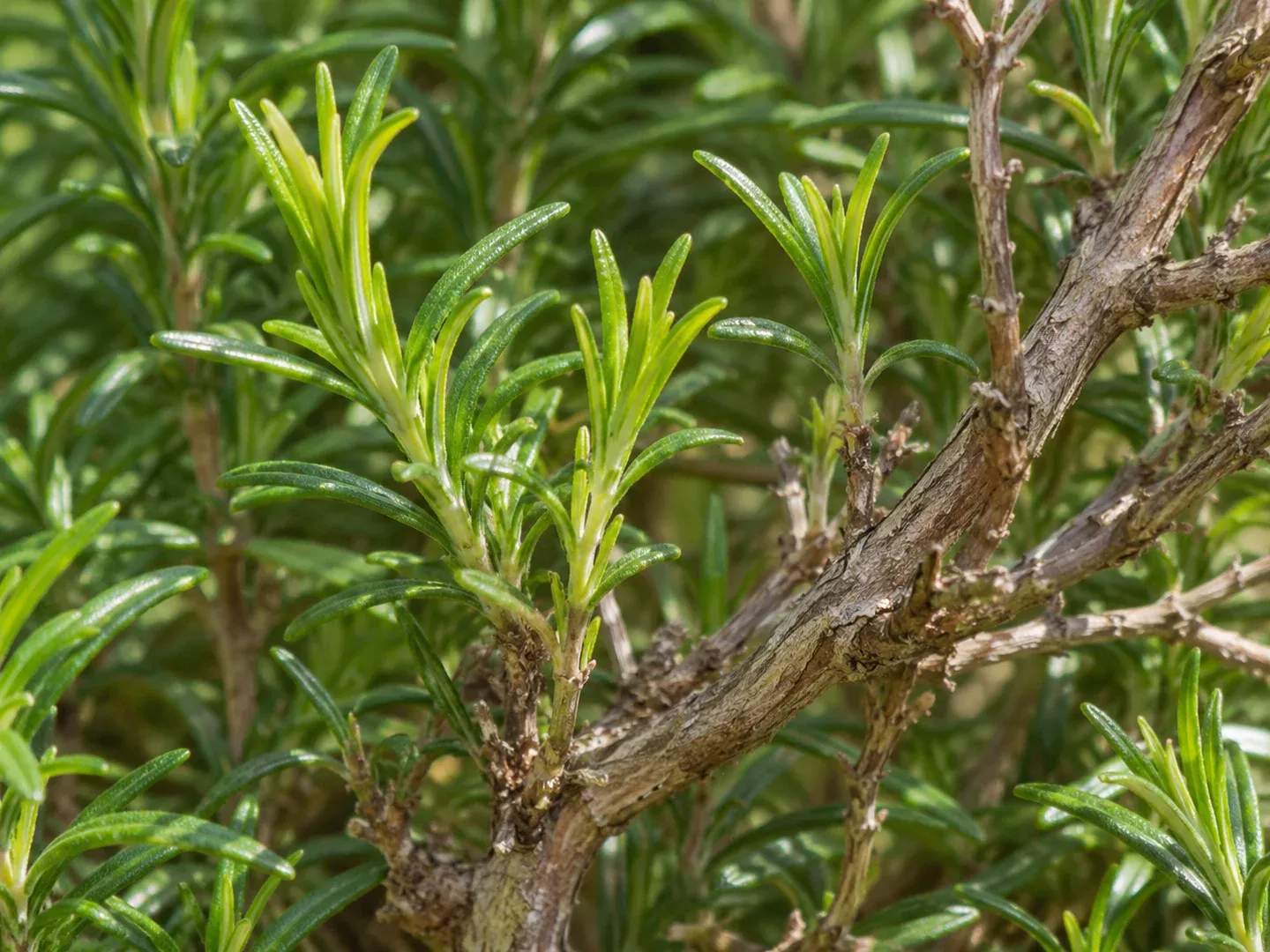
If rosemary is drying out, check the cause first
Brown foliage may follow water shortage, but also frost or waterlogged roots. Examine the root ball and drainage: if dry, resume watering appropriate to the pot or young plant; if waterlogged, correct exposure to rain and drainage. These steps can help address a possible cause. RHS
If leaves are eaten, look for an insect before treating. The rosemary beetle has shiny adults striped in green and purple; its larvae and adults eat leaves and flowers. The RHS states that damage often remains tolerable on a healthy plant. If feeding becomes significant, manual removal is possible. RHS, rosemary beetle
Harvest and prepare for winter
Pick a few shoots as needed, preserving the shrub’s foliage and shape. Evergreen rosemary can provide leaves year-round when its condition allows. For storage, dry species separately in a dark, dry, ventilated space; seal and label leaves only once fully dry. RHS SNHF, herbs
Winter hardiness depends on variety, wind, root establishment and soil. The SNHF’s guidance for north of Paris is a call to adapt protection, not an absolute climatic boundary. In pots, shelter from persistent rain and cold winds; also protect the container during severe frosts. The RHS suggests grouping pots or wrapping their sides with an old blanket or reused insulation. Keep drainage outlets clear and foliage exposed to light; protection here targets roots and container walls, without permanently enclosing the entire shrub in darkness. A greenhouse or bright shelter may be used in cold sites, provided roots are not kept waterlogged. SNHF RHS
Key points for this crop
Practical guidance
- Species
- Salvia rosmarinus, formerly Rosmarinus officinalis
- Location
- Full sun, well-drained soil and long-term space for a shrub
- Pruning
- Light, after flowering, on leafy shoots only
- Winter
- Avoid waterlogged roots; protect according to site and container
Sources and references
- RosemarySociété Nationale d’Horticulture de France Accessed on 18 October 2026.
- How to grow rosemaryRoyal Horticultural Society, in English Accessed on 18 October 2026.
- Rosemary beetleRoyal Horticultural Society, in English Accessed on 18 October 2026.
- Herbs: a world of flavours at your fingertipsSNHF, vegetable and fruit section, April 2023 Accessed on 18 October 2026.
- Cuttings: softwoodRoyal Horticultural Society, in English Accessed on 8 November 2026.