
The vegetable garden notebook / Crops
Cultivating Oregano: Sowing, Maintenance, Harvesting, and Overwintering
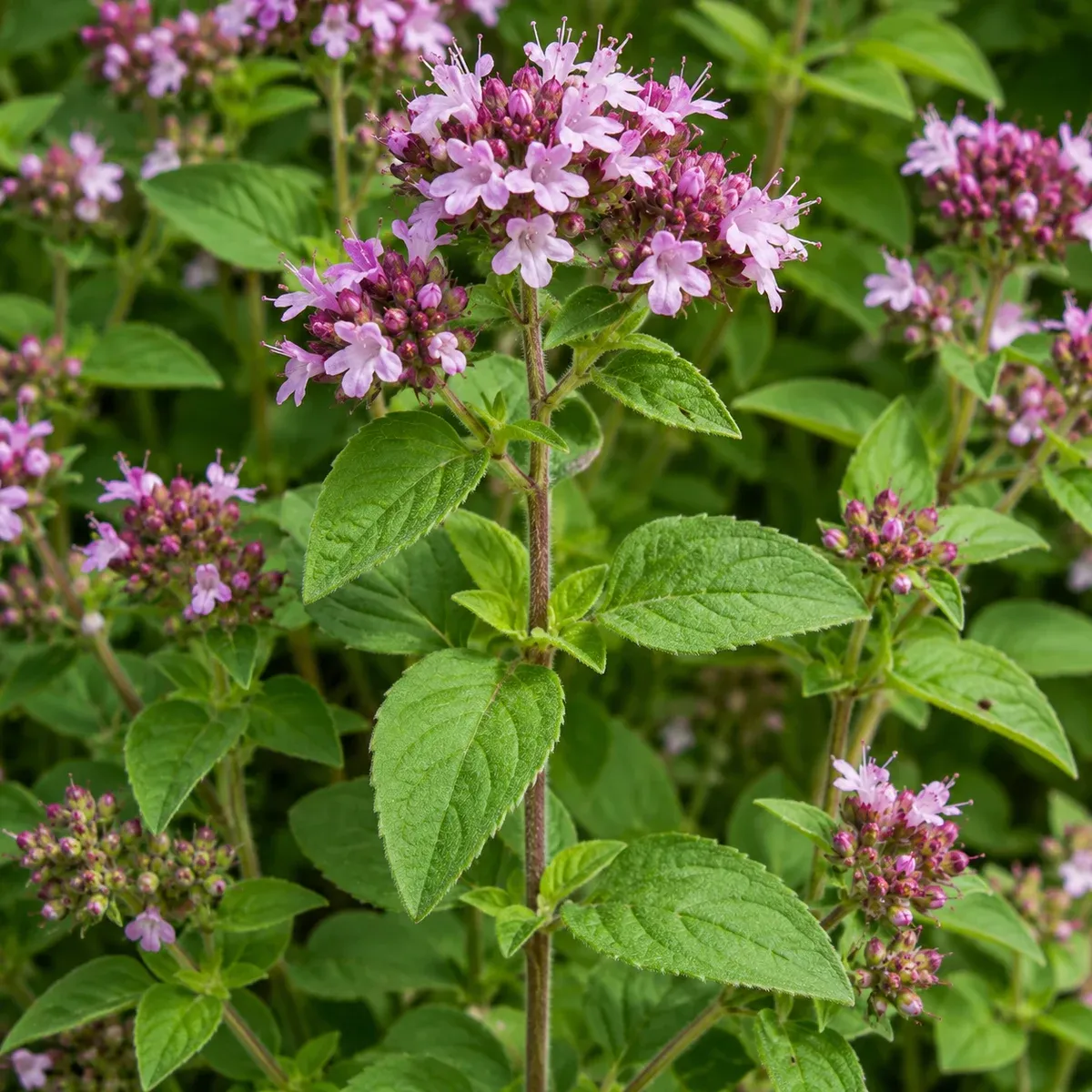
Common oregano forms a perennial aromatic clump that can remain in the same spot for several years. Its name is sometimes confused with that of marjoram: start by checking the species, then choose a sunny location with good drainage.
Adapt this guidance to your garden’s climate and conditions.
Oregano or Marjoram: Check the Botanical Name
This guide covers Origanum vulgare, common oregano, sometimes called wild marjoram. Sweet marjoram, Origanum majorana, is a different species, generally less cold-hardy. A shared common name does not guarantee the same overwintering requirements. RHS
For culinary use, select a plant identified in the herb section with an aroma that suits you. Some selections are primarily ornamental. Among oregano varieties, ‘Compactum’ has a low-growing habit, while ‘Aureum’ features golden foliage. The cultivar name helps anticipate size and appearance. RHS
Sowing or Dividing a Known Plant
To propagate common oregano, sowing is possible in spring under cover. Sow thinly on the surface of a moist, well-drained seed compost, without burying the tiny seeds. The RHS indicates seedling emergence within one to three weeks at around 20 °C under its conditions. Transplant into individual pots once seedlings have several leaves, avoiding excess water that encourages damping off. RHS
A purchased plant simplifies establishing a specific variety. Dividing a healthy, identified clump in spring also preserves its characteristics; the RHS also mentions softwood cuttings in summer. Do not propagate a plant suspected of disease in an attempt to obtain a healthy new clump. RHS Maryland
Planning a Clump in Full Sun, in the Ground or in a Pot
Oregano tolerates relatively poor soil but requires full sun and good drainage. Allocate it a permanent spot in the plan: it does not follow the annual vegetable rotation. Keep neighbouring plants at a sufficient distance to avoid smothering it; maintain the clump’s boundaries or use a container if space is limited. RHS Maryland
Plant young plants raised under cover after hardening them off and after the last frosts. Plant at the previous depth. The RHS recommends at least 20 to 30 cm between neighbours and a pot of at least 15 cm for a young plant: allow more space as it grows, with some varieties reaching 30 to 60 cm in spread. In damp soil, opt for a pot with drainage holes or a raised area with a well-drained growing medium. RHS
Maintenance According to the Root Ball’s Condition
Water recent plantings during dry periods. An established clump in the ground subsequently tolerates drought; a pot requires more frequent checks in hot weather. Check the growing medium before watering and allow excess water to drain away. Wilting foliage alone is not sufficient to decide to water: roots may also suffer in a waterlogged root ball. RHS
Oregano in open ground does not need routine feeding. For oregano that has been growing in a pot for over a year, feeding during the growing season may be beneficial. Keep the base clear of dead leaves that could smother it; no thick, damp mulch is necessary to follow this advice. If a clump appears dry on the surface but remains waterlogged underneath, correct the drainage first; recovery depends on the roots’ condition. RHS
Pruning for Leaves or Allowing Flowers
Harvest a few leafy shoots as needed during the growing season. The RHS notes the best flavour is before flowers open. To store some for cooking, dry the shoots in a dark, dry, well-ventilated place, separately from other species; store the thoroughly dried leaves in a labelled container, protected from light. RHS SNHF, herbs
Harvesting young shoots encourages a bushy habit. To prioritise leaves, cut back the flowering stems; to enjoy the flowers visited by bees and butterflies, leave some and remove faded stems later. In spring, pruning dead or bare stems helps maintain a compact clump. RHS Maryland
When to Renew a Less Vigorous Clump?
Maryland advises renewing plants that have become woody, often after three or four years under its conditions. Assess vigour rather than setting a fixed date: divide a healthy section or replace an old, unproductive plant. Maryland RHS
Identifying a Problem Before Intervening
Reduced growth in winter does not carry the same meaning as decline during active growth. First, check the season, light, space allowed by neighbours, and root moisture. A water-saturated pot or an already rotting rootstock may not recover after a change of location. RHS
The RHS lists rust among possible oregano diseases. Powdery orange pustules, sometimes turning yellow or black, are signs to examine under the leaves; these should not be confused with simply dry leaves. Also observe any insects present if leaves appear nibbled. If the problem is spreading, have it identified before taking action. RHS RHS, rust
Overwintering: Protecting the Rootstock or Producing Leaves?
O. vulgare is described as hardy by sources, but rootstock survival does not guarantee harvestable leaves throughout winter. Verify the identity and hardiness of your selection, especially for another Origanum. Protect pots from persistent rain; under cloches or in a greenhouse, maintain ventilation. Winter production under cover also depends on available light and warmth. Group aromatic plants according to their needs and space, without relying on an automatic repellent effect. RHS Maryland
Key points for this crop
Practical guidance
- Species covered
- Common oregano: Origanum vulgare
- To distinguish
- Sweet marjoram: Origanum majorana
- Location
- Full sun and well-drained soil; long-lived clump
- Winter
- Rootstock survival and leaf harvest are two different objectives
Sources and references
- How to grow oreganoRoyal Horticultural Society, in English Accessed on 18 October 2026.
- Oregano (Origanum vulgare)University of Maryland Extension, in English Accessed on 18 October 2026.
- Mint rustRoyal Horticultural Society, in English Accessed on 18 October 2026.
- Herbs: a world of flavours at your fingertipsSNHF, vegetable and fruit section, April 2023 Accessed on 18 October 2026.