
The vegetable garden notebook / Crops
Growing marjoram: sowing, harvesting and winter protection
Sweet marjoram produces more delicate aromatic foliage than common oregano. To keep it for several seasons, anticipate winter cold and damp: pots make it easier to move to a bright shelter.
Adapt this guidance to your garden’s climate and conditions.
Sweet marjoram or oregano: verify the species
This guide covers Origanum majorana, with small, soft, velvety grey-green leaves. Common oregano, O. vulgare, is a different species; O. onites and the selection ‘French’ also appear under the name marjoram. Do not infer their aroma or frost resistance from the common name alone. Illinois RHS, cultivation
Choose a packet or plant labelled for culinary use. Sweet marjoram is a frost-sensitive perennial, often grown for a single season. Decide at purchase whether you will replace it or have a bright space to overwinter it. RHS, species
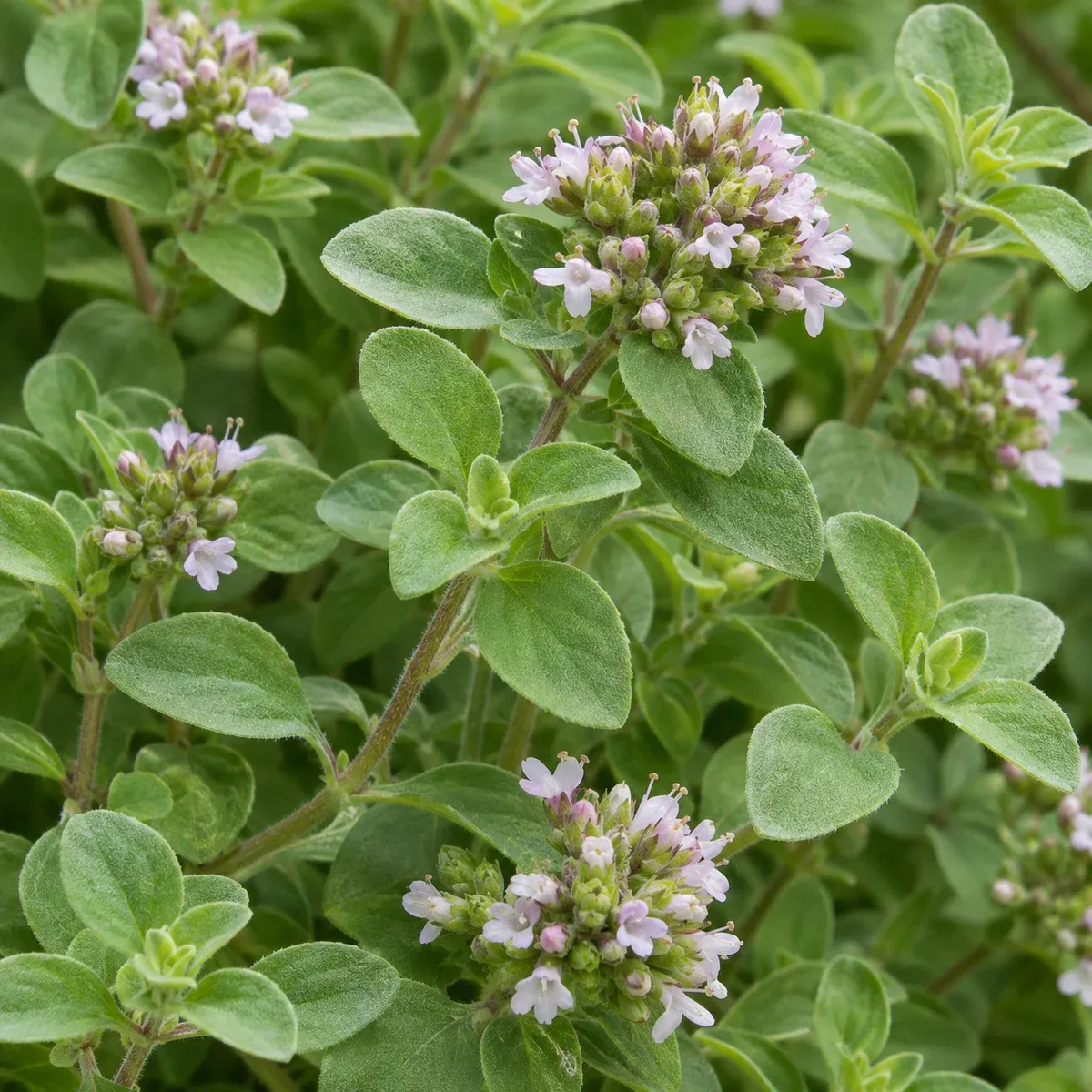
Sow in warmth or propagate a healthy plant
In spring, sow thinly on the surface of moist seed compost, without covering the tiny seeds. The RHS gives a seedling emergence time of one to three weeks at around 20 °C. Keep seedlings in the light, without waterlogging; transplant individually when they have several leaves. Adjust the planting date to your garden’s weather. RHS, cultivation
A correctly identified young plant makes it easy to start with just a few plants. To keep a known marjoram, you can take cuttings; the RHS species profile also mentions division and basal softwood cuttings in spring. Choose a healthy, vigorous parent plant, then protect the new plants while they root. Division is not a remedy for a diseased plant. Illinois RHS, species
To take basal cuttings, follow the section “Preparing basal softwood cuttings” in the RHS guide to softwood cuttings, in English: it specifies taking cuttings from the base of the plant and refers to preparation and rooting care.
Plant in full sun, in pots or in the ground
Wait until the risk of frost has passed and gradually harden off plants raised under cover. Provide full sun and soil that drains well. In waterlogged soil, roots may rot; a pot with drainage holes or a raised growing position is preferable. An established plant tolerates dry spells better than a recently transplanted young one. NC State
Leave at least 20 cm between neighbours, allowing for the spread of the clump. For a young plant, the RHS recommends a container at least 15 cm wide and deep; repot as it grows. The pot must remain movable if you plan to shelter it. Group aromatic plants according to their drainage needs and future size. RHS, cultivation
Maintain watering and encourage shoots
Water recent plantings during dry periods. In pots, check the potting compost and allow excess water to drain before returning the pot to its position. In the ground, after establishment, watering becomes less frequent. Limp leaves are a reason to check the root ball: they do not alone indicate a lack of water. NC State RHS, cultivation
In the ground, no systematic fertiliser is needed. A plant kept for more than one year in the same container may benefit from a supplement during growth, depending on its potting compost. Pinch or harvest the tips to encourage branching; Illinois suggests a first shaping cut when the plant reaches 15–20 cm in height. Keep active foliage on young plants. RHS, cultivation Illinois
Harvest, allow to flower or dry
Cut a few shoots as needed, then strip the leaves for cooking. Their aroma is most appreciated before flowers open. Harvesting and pruning before flowering encourage a bushy clump; leave other stems to flower if you wish to observe visiting insects. After flowering, remove the spent flower stems. Illinois NC State RHS, cultivation
To store a supply, dry the shoots in a dark, dry and ventilated place, keeping species separate. Once leaves are thoroughly dry, place them in a sealed, labelled container, away from light. Drying is a more predictable solution than winter harvesting dependent on shelter. SNHF
Spots or decline: examine before acting
First check light, recent temperatures and root moisture. A weakened plant in saturated soil does not automatically need more water. NC State warns of rot risk in poor drainage: examine roots if the plant declines. NC State
The RHS lists possible aphids and mites on the species. Look for the pests under the leaves before attributing yellowing to them. Powdery orange pustules, sometimes turning yellow or black, may indicate rust. Photograph any damage that is spreading and have the cause confirmed; measures for mint rhizomes do not apply to this plant. RHS, species RHS, rust
Overwinter the plant or start anew in spring
To attempt to preserve O. majorana, move the pot indoors before frost into a bright, frost-free place. Avoid constantly wet potting compost and monitor the plant. Illinois suggests this move; NC State notes that indoor overwintering is not always successful. A dark window or damp shelter is insufficient to maintain a harvest. Illinois NC State
When active growth returns, remove dead stems and harden off the plant again before moving it outside. If growing marjoram as an annual, plan a new sowing; if it remains in place, reserve its space in the plan for several seasons. The hardiness of common oregano does not mean that sweet marjoram will survive outdoors. RHS, species
Key points for this crop
Practical guidance
- Species
- Sweet marjoram: Origanum majorana
- Lifecycle
- Perennial sensitive to frost, often grown as an annual
- Soil and light
- Full sun, warmth and drainage; no waterlogging
- Winter
- Bright frost-free shelter to attempt to preserve the plant
Sources and references
- How to grow marjoramRoyal Horticultural Society, in English Accessed on 18 October 2026.
- Origanum majoranaRoyal Horticultural Society, in English Accessed on 18 October 2026.
- Marjoram: SweetUniversity of Illinois Extension, in English Accessed on 18 October 2026.
- Origanum majoranaNorth Carolina Extension Gardener Plant Toolbox, in English Accessed on 18 October 2026.
- Mint rustRoyal Horticultural Society, in English Accessed on 18 October 2026.
- Aromatic plants: a world of flavours within reachSNHF, vegetable and fruit section, April 2023 Accessed on 18 October 2026.
- Cuttings: softwoodRoyal Horticultural Society, in English Accessed on 8 November 2026.