
The vegetable garden notebook / Crops
Growing lemon verbena: planting, pruning and overwintering
Lemon verbena becomes a shrub and may lose its leaves in winter. Choose its location with its mature size and possible shelter in mind before purchasing the plant.
Adapt this guidance to your garden’s climate and conditions.
Buy the right verbena and plan its location
Look for Aloysia citrodora, also sold under the name Aloysia triphylla. Common vervain (Verbena officinalis) and lemongrass (Cymbopogon citratus) are different plants: their common names do not replace the botanical label. Keep the plant’s label. RHS, common vervain, NC State
This shrub can reach 1.5 to 2.5 metres in height and width in favourable conditions according to the RHS. Allocate space for it beyond the first season; this size represents its potential, not the size every pot-grown plant will reach. Choose companion plants based on space requirements and water needs using the companion planting guide. RHS
Plant after the cold, in the ground or in a pot
Start with a potted plant, an option recommended by UC Marin over sowing. Plant outdoors once the risk of frost has passed, in full sun and sheltered from wind; a warm wall may be suitable. The soil should be fertile and well-drained. UC Marin
In gardens exposed to cold, a container that can be moved makes overwintering easier. Choose one that is perforated, stable and proportionate to the root ball, then repot as it grows. Under shelter, the RHS recommends a loam-based potting compost in full light. Illinois, RHS
Water, feed and support establishment
Provide water during summer growth by checking the root ball, without allowing the container to retain stagnant water. UC Marin states that well-prepared soil does not require systematic additional fertilisation. Illinois advises more nutrition for container-grown plants: check the fertiliser already present in the potting compost and adjust applications based on growth and the fertiliser instructions, without following this routine all year. UC Marin, Illinois
When growth resumes, identify branches that do not regrow and remove dead wood. Regular pruning of the tips helps maintain a bushy shape. Small white to lilac flowers may appear in summer; young leaves can also be harvested before flowering. UC Marin, Illinois
Take cuttings from young shoots
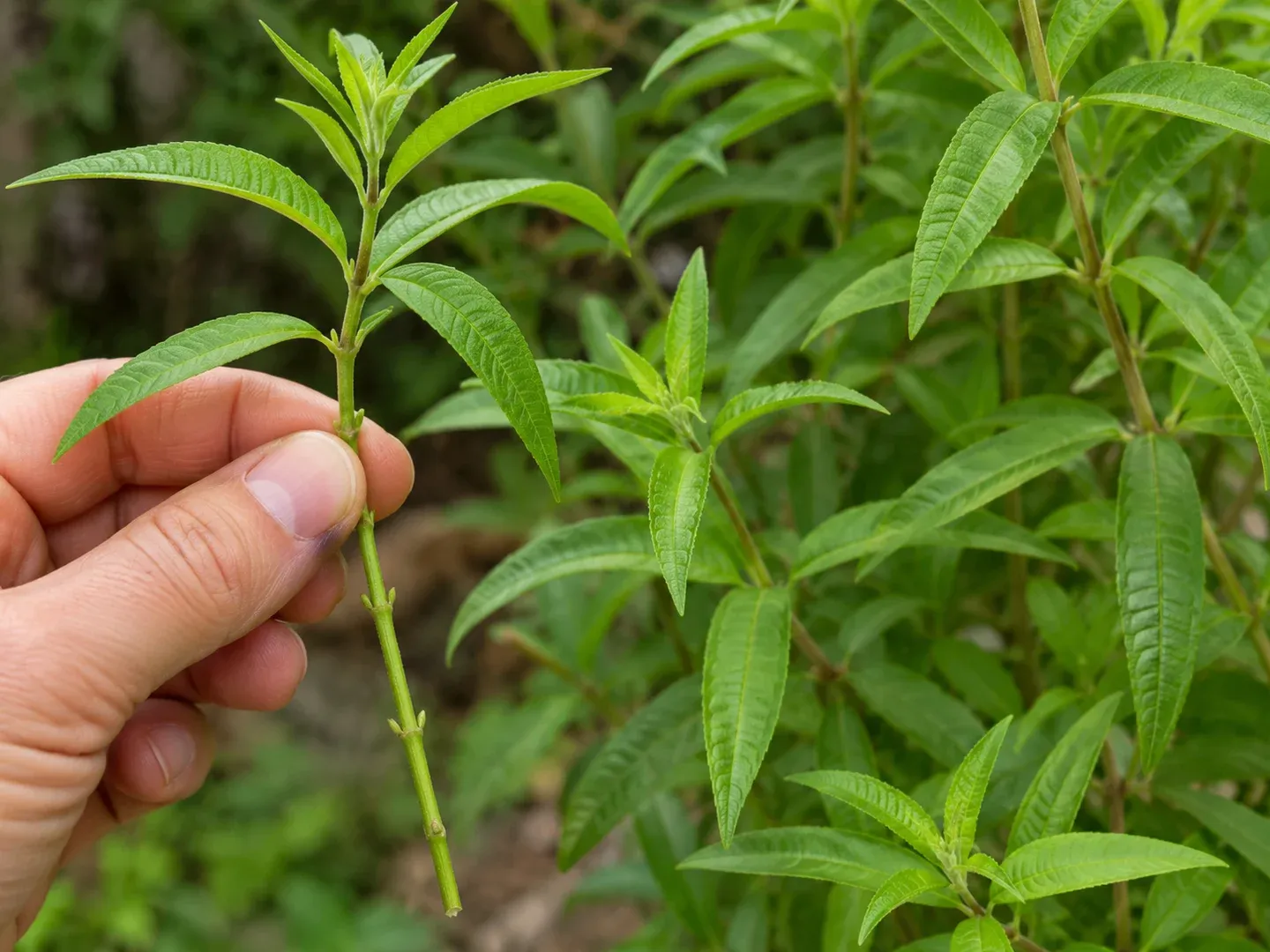
The method indicated for Aloysia is softwood cuttings. When the plant produces young, flexible stems, take a healthy, non-flowering shoot. Prepare a section of approximately 5 to 10 cm, cut below a node, and remove the lower leaves. RHS, RHS, cuttings
Insert it into compost for cuttings, water and maintain a humid atmosphere under a transparent cover that is regularly ventilated. Place in light without scorching sun; keep the compost moist but not saturated. After rooting, gradually increase ventilation before individual repotting. RHS, cuttings
Harvest and dry the leaves
Pick leaves as needed for fresh use or drying. Spread them out without crowding in a dry, ventilated place; do not seal the jar until completely dry. Label with the species and date, then store away from light, following the SNHF’s general advice. Illinois, SNHF
Overwinter without confusing dormancy and decline
Prepare shelter before frosts: a cool, frost-free location is better for dormancy than a very warm room. Leaf drop may be normal. Reduce watering during dormancy while avoiding complete drying of the root ball. The original case from Ask Extension concerns Oregon: follow these steps, then adapt the shelter to your garden. Ask Extension
In the ground, mulching over the roots, as recommended by the RHS, helps protect them. In spring, wait for signs of regrowth before assessing branches, then gradually harden off a plant that has been kept under cover. RHS, UC Marin
Damaged leaves: inspect before treating
UC Marin lists aphids, whiteflies, scale insects and mites as occasional pests. Check the undersides of leaves, shoots and the condition of the root ball before concluding; the season and cold also matter. Note what you observe and use the vegetable garden disease guide to prepare for identification. No systematic preventive treatment follows from this list. UC Marin
Key points for this crop
Practical guidance
- Species
- Aloysia citrodora, synonym Aloysia triphylla
- Mature size
- RHS reference in favourable conditions: 1.5 to 2.5 metres in height and width
- Planting
- Full sun, sheltered from wind and well-drained; movable pot if winters are cold
- Propagation
- Softwood cuttings of young shoots
Sources and references
- Aloysia citrodoraRoyal Horticultural Society, in English Accessed on 18 October 2026.
- Lemon VerbenaUniversity of California Agriculture and Natural Resources, UC Marin Master Gardeners, in English Accessed on 18 October 2026.
- Cuttings: softwoodRoyal Horticultural Society, RHS Advice Team, in English Accessed on 18 October 2026.
- Lemon VerbenaUniversity of Illinois Extension, in English Accessed on 18 October 2026.
- How can I preserve lemon verbena through winter? #160739Ask Extension, Jean R. Natter, Master Gardener Diagnostician, Oregon, 18 November 2013, in English Accessed on 18 October 2026.
- Verbena officinalisRoyal Horticultural Society, in English Accessed on 18 October 2026.
- Cymbopogon citratusNorth Carolina State University, Extension Gardener Plant Toolbox, in English Accessed on 18 October 2026.
- Herbs: a world of flavours within reachSNHF, vegetable and fruit section, April 2023 Accessed on 18 October 2026.