
The vegetable garden notebook / Crops
Growing fenugreek: harvesting leaves or seeds
Fenugreek can be harvested young for its leaves or left in place until the seeds are ready. These two aims need different amounts of space and time: set aside plants for seed production when you sow.
Adapt this guidance to your garden’s climate and conditions.
Identifying fenugreek and choosing leaves or seeds
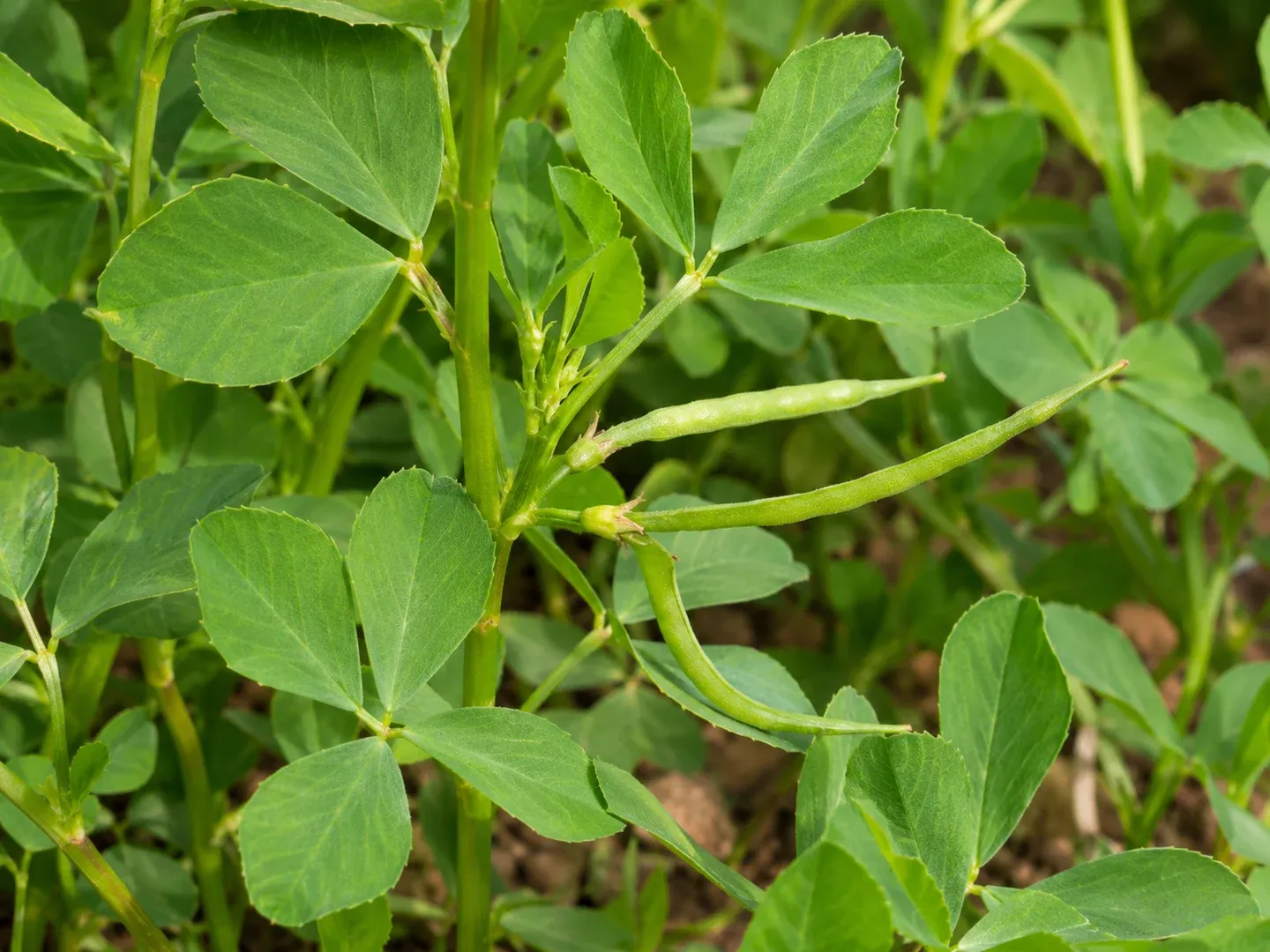
Select seeds of Trigonella foenum-graecum, an annual in the Fabaceae family. Garden Organic distinguishes this large-seeded fenugreek from Trigonella glabra, which has small seeds and can tolerate multiple cuts: do not assume this trait applies to all packets labelled “methi”. Kew, Garden Organic
For leaves, plan small successive sowings. To harvest seeds as a spice, allow some plants to flower and ripen their pods. Germinance describes a bushy plant around 50 cm tall, with cream-coloured flowers. Germinance
Sowing directly after frosts
Germinance recommends direct sowing after frosts. Do not wait until late summer for a seed harvest: maturation requires a warm, dry period. Dates from a British calendar do not determine those for your garden. Germinance, NC State
For a small leaf crop, Garden Organic suggests 5 mm depth, 20 cm between rows and 5 cm between plants. Transplanting is poorly tolerated: sow in the intended location, keep the seedbed moist, and thin if necessary. For fully developed plants, Germinance indicates 40 × 50 cm spacing instead; this wider spacing suits a trial crop for seed production. Neither spacing is a universal rule. To prepare and mark the row, refer to the sowing techniques. Garden Organic, Germinance
Garden Organic typically observes emergence in about one week, with a range of 4 to 10 days in their factsheet. Adjust the waiting period based on the warmth and moisture of the seedbed. Weed during establishment before the plants occupy their space. Garden Organic
Planting in sun, in soil or containers
Choose well-drained soil and a sunny location. Stagnant water is unsuitable for fenugreek. Keep neighbouring crops at a sufficient distance to avoid shading it. NC State
Container growing is possible, particularly for a few leaves. Sow directly into a pot with drainage holes and monitor the substrate. Adjust the number of plants to the container size, and distinguish between harvesting young leaves and growing the crop on to produce pods. Under cover, light and drainage remain essential. Garden Organic, NC State
Managing water and nutrition without promising nitrogen
Check soil moisture during emergence and growth; water according to how dry the soil actually is, using the watering guide, without keeping the soil waterlogged. Drainage is the first point to check if a plant stalls in damp soil. NC State
Nitrogen fixation depends on compatible bacteria: being a member of the Fabaceae family does not remove the need to monitor growth. A pale leaf does not alone indicate a deficiency or absence of nodules. Avoid automatic fertiliser applications; first note moisture, light, and development. Garden Organic
Harvesting leaves before flower buds appear
Germinance states that leaves can be harvested around 30 to 40 days; use this as a guideline. Garden Organic suggests cutting stems a few centimetres from the base when plants reach about 25 cm, before flower buds appear, while leaves are still of good quality. For T. foenum-graecum, plan one cut followed by a new sowing, without relying on repeated regrowth as with the small-seeded type. Germinance, Garden Organic
Use the leaves fresh or dry them. For drying, the SNHF’s general method is to use a dry, dark, airy room. Turn the leaves so they dry evenly, then store them in an airtight container only once thoroughly dry, with a label and date. SNHF
Allowing flowering and harvesting mature pods
Do not cut plants reserved for seeds. Wait for fully developed, dark yellow pods, then harvest before they split. Scent alone is insufficient to determine maturity. Germinance, Garden Organic
Remove the seeds from the pods, clean them and finish drying them before storage. Keep seeds in a labelled, dry envelope in a cool place: this is a general seed-saving method. RHS seeds
Pods still green at the onset of cold may remain immature. Plan a new sowing the following season; do not plan to keep fenugreek as a perennial over winter. Include this member of the Fabaceae family in your crop rotation plan, without assuming a specific amount of nitrogen will be available to the following crop. Kew, NC State
Inspecting damage before intervening
When faced with spots, wilting, or eaten leaves, examine both sides of the leaves, stems, and soil condition; photograph the progression. NC State reports fungal and bacterial pathogens as well as a caterpillar in the context it covers: this list cannot identify a problem in a French garden from leaf colour alone. Seek confirmation of the cause of persistent decline before any treatment. NC State
Key points for this crop
Practical guidance
- Species
- Trigonella foenum-graecum, an annual in the Fabaceae family
- Planting
- Direct sowing after frosts; transplanting poorly tolerated
- Harvest
- Leaves before flower buds appear; seeds in mature yellow pods
- Soil
- Sun and drainage; no guaranteed nitrogen fixation
Sources and references
- Trigonella foenum-graecum L. — General informationRoyal Botanic Gardens, Kew, Plants of the World Online, in English Accessed on 18 October 2026.
- FenugreekGerminance, French seed producer Accessed on 18 October 2026.
- Fenugreek, MethiGarden Organic, horticultural organisation and demonstration garden, in English Accessed on 18 October 2026.
- Trigonella foenum-graecum — FenugreekNorth Carolina State University, Extension Gardener Plant Toolbox, in English Accessed on 18 October 2026.
- Herbs: a world of flavours at your fingertipsFrench National Horticultural Society, Vegetable and Fruit Gardens Section, April 2023 Accessed on 18 October 2026.
- Seed: collecting and storingRoyal Horticultural Society, general method, in English Accessed on 18 October 2026.