
The vegetable garden notebook / Crops
Cultivating common sage: planting, pruning and harvesting
Common sage is a small perennial aromatic shrub. To keep harvestable leaves, select an identified plant, well-drained soil and light pruning, then adjust watering and winter care for in-ground or container cultivation.
Adapt this guidance to your garden’s climate and conditions.
Which sage to choose for cooking?
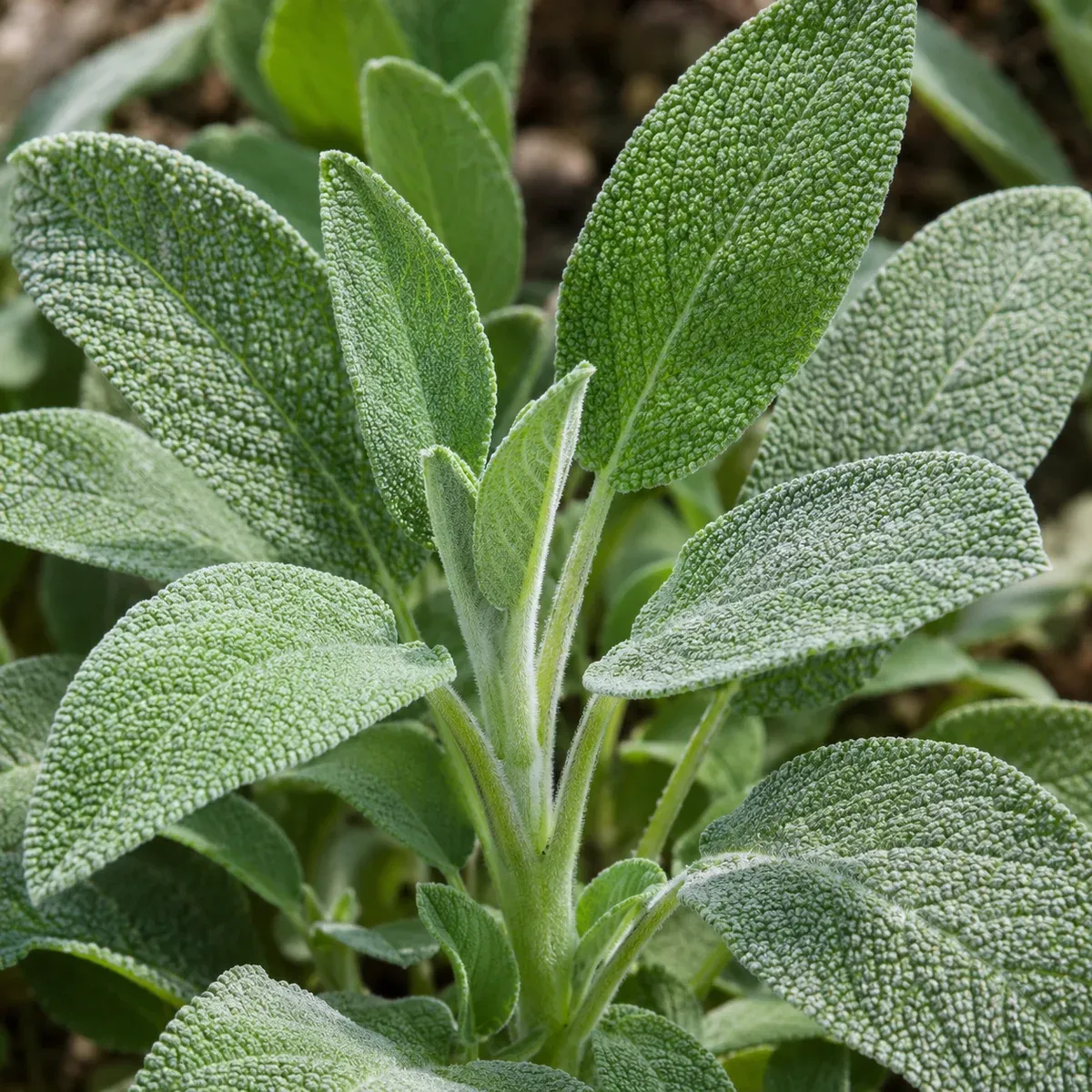
Look for a label marked Salvia officinalis. The word “sage” appears in the names of many plants, including Russian sage and pineapple sage: their characteristics do not replace those of common sage. This forms a bush with stems that become woody, bearing blue to purple flowers in summer. RHS
‘Icterina’ has yellow-variegated leaves, ‘Tricolor’ has colourful variegated foliage, and ‘Berggarten’ has large grey-green leaves. Also choose according to the space available. Cold hardiness varies by cultivar and location. SNHF RHS Iowa
Planting a young plant or starting from seed
A young plant or cutting will produce a harvestable plant more quickly than seed. If you sow common sage, do so in spring under cover, in a moist but well-drained seed compost, with a light covering. The RHS reports seedling emergence in approximately two weeks under its conditions, and at least a year of growth before the plant is ready to harvest. RHS
Plant when the soil warms in spring; acclimatise plants raised indoors. Provide full sun and light soil that does not become waterlogged. The RHS recommends at least 30 cm from neighbours, increasing this for a vigorous variety. In damp soil, opt instead for a container or raised area. SNHF RHS
In containers, drainage does not eliminate the need to water
For a long-term planting, choose a pot with drainage holes and enough room for the roots: the RHS recommends at least 30 cm in width and depth, with a well-drained growing medium. Keep the top of the roots shallow and place the container in full sun, sheltered from strong winds. RHS
Water during dry periods in the first year. Sage established in the ground then tolerates drought, whereas containers require regular checks in summer. Water when the growing medium needs it, without saturating it. In the ground, there is no need to fertilise routinely; after more than a year in the same pot, a feed during the growing season may be helpful. RHS
Pruning in the right place and planning renewal
In spring, when new shoots appear, lightly prune the established plant to maintain a compact shape. Retain healthy foliage or buds: old bare stems may not regrow. The SNHF’s guideline “prune hard after flowering” should therefore not become severe cutting back of an entire old plant. Cut off faded flower spikes after flowering. SNHF RHS Iowa
If the centre becomes bare with age, plan replacement rather than certain regrowth from bare wood. Take cuttings from healthy shoots in spring or early summer; this propagation preserves the characteristics of the chosen plant. Flowering attracts pollinators: you may leave some, then remove faded stems to maintain the bush. SNHF RHS
Damaged leaves: examine the root ball and shoots
A weakened plant is not automatically thirsty. Iowa highlights excess moisture and poor drainage among the main causes of decline. Check the root ball before adding water: water if it is genuinely dry; if it remains wet, improve drainage and shelter the pot from rain. A plant with already rotted roots may not recover. Iowa RHS
The SNHF mentions powdery mildew and botrytis; a white powdery coating or deteriorating tissue calls for closer inspection than yellowing alone. Improve air circulation around overcrowded plants. Insects may also damage leaves, often without serious harm according to the RHS: inspect the undersides and remove affected leaves as needed, without routine preventive treatment. SNHF Iowa RHS
Harvesting, overwintering and maintaining its place in the plan
From a well-developed plant, pick leaves or a few young shoots as needed for cooking, without stripping the plant. The evergreen foliage allows winter harvests when it remains in good condition; active growth yields young shoots. Dry part of the harvest in the shade in a dry, well-ventilated area, then store the thoroughly dry leaves in a labelled container. SNHF RHS SNHF, herbs
In winter, protect container-grown sage especially from prolonged rain and the most exposed cold conditions. Hardiness does not eliminate the risk of rot. Give it a place where it can remain for several years, away from annual crops that need moving; pair it according to sunlight, space and watering requirements, without assuming an automatic repellent effect. Avoid mulch or dense neighbours compromising the airy, well-drained space it needs. Iowa RHS
Key points for this crop
Practical guidance
- Culinary species
- Salvia officinalis
- Planting
- Full sun and well-drained soil; permanent position
- Pruning
- Retain live shoots; regrowth from bare wood uncertain
- Harvesting
- A few leaves or young shoots from a well-established plant
Sources and references
- Common sageSociété Nationale d’Horticulture de France Accessed on 18 October 2026.
- How to grow sageRoyal Horticultural Society, in English Accessed on 18 October 2026.
- All about sageIowa State University Extension and Outreach, in English Accessed on 18 October 2026.
- Herbs: a world of flavours at your fingertipsSNHF, vegetable and fruit section, April 2023 Accessed on 18 October 2026.