
The vegetable garden notebook / Crops
Growing Swiss chard: sowing, watering and leaf-by-leaf harvesting
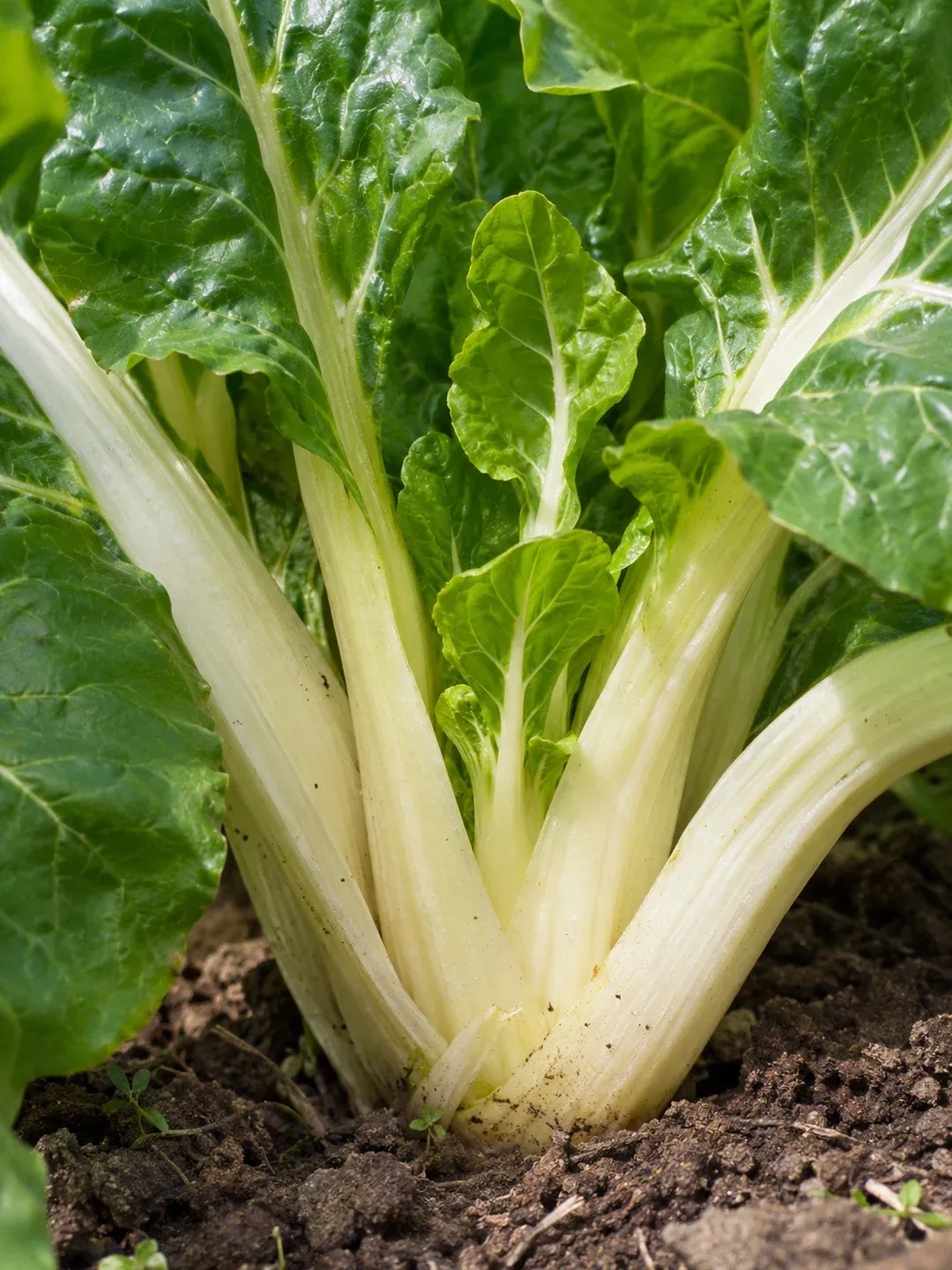
Swiss chard allows multiple harvests from the same plant. Give plants space, keep the soil moist during establishment and first pick the outer leaves.
Adapt this guidance to your garden’s climate and conditions.
Swiss chard, chard, or leaf beet: is it the same crop?
Yes. This guide covers chard, grown for its leaves and fleshy leaf stalks (petioles), not beetroot harvested for its root. It is a form of Beta vulgaris, typically cultivated for its leaves before it flowers as part of its biennial cycle. SNHF · INRAE
Which chard varieties should you choose for stalks or colour?
For large stalks, consider the white-stemmed types, such as ‘Blonde à carde blanche’ and ‘Verte à carde blanche’, cited by the SNHF. It also mentions ‘Verte à couper’ and varieties with red or yellow petioles. Read the seed packet to see if the variety is intended for large stalks or repeated harvests of leaves: the word ‘chard’ alone does not describe the desired outcome.
For a colourful effect, the RHS describes ‘Bright Lights’, with multi-coloured stems. Use the variety’s instructions to choose the growing period and spacing.
When should you sow Swiss chard?
For a spring start in France, INRAE gives April–May. The SNHF presents a much wider range, from April to October: do not turn it into an identical calendar for all regions and varieties. For late sowing, check the seed packet instructions and the available establishment time before cold weather. INRAE · SNHF
See the tasks for the month of April. If you want leaves in winter, allow time for the plants to establish; a developed chard plant and a newly sown crop will not offer the same prospects.
How should you sow and thin Swiss chard?
The ‘seed’ is a seed ball that can produce several seedlings. The SNHF suggests, for full-sized chard plants, 30 cm between plants and 40 cm between rows, with thinning at the three- to four-leaf stage. Keep the most vigorous seedling if several emerge together. SNHF
The RHS gives a sowing depth of 2.5 cm; follow the seed packet for your variety first. The sowing guide details the preparation. If starting with pot-grown plants, harden off any raised under cover, plant them without damaging the roots and water them in. RHS
Label the variety and target stage: small leaves harvested from closely spaced plants need different spacing from large chard grown for its stalks.
How should you water and feed Swiss chard?
Maintain rich, deep, moist soil that drains excess water. Young plants and containers require close monitoring; an established plant tolerates dry periods better, but watering remains useful during prolonged drought to maintain leaf harvest. INRAE · RHS
Mulching around plants can retain moisture: keep the base clear to avoid rot. The RHS does not recommend routine feeding in suitable soil or fresh potting compost. RHS
How can you harvest without exhausting the plant?
Harvest a few outer leaves with their stalks, cleanly cut at the base, and leave several central leaves. Return when the plant has enough leaves again. INRAE’s guideline of about two and a half months after sowing depends on the season; observe the actual development first. RHS · INRAE
When Swiss chard bolts to seed
The flower stalk is part of the normal biennial cycle, typically in the second year according to the SNHF. Chard that elongates to flower is therefore not simply a large leaf to leave growing. Heat can also encourage early bolting, notes the RHS.
Cut the first flower stalks if you wish to extend harvests slightly; the RHS states that this extra time is only temporary. Once flowering begins, the plant becomes less productive: plan replacement plants for leaf harvests. Regular watering, advised by the SNHF against bolting, does not indefinitely block the plant’s cycle.
Does Swiss chard regrow after winter?
Regrowth is possible, particularly in mild climates, but frost can damage the crop. The RHS distinguishes the survival of a plant from its production: cold may stop new leaves growing. Under protection, a few harvests may still be possible during mild periods. INRAE · RHS
Can Swiss chard be grown in pots?
Yes. The RHS recommends a drained container at least 40 cm in width and depth, allowing space for plants and frequently checking moisture. RHS
Spots or leaf mines: what to check?
Slugs on young plants, leaf miners in the blade, and foliar diseases are possible causes. INRAE mentions cercospora leaf spot and the beet leaf miner in particular. Examine both sides of the leaves before concluding; do not use a single spot colour as a certain diagnosis. SNHF · INRAE
Leaf miner: examine the blade and underside
The RHS describes large, irregular mined areas inside the leaf, initially pale, then brown and dried. Also look for small clusters of white eggs on the underside. This set of clues differs from a piece of leaf eaten from the edge. Remove leaves that contain mines and check new leaves as they grow; damaged areas will not turn green again.
To limit new egg-laying, cover healthy plants with a suitable insect-proof net, combined with a change of location. Adults may emerge from pupae remaining in the soil under cover: chard, beetroot, and leaf beet share this leaf miner. Netting will not restore leaves that are already damaged. RHS, leaf miner
Leaf spots: also consider growing conditions
The INRAE describes cercospora leaf spot as small, round spots with dark borders, favoured by humidity and dew. These signs can guide your checks, but they cannot identify every spot on chard leaves. Check if the plants are crowded and the foliage is poorly aerated; the RHS recommends leaving space to limit foliar diseases in humid conditions. If the lesions spread despite suitable planting, photograph both sides and seek advice before choosing a treatment.
Key points for this crop
Practical guidance
- Names
- Swiss chard, chard or leaf beet: Beta vulgaris
- Soil
- Deep, rich, moist and well-drained
- Harvest
- Outer leaves with their stalks, leaving the centre intact
- Winter
- Possible regrowth in mild climates; production slowed by cold
Sources and references
- Swiss chard or chardFrench National Horticultural Society Accessed on 17 October 2026.
- Swiss chard, Beta vulgaris subsp. vulgarisINRAE, Ephytia, Hypp Encyclopaedia Accessed on 17 October 2026.
- How to grow chardRoyal Horticultural Society, in English Accessed on 17 October 2026.
- Beet leaf minerRoyal Horticultural Society, in English Accessed on 18 October 2026.