
The vegetable garden notebook / Crops
Growing caraway: sowing and harvesting seeds after winter
To harvest caraway seeds, set aside space for two seasons: biennial caraway first forms a rosette, then flowers after winter. A few leaves can be picked earlier.
Adapt this guidance to your garden’s climate and conditions.
Choose the right caraway and decide what to harvest
Look for Carum carvi on the seed packet. The French names “anis des prés” and “cumin des prés” may refer to caraway; Cuminum cyminum (cumin) and Pimpinella anisum (green anise) are two different species. Their cultivation methods are not interchangeable. This guide assumes labelled seeds and does not cover wild plant identification. Sainte Marthe, NC State, cumin, NC State, anise
The method described applies to biennial caraway: leaves in the first season, followed by flowers and seeds generally in the next. Check the packet to see if the variety produces seeds in the year of sowing or the following year. Illinois
Sow directly in a permanent location
The French fact sheet from Sainte Marthe indicates March–April as a guideline for spring sowing and also describes autumn sowing. Sow when the soil can be worked without sticking and you can maintain moisture. Late sowing does not allow the same establishment period before winter. Sainte Marthe
Choose a sunny spot with fertile, loose, and well-drained soil. Caraway tolerates heavier soil if water drains away. Sow thinly in place, as the root does not tolerate transplanting well. If you start with a pot-grown seedling, plant it out while very young without disturbing the root ball. RHS
Follow the shallow sowing depth indicated on the packet and keep the seedbed moist: seedlings may be slow to emerge. Thin seedlings to approximately 20–30 cm apart, a rounded conversion of Maryland’s 8–12 inches. Leave space between rows for weeding and cutting umbels. Illinois, Maryland
If seedlings are slow to emerge, check depth, moisture, and seed condition before resowing on the same row. The guide for seeds that do not germinate helps organise these checks and test the rest of the packet.
In pots: plan for the root and future flower stalks
NC State mentions container cultivation and describes a deep root: sow in a deep pot with drainage holes where it can remain, filled with a well-draining growing medium. Avoid repeated repotting. NC State
The small initial foliage does not indicate the space required later: Illinois describes flowering stems of approximately 60–90 cm in the second season. Place the container where these stems will remain accessible and check its stability before they develop. Illinois
Support the rosette through winter
Maintain fairly consistent moisture during establishment and growth; adjust watering based on rainfall and soil drying. A well-drained surface may hide a dry root ball. The watering guide details how to check before watering. Start with fertile soil. Illinois, RHS
Mark the location before cold weather. The foliage may die back with frost, then regrow in spring. Maryland recommends mulching to protect the roots; keep it airy and avoid retaining water against the stem base. A rosette without flowers in the first season is not a failure requiring more fertiliser. Illinois, Maryland
Leave the flower stalks on plants intended for seed production. Cutting them as you would for a leafy herb prevents a seed harvest. RHS
Observe damage before intervening
NC State mentions aphids, carrot fly, anthracnose, and white rot as potential issues. These are possible problems; a yellow leaf alone is not enough to identify one. Examine shoots, stem base, and roots of a struggling plant, as well as moisture levels; have any worsening problem assessed. Pests mentioned in an American context may not all apply to French gardens. NC State
Harvest leaves or allow seeds to ripen
Pick a few fresh leaves as needed. Lifting a young root for cooking removes the whole plant: reserve other plants for seed production. Sainte Marthe describes these three parts as usable in cooking. Sainte Marthe
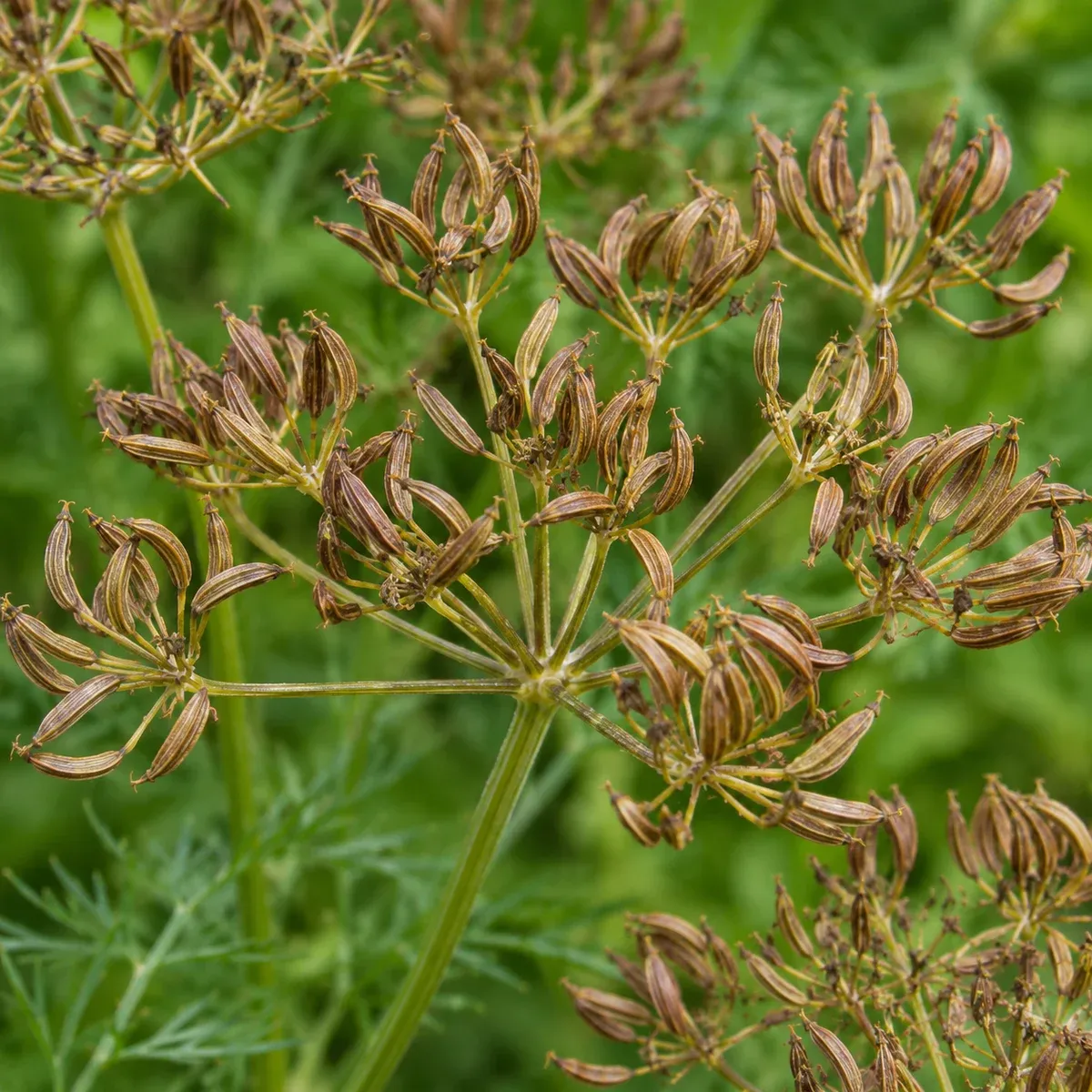
For seeds, wait until they turn from green to brown or greyish-brown. Cut the heads and complete drying in a paper bag, in a dry, ventilated place. Separate the seeds and only store them once completely dry. Maryland, Illinois
Keep a portion of labelled seeds to renew the crop. Remove seed heads before dispersal if you do not want self-sown seedlings. Record this member of the Apiaceae family and the space it occupies over two seasons in your crop rotation plan. NC State
Key points for this crop
Practical guidance
- Species
- Carum carvi, Apiaceae; distinct from cumin and green anise
- Growth cycle
- Biennial caraway: seeds generally produced in the second season
- Planting
- Direct sowing, as the root does not tolerate transplanting well
- Spacing
- Approximately 20 to 30 cm between plants after thinning
Sources and references
- CarawayUniversity of Illinois Extension, in English Accessed on 18 October 2026.
- Carum carviRoyal Horticultural Society, in English Accessed on 18 October 2026.
- Caraway AB — Carum carviLa Ferme de Sainte Marthe, seed supplier Accessed on 18 October 2026.
- CarawayUniversity of Maryland Extension, updated 20 February 2023, in English Accessed on 18 October 2026.
- Carum carviNC State Extension, in English Accessed on 18 October 2026.
- Cuminum cyminumNC State Extension, in English Accessed on 18 October 2026.
- Pimpinella anisumNC State Extension, in English Accessed on 18 October 2026.