
The vegetable garden notebook / Crops
Growing bay laurel: container, pruning, harvest and winter care
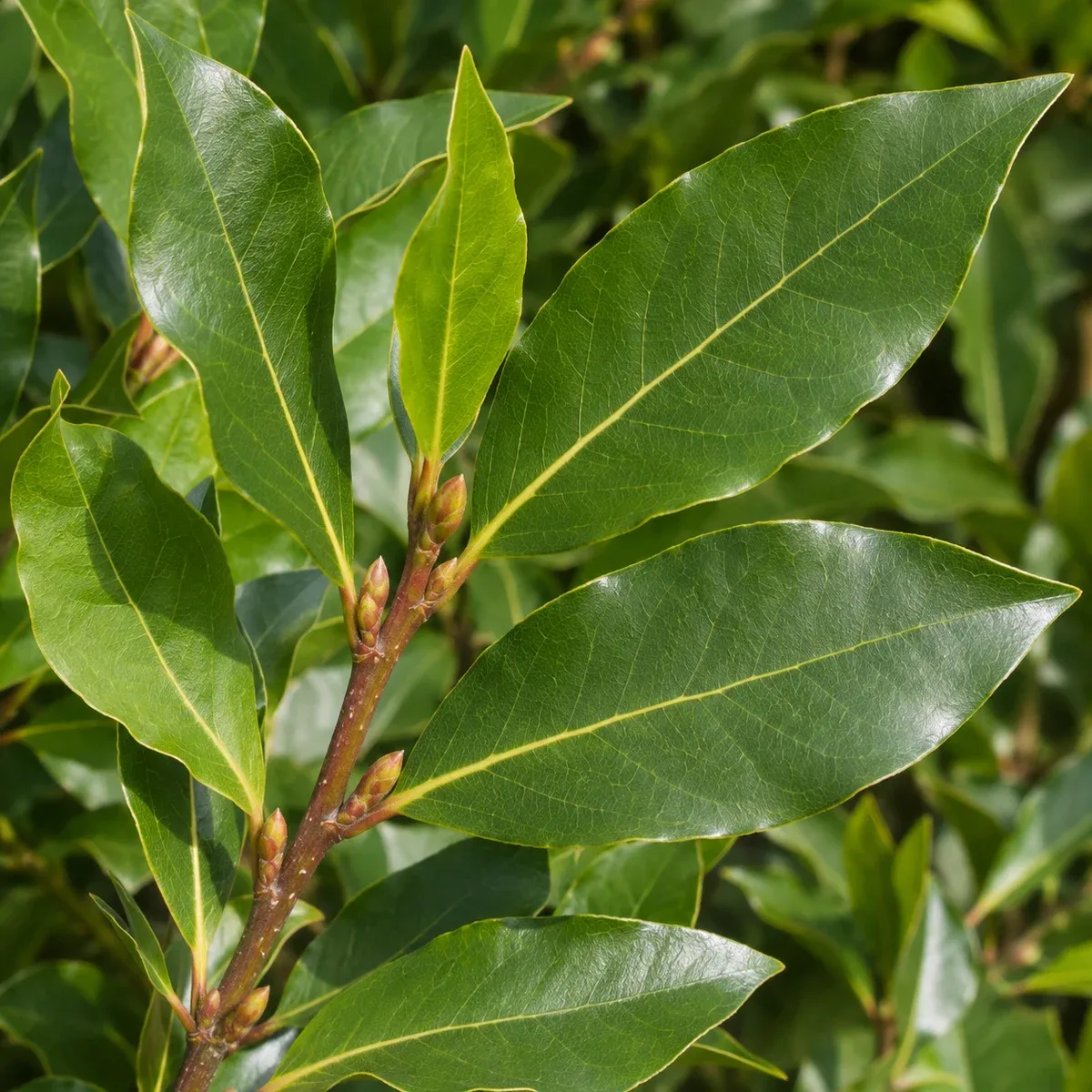
Culinary bay laurel is Laurus nobilis. This evergreen shrub can grow into a tree: the choice between planting in the ground or in a container affects both the space it will need and its winter protection.
Adapt this guidance to your garden’s climate and conditions.
Choosing Laurus nobilis for cooking
Purchase a plant explicitly labelled Laurus nobilis and keep a record of where it came from. The SNHF confirms the culinary use of its leaves. The name “laurel” alone does not extend this use to another shrub: do not harvest from a plant of uncertain identity and do not use taste as a test. This guide concerns an identified cultivated plant. SNHF
Without pruning, bay laurel reaches approximately 10 m at French latitudes, according to the SNHF. Before planting, plan for its future crown, pathways, and access for harvesting; a few leaves do not justify planting it in a cramped space between annual vegetables. SNHF
Ground or container: decide before planting
Choose a sheltered location, in full sun or light shade, with soil that drains water. Plant when the soil begins to warm and allows establishment before winter, adjusting the timing to the local climate. In persistently damp or very cold sites, a movable container makes it easier to find suitable shelter. RHS
Choose a container with drainage holes, slightly larger than the root ball, and fill it with free-draining, loam-based potting compost. No single pot size suits every stage of growth. Move up to larger pots gradually; the RHS suggests repotting every two to three years. Consider the container’s weight before choosing its position. RHS
Monitoring water, nutrition, and shape
Water after planting and during very dry spells while the plant is establishing. In containers, check watering and feeding needs regularly, and move the plant into larger pots as it grows. A plant in the ground needs different care from one with roots confined to a pot. SNHF
An established plant in the ground generally does not require additional fertiliser; a potted plant benefits from feeding during growth, following the product instructions. Check the root ball before each watering, without letting it become waterlogged. RHS
Trim shoots that exceed the desired shape during growth. Bay laurel tolerates harder pruning to reduce its size; for branches damaged by frost, wait for regrowth before removing affected parts. Use the local resumption of growth to interpret the RHS’s seasonal advice, rather than copying its months. RHS
Propagating and understanding flowering
Starting with a young plant is the simplest approach. For sowing, the SNHF uses fresh seeds soaked for one day, then sown in seed compost. The RHS describes growing from seed as slow and tricky; Wisconsin notes irregular germination. Do not expect rapid sprouting. SNHF, RHS, Wisconsin
Wisconsin also describes cuttings from partially hardened shoots, which may take several months to root. Male and female flowers are borne on separate plants; a flowering bay laurel does not necessarily bear fruit. Wisconsin
Harvesting leaves and preparing for winter
Harvest healthy leaves as needed, fresh or for drying, then remove them from the dish before serving. RHS
The SNHF booklet advises drying each species separately in a dark, dry, and well-ventilated space. Turn the harvest to ensure even drying, then store the leaves completely dry in a labelled container, protected from light. SNHF
Preparing the container and checking the future shelter
Before cold weather arrives, check the container’s weight, the route for moving it, its drainage holes and the condition of the root ball. The RHS notes the vulnerability of roots in containers to prolonged cold and damp: prepare to move it to a more sheltered location before handling becomes difficult. A greenhouse, porch or spot sheltered by a wall are options to compare against the expected temperatures; none can be assumed to stay frost-free in every situation.
The SNHF mentions an unheated greenhouse. The University of Wisconsin describes two distinct approaches: in a cool room, it limits watering to prevent complete drying; in a warmer room, it requires more light and watering adapted to the plant’s activity. Measure the minimum temperatures of the shelter and observe its light rather than choosing solely based on its name. A dark, warm space does not replicate the cool overwintering described.
Check the root ball and leaves regularly, and make sure there is no standing water. Keep the plant accessible; in a greenhouse, make sure you can also ventilate according to conditions. Do not permanently close all openings to protect a single pot. Do not apply American hardiness zones as a guarantee for your garden. RHS, Wisconsin
Yellowing or curled leaves: observe before acting
Check moisture, water drainage, and root congestion. The RHS lists several possible explanations for yellow or marked leaves; colour alone does not indicate a deficiency. RHS
The SNHF mentions psyllids, which can curl leaf edges, and scale insects. Look for insects or other consistent signs before concluding; have persistent decline assessed. The vegetable garden disease guide helps document symptoms. SNHF
This shrub occupies its space long-term. Annual rotation is not suitable; when replacing, first examine the health history and drainage. Consider companion plants based on their mature size and water needs.
Key points for this crop
Practical guidance
- Culinary identity
- Laurus nobilis, only from an identified source
- Size
- Approximately 10 m without pruning in the ground, depending on the site
- Site
- Sheltered location and well-drained soil
- Harvest
- Evergreen leaves, used fresh or dried
Sources and references
- Bay laurelSNHF, Pierre Barandou, Ornamental Trees and Shrubs Section Accessed on 18 October 2026.
- How to grow bayRoyal Horticultural Society, in English Accessed on 18 October 2026.
- Sweet Bay, Laurus nobilisUniversity of Wisconsin–Madison Extension, Susan Mahr, revised October 2026, in English Accessed on 18 October 2026.
- Aromatic plants: a world of flavours within reachSNHF, vegetable and fruit section, April 2023 Accessed on 18 October 2026.