
The vegetable garden notebook / Crops
Growing anise: direct sowing and harvesting seeds
Anise is an annual grown for its leaves and, especially, its aromatic seeds. To obtain mature seeds, start early enough once cold weather has passed, and leave the flower stalks until the seeds are ripe.
Adapt this guidance to your garden’s climate and conditions.
Identifying Anise and Choosing Your Harvest
Purchase seeds of Pimpinella anisum. This annual member of the Apiaceae family provides leaves and seeds used in cooking. Star anise (Illicium verum) is a tree from a different family: it does not follow this sowing and harvesting method. An aniseed scent alone is not sufficient to select the species. NC State, Kew
For a few fresh leaves, keep some plants accessible for cutting. For seeds, set aside plants that you will allow to flower. A crop sown very late may not necessarily have a long enough season to mature. Iowa, RHS
Sowing After Frosts, Without Disturbing the Roots
Prioritise direct sowing in the final location, in full sun, once the risk of frost has passed. The RHS highlights sensitivity to transplanting. If your season is short, starting under cover in individual pots is possible, but losses during planting may still occur: keep the root ball intact. RHS
Use fresh seeds: Johnny’s indicates a rapid decline in viability after two years. Sow thinly at about 6 mm deep, maintain moisture, then thin out when the young plants reach about 7 to 8 cm tall. Their guideline is about 15 cm between plants and 45 cm between rows. Johnny’s indicates seedling emergence in 6 to 14 days at 21 °C; colder soil may slow it down. Johnny’s
If no seedlings emerge, first check the batch age, moisture, temperature, and depth. Do not sow again over the same spot without first checking these conditions. The sowing guide helps organise observations.
Soil, Mature Plant Spacing, and Container Growing
Prepare light, well-drained, and moderately fertile soil. Johnny’s indicates a height of about 60 cm; the RHS also describes a bushy habit around this size. Allow the developing seed heads enough light and keep them accessible. Johnny’s, RHS
Iowa confirms the possibility of container growing. Sow in a pot with drainage holes that is large enough for the whole growing season, then thin the seedlings. Check compost moisture and drainage more carefully than you would in the ground. Iowa
Water, Nutrition, and Supporting Seed Heads
Keep water available without waterlogging the soil, especially during establishment. Adjust watering based on rainfall and observed drying with the watering guide. The RHS’s preference for moist, well-drained soil does not mean leaving a saucer permanently full of water. RHS
Moderately fertile soil is sufficient as a starting point; do not automatically add fertiliser to obtain more seeds. Iowa notes that for aromatic plants, overfeeding can promote leaves at the expense of aroma. Weed around young seedlings so they have room to grow. Johnny’s, Iowa
Pruning is not necessary. If the flower stalks start to flop, support them to keep the seeds off the ground. Do not prune back seed-bearing plants: the white flowers must continue developing until the fruits form. RHS
Harvesting Leaves and Then Mature Seeds
Cut a few leaves once the plants are sufficiently developed and use them fresh. For seeds, Johnny’s indicates at least 130 days of growth in their production schedule: this is a general guideline, not a guarantee after a precise number of days in France. Iowa, Johnny’s
Treat harvesting and final drying as separate stages:
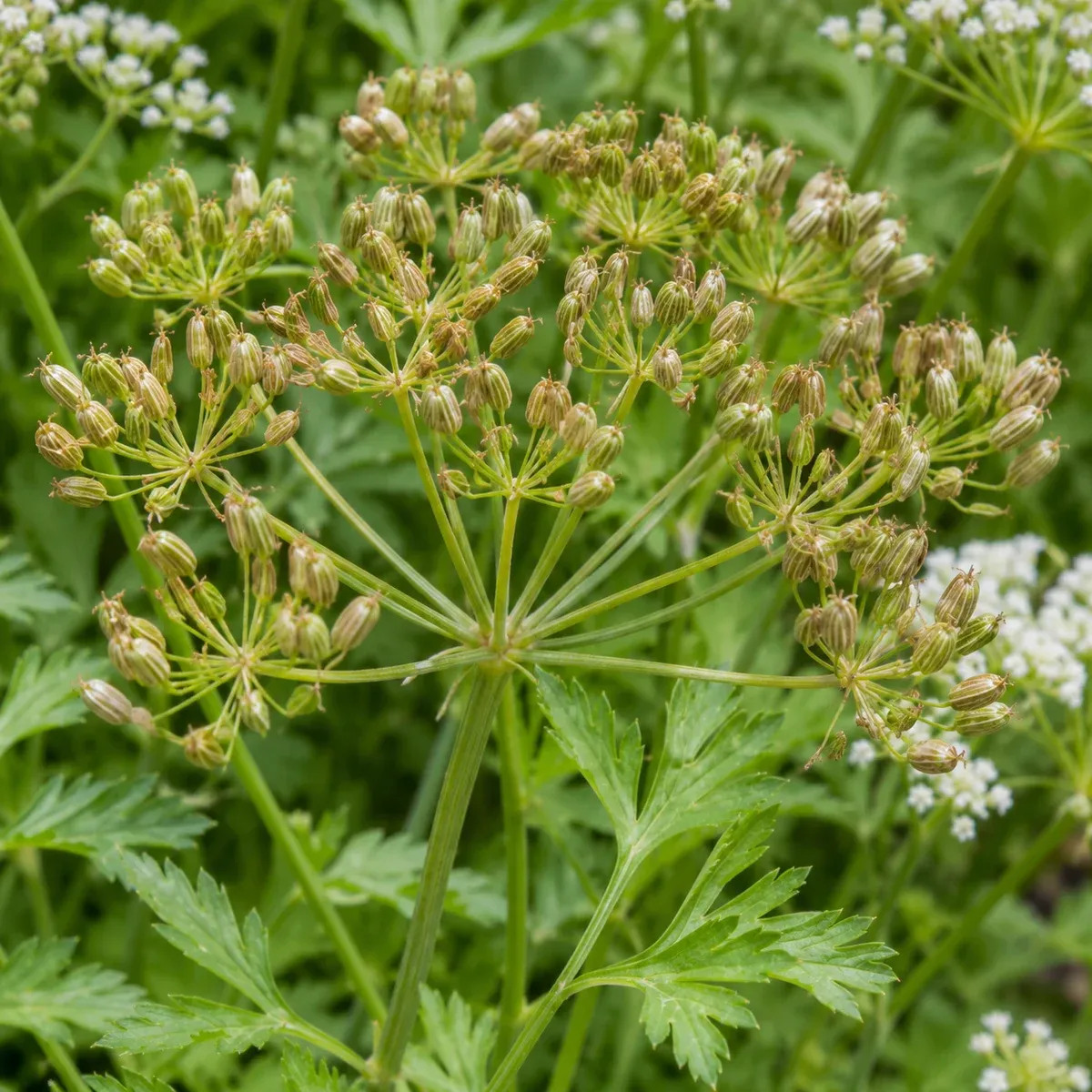
- Observe the fruits on the heads. Johnny’s gives the start of greying at their tips as a harvest signal; Iowa describes mature seeds as brown. These are two descriptions of maturity, not two colours you must wait for in sequence. Johnny’s guidance is to harvest before the seeds turn black. Johnny’s, Iowa
- Collect the mature heads. Iowa’s annual harvest section recommends collecting seed heads when they brown, then drying the seeds after collection: the entire drying process does not need to occur on the plant. Iowa
- Air-dry the seeds. For anise, Iowa specifies thoroughly draining seeds if they have been washed. Wait for complete drying before any airtight storage, in a cool, dry place, protected from light; the “Storage” section notes the risk of mould from still-damp harvests. Iowa
If part of the batch is to be used for resowing, consult harvesting and storing your seeds to plan how to label and store it.
Monitoring Damage and Preparing for the Next Season
The RHS lists aphids, slugs, snails, mice, powdery mildew, and downy mildew among possible issues. Look for signs of damage or visible organisms before drawing conclusions from colour alone; note the growth stage, where the damage occurs and the condition of the soil. This list does not justify any systematic preventive treatment. RHS
Anise completes its cycle within the year: do not rely on division or overwintering a rootstock for the next harvest. Keep an identified batch of seeds if you wish to resow. Record its family, Apiaceae, in your plan and consider successions with the crop rotation guide. NC State
Key points for this crop
Practical guidance
- Species
- Pimpinella anisum, an annual in the Apiaceae family
- Start
- Direct sowing with fresh seeds; avoid disturbing the roots
- Spacing
- Johnny’s guideline: about 15 cm between plants and 45 cm between rows
- Soil
- Full sun, light, moderately fertile, and well-drained soil
Sources and references
- Pimpinella anisumRoyal Horticultural Society, in English Accessed on 18 October 2026.
- Anise — Key Growing InformationJohnny’s Selected Seeds, seed producer, in English Accessed on 18 October 2026.
- Growing, Harvesting, and Drying HerbsIowa State University Extension, Linda Naeve and Cynthia Haynes, revised September 2026, in English Accessed on 18 October 2026.
- Pimpinella anisumNorth Carolina State University, Extension Gardener Plant Toolbox, in English Accessed on 18 October 2026.
- Illicium verum Hook.f. — General informationRoyal Botanic Gardens, Kew, Plants of the World Online, in English Accessed on 18 October 2026.