
The vegetable garden notebook / Techniques
BRF in the Vegetable Garden: Understanding the Material Before Mulching
BRF (bois raméal fragmenté) comes from shredded branches. In the vegetable garden, its origin, condition, and application method matter as much as its name: covering the soil and mixing in fresh wood are two different practices.
Adapt this guidance to your garden’s climate and conditions.
Practical steps
- Identify
Check the origin of the branches and the condition of the shredded wood.
- Choose the Area
Consider sowings, young plants, and shallow roots.
- Keep on the Surface
Remove the mulch before working the soil.
- Assess Applications
Do not automatically add nitrogen when using BRF.
What Is BRF Exactly?
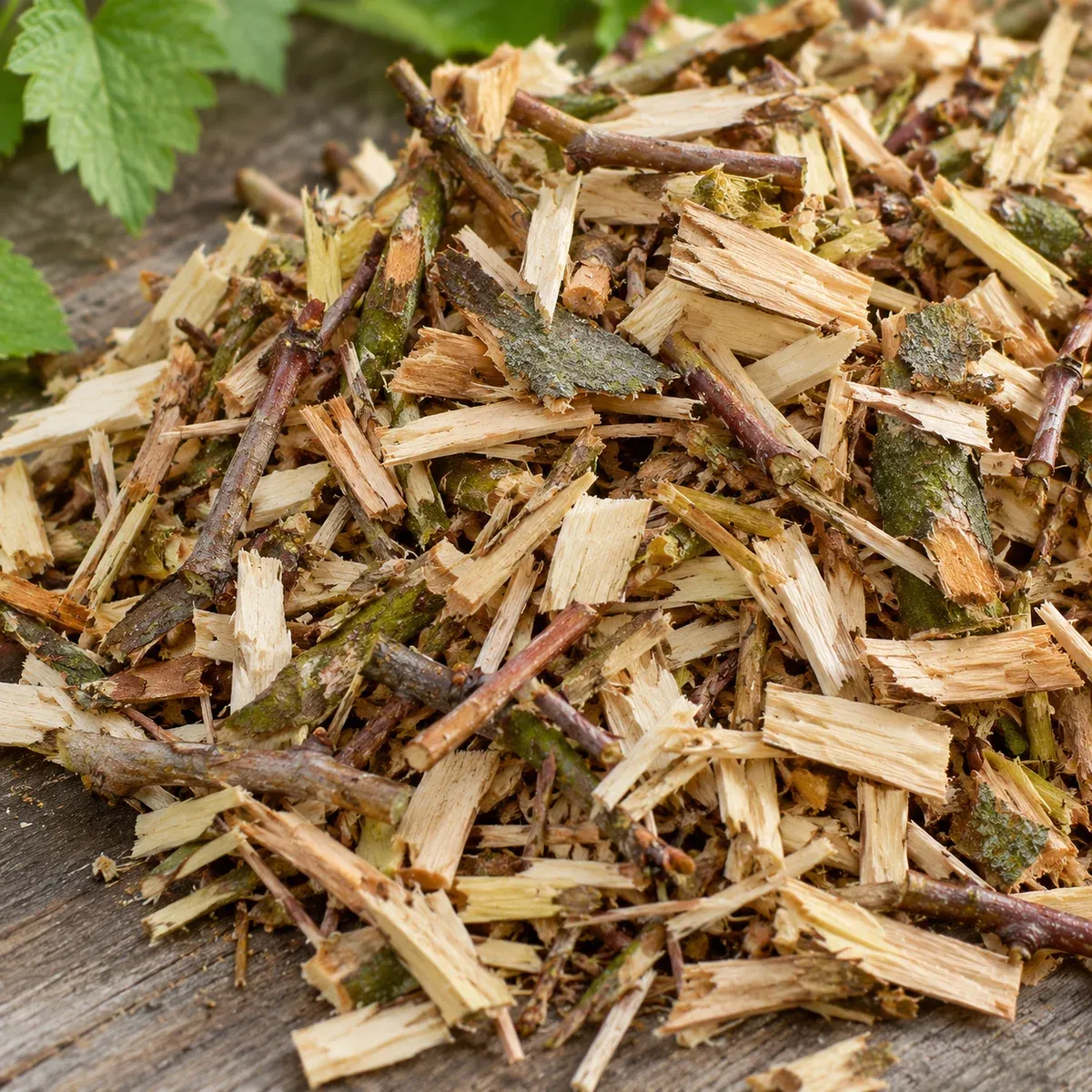
Ramial chipped wood (BRF) refers to shredded branches. The Ephytia factsheet from INRAE defines it as non-dried, non-composted wood from branches less than 7 cm in diameter. This measurement applies to branches before shredding, not the size of the fragments.
Wood chips from trunks, sawdust, or bark do not become BRF based solely on appearance. Before using shredded material, check the plant species and parts shredded, as well as any storage or composting. The name alone does not describe its current condition.
Mulching and Incorporation: Two Distinct Uses
When mulching, fragments remain on the soil surface. Incorporating them through digging mixes them into the root zone where plants feed. The RHS distinguishes these practices: incorporating woody material may temporarily reduce nutrient availability for plants.
Microorganisms use nitrogen, among other elements, to decompose organic matter. This use of nitrogen can leave less available to plants, a mechanism known as “nitrogen drawdown” explained by Jardiner Autrement. However, keeping shredded material on the surface does not automatically make it suitable for all crops.
Where Can You Use It in the Vegetable Garden?
As a precaution, the RHS advises avoiding woody mulches on beds with shallow-rooted vegetables and annual flower beds. Their observation of minimal impact on well-established plants does not apply to all young vegetables.
To start with, reserve this material for an area you will not be planting immediately. If you plan to sow or transplant soon, choose another mulch using the general guide. This allows you to prepare rows without accidentally mixing fragments into the soil.
A limited use: covering an empty area, then retrieving the shredded wood
For a first trial, select a small area that will remain free of sowing or transplanting until your next spring preparation. Note when you will next work on the area before laying the mulch. The goal is a recoverable cover without mixing wood into the soil; it is not about relying on its disappearance over winter. The RHS precautions regarding shallow-rooted vegetables remain applicable. RHS
When sowing resumes, gather surface fragments with a rake, then finish by hand where they mix with the soil: aim to clear the seedbed without burying the shredded wood. Set it aside for another suitable use or for composting woody material. Jardiner Autrement requires careful removal during sowing and planting; the remaining shredded wood should not be used as seed compost. Removal · Composting
If your primary need is to cover a permanent pathway, compare this with the wood chip guide to select the material based on use, without requiring it to be BRF.
Fresh BRF, aged shredded wood, and compost: check the condition
Some freshly shredded wood may contain substances that hinder germination or the growth of young plants. The RHS distinguishes origins and recommends ageing before certain uses. This precaution concerns these substances but does not prove that all stored shredded wood immediately provides nitrogen.
Composting goes further: the RHS describes the transformation of woody material into crumbly, well-decomposed compost. It notes that the proportion of young wood influences the process duration. A few months of storage does not automatically qualify the material as mature compost. Identify the actual condition before deciding on its use.
Preparing a Small Trial Area
Once the area and material are chosen:
- Weed, removing underground parts of unwanted perennials.
- Check the soil: it may be damp, but postpone application if it is waterlogged or frozen, following RHS guidelines.
- Spread on the surface, keeping shoots and plant bases clear.
- Remove fragments before sowing or soil work, in line with Jardiner Autrement precautions.
For this trial, aim for an even cover without gaps exposing bare soil, while staying within the area’s boundaries and keeping shoots uncovered. Inspect after settling; fill gaps rather than adding a new layer everywhere. Adjust the BRF layer to fragment size and intended use on your vegetable bed.
Record the origin, date, and installed thickness. The rates from the tropical Ephytia factsheet, which mentions mango wood, are not a recipe for a vegetable bed in France.
Should You Always Add Nitrogen?
No: the RHS does not recommend automatic additional fertilisation before applying woody mulch. Crop management must also consider soil fertility and plant needs; the volume of BRF alone does not determine the dose.
The 2010 research synthesis separates trials by climate, soil, and application method. It highlights the lack of references for precise recommendations. A nitrogen supplement useful in one experimental setup does not become a universal correction for all gardens.
What Results Can You Expect?
The same synthesis notes numerous variables: species, branch diameter, fragment size, and quantity applied. It does not demonstrate a general superiority of BRF over other organic amendments.
On your trial area, observe what remains of the mulch and the soil condition before replenishing. Compare your observations with a neighbouring area managed differently, without attributing all differences to BRF. Prepare the next crop using the sowing and watering guides.
Sources and references
- Tropifruit — Examples of Mulching: Ramial Chipped WoodINRAE, Ephytia Accessed on 16 October 2026.
- Woody waste: using as a mulchRoyal Horticultural Society (RHS), in English Accessed on 16 October 2026.
- Woody waste: shredding and compostingRoyal Horticultural Society (RHS), in English Accessed on 16 October 2026.
- Effects of Ramial Wood Application on Plants and Soil: A Review of Experimental ResultsB. G. Barthès, R. J. Manlay and O. Porte, Cahiers Agricultures, 2010; IRD archive Accessed on 16 October 2026.
- The Effects of Mulching in the GardenJardiner Autrement, SNHF Accessed on 16 October 2026.
- How to mulch with organic matterRoyal Horticultural Society (RHS), in English Accessed on 16 October 2026.