
The vegetable garden notebook / Crops
Growing salad burnet: planting and encouraging fresh leaves
Salad burnet is a perennial grown for its young leaves with a cucumber-like flavour. Keep a clump accessible and choose between removing the flowers to encourage leaf growth or retaining a few seed-bearing stems.
Adapt this guidance to your garden’s climate and conditions.
Choosing an identified salad burnet
Purchase a seed packet or plant labelled Sanguisorba minor or its synonym Poterium sanguisorba. This guide covers salad burnet cultivated for its leaves, not a wild plant identified only by the common name “burnet”. The RHS classifies it among perennial Rosaceae for culinary use. RHS
The University of Illinois describes a leafy clump of approximately 30–40 cm; flower stems may exceed the leaf level. Plant it within easy reach of scissors, along a border where it will remain for several years. Its flowering does not mean the entire plant must be uprooted at the end of the season. Illinois, RHS
Sowing, planting or dividing
For sowing, the Silenes grower’s catalogue recommends an outdoor nursery bed in spring or autumn. Choose a period without rapid drying or waterlogged soil; sow thinly and keep the surface moist until seedlings emerge. Follow the packet instructions for sowing depth. The catalogue does not prescribe any specific stratification for this entry. Silenes
If seedlings fail to emerge, this does not necessarily indicate a need for cold treatment. Check the age and storage conditions of the batch, drying out, and sowing depth before retrying.
To save time, plant a labelled specimen with its root ball, water to aid establishment, and allow space around it. NC State indicates a mature spread of 30–60 cm: this helps reserve space for a clump without crowding neighbouring plants. This size is not a mandatory sowing distance. NC State
Division also allows multiplication of a healthy clump. Separate rooted sections, replant them, and support their establishment. The University of Illinois suggests dividing every three to four years to maintain vigour; intervene particularly when the plant becomes less productive. Illinois
Sun, well-drained soil and container growing
Prefer full sun and soil that drains excess water. The RHS notes good tolerance to various soils, including calcareous ones. Silenes describes conditions of low fertility, dry to moist: heavy fertilisation is not necessary for establishing this crop. RHS, Silenes
Container growing is mentioned by NC State. Use a pot with drainage holes, a well-draining growing medium, and a location allowing the clump to expand. Repot or divide if it becomes root-bound. NC State
Encouraging young leaves without exhausting the clump
Water during establishment and monitor the soil thereafter. The University of Illinois notes tolerance to dry conditions once established, while the NC State factsheet contains contradictory information on drought resistance. To produce tender leaves, do not test its resilience: check the root ball and water if it dries out, particularly in pots. Illinois, NC State
If harvesting leaves, remove inflorescences as they form. This encourages leafy growth and limits self-seeding. To collect your own seeds, allow a few heads to mature on an identified plant; remove others if you wish to control the location of new clumps. Illinois
Cutting back old foliage may stimulate new growth. Wait until the plant has regenerated leaves before another substantial harvest. A slowdown in growth requires checking water, competition, and root condition before adding fertiliser. NC State
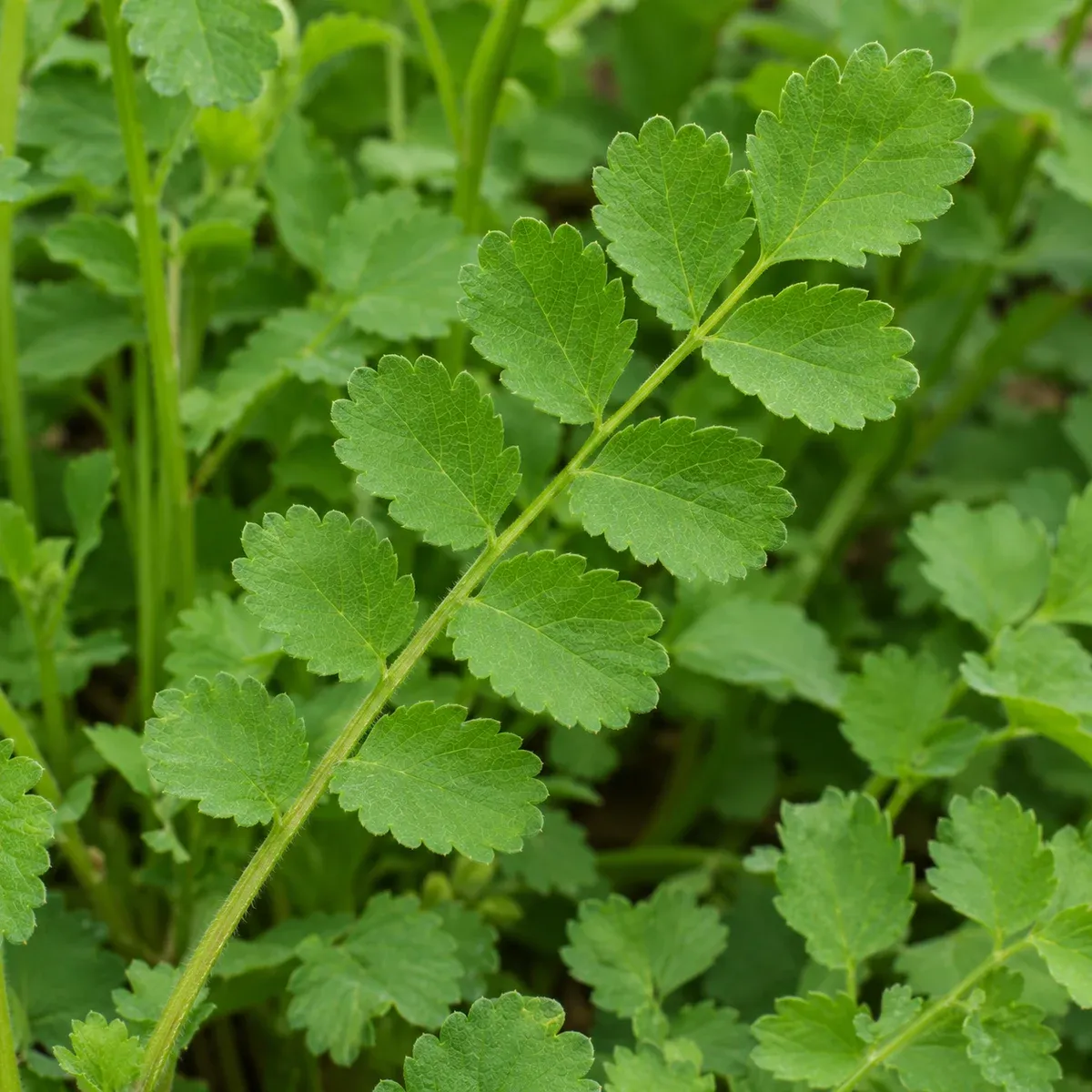
Harvesting fresh and locating the plant after winter
Regularly pick small quantities of tender young leaves; older leaves become tougher and more bitter. Use them fresh in salads, cold sauces, or other dishes. For this herb, the University of Illinois source prioritises fresh use; no domestic long-term preservation method is validated in this guide. Illinois
The rootstock is perennial and its foliage deciduous, according to the RHS. Keep a marker near the plant during the off-season and observe regrowth before concluding it has died. RHS
Monitoring the clump and maintaining its space
The RHS reports few common pests or diseases, and NC State does not indicate any serious recurring issues. However, a plant that yellows or collapses warrants inspection: check the undersides of leaves, the base, moisture, and roots. These signs alone do not identify a specific organism or treatment. RHS, NC State
Keep access clear for cutting and weeding; remove excess seedlings before they crowd neighbouring plants. This permanent clump primarily requires managing competition and water. The companion planting guide helps organise neighbours without attributing an automatic repellent effect to salad burnet.
Key points for this crop
Practical guidance
- Cultivated species
- Salad burnet: Sanguisorba minor, synonym Poterium sanguisorba
- Lifecycle
- Perennial in the Rosaceae family
- Establishment
- Sowing, identified plant or division of a healthy clump
- Desired harvest
- Tender young leaves used fresh
Sources and references
- Sanguisorba minorRoyal Horticultural Society, in English Accessed on 18 October 2026.
- Salad Burnet — Poterium sanguisorbaUniversity of Illinois Extension, in English Accessed on 18 October 2026.
- Sanguisorba minorNC State Extension, in English Accessed on 18 October 2026.
- Catalogue February 2026 — Salad Burnet, Poterium sanguisorbaVirginie Benoit, Silenes — Graines du Morvan, seed collector Accessed on 18 October 2026.