
The vegetable garden notebook / Crops
Growing mint: pots, planting, division and harvest
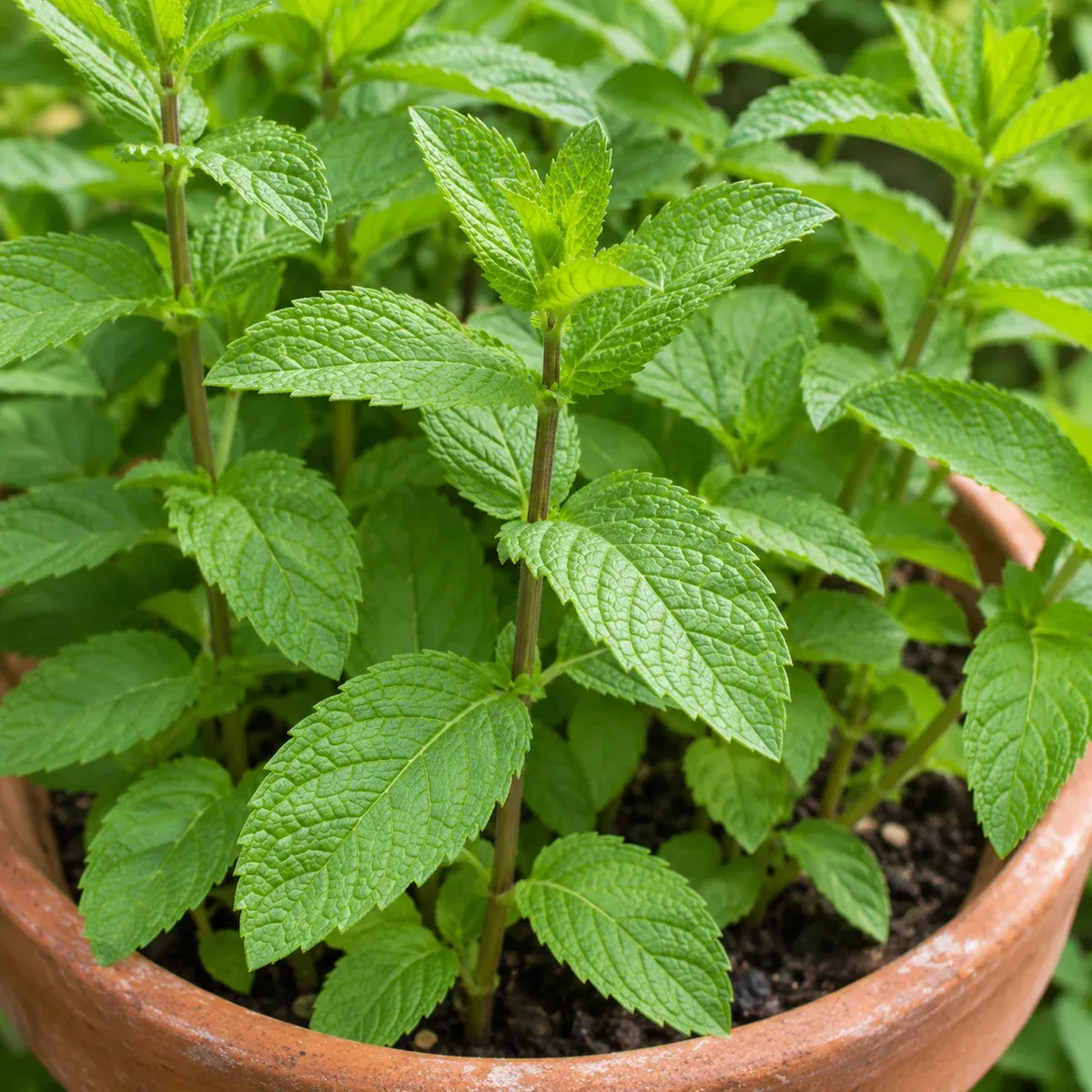
Mint grows quickly and spreads via its underground stems. A container and regular monitoring allow it to be grown near the kitchen without taking over the entire vegetable garden.
Adapt this guidance to your garden’s climate and conditions.
Which mint to plant for cooking?
Choose a mint identified for culinary use, such as spearmint (Mentha spicata) or peppermint (Mentha × piperita). Their aromas differ; Maryland describes a mild flavour for the former and a stronger menthol flavour for the latter.
The common name “mint” is not sufficient to guarantee a plant is edible: the RHS notes that not all species are suitable for this purpose. Start with a labelled plant or a division of known identity.
Where and when to plant mint?
Opt for full sun or partial shade and soil that retains moisture. Mint is perennial and cold-hardy; the SNHF recommends rich, deep soil.
Spring and autumn are favourable periods for planting, according to the RHS. In France, choose a time when the soil is workable and you can monitor establishment: avoid frozen or waterlogged soil, and do not leave newly planted mint to face summer drought without care.
How to prevent mint from invading the vegetable garden?
Mint spreads via its rhizomes, underground stems. For a small area, start with a dedicated pot. Maryland suggests a diameter of 12 to 16 inches, approximately 30 to 40 cm. Select a pot with drainage holes and sufficient depth, as advised by the SNHF.
A buried container can limit expansion but requires monitoring: leave the rim above ground and cut back stems that escape before they root outside. This precaution is described by Maryland. No buried pot eliminates the need to check surrounding growth.
If mint has already spread, remove shoots with as many rhizomes as possible as soon as they appear, advises the RHS. Allocate it a space in your vegetable garden plan rather than relying on neighbouring crops to contain it.
Preparing the dedicated pot and monitoring establishment
Choose the container before taking the plant out of its pot: use the 30 to 40 cm diameter suggested above and make sure the drainage holes work. The RHS advises filling it with peat-free multipurpose or loam-based potting compost. Pure garden compost is not a suitable growing medium. Plant according to the instructions, then place the pot in full sun or partial shade where you can monitor the substrate and stems. RHS · Maryland
During establishment, check the pot’s moisture as described below and observe new shoot growth. A wilted leaf does not automatically require watering: first verify whether the root ball is dry or overly wet.
How to water mint in a pot?
Keep the substrate consistently moist during growth. A pot dries out faster than open ground: monitor it closely in hot, dry weather. Move it to a shadier spot during heatwaves to reduce drying. RHS
Water needs depend on the container, wind, and exposure. Check the root ball before intervening; the watering guide helps adjust applications. The SNHF also notes diseases encouraged by excessive moisture: keeping the soil moist does not mean leaving the roots sitting in water.
Rust: observe both sides of leaves and shoots
An isolated brown spot is not sufficient to identify rust. From spring to autumn, examine the upper and lower sides of leaves, stems, and new shoots. The RHS describes powdery orange, then yellow or black pustules, as well as pale, deformed spring shoots; leaves may later die or drop.
Photograph both sides and track progression. Distinguish these pustules from simply dried foliage or chewed leaves: in the latter case, also check which pests are actually present. The RHS reports occasional insect damage on mint. Simultaneously check the pot’s moisture and the season before attributing any decline to disease.
If rust is confirmed, the RHS recommends promptly removing affected plants with their rhizomes before black spores form. Reserve division for healthy clumps: removing a few spotted leaves will not clear rust from an affected clump. If in doubt, have your observations assessed before replacing the plant.
When to divide and repot mint?
The SNHF suggests dividing clumps in spring. Unpot a healthy plant, separate portions with roots and shoots, then replant them. Maryland confirms that division and cuttings work for both spearmint and peppermint.
Refresh the potting compost and divide when the plant becomes overcrowded: frequency depends on vigour and available volume. The RHS recommends this every few years rather than adhering to a fixed schedule for each pot.
Harvesting, cutting back and overwintering
Regularly pick tender tips: this encourages a bushy habit. For harvests intended for drying, Maryland recommends the start of flowering; the SNHF advises just before. Monitor buds, then harvest just before or as the first flowers open.
From harvesting to drying
The NCHFP classifies mint among high-moisture herbs that may mould if dried too slowly. Sort leaves, discard damaged or soiled ones, rinse in cool water, then gently remove excess moisture. For a dehydrator, spread in a single layer and follow the “Herbs” method and the appliance’s instructions, with checks during drying. NCHFP
The endpoint is a dry, brittle leaf that crumbles easily; do not seal a batch that is still pliable and damp. Store in an airtight container, in a cool, dry, dark place. Do not use mouldy batches. Regularly inspect stored herbs. NCHFP
In winter, the stems may dry out while the crown remains alive. Cut back old, withered stems between late autumn and the resumption of growth in spring. This natural dormancy does not guarantee fresh leaves outdoors year-round. RHS
Key points for this crop
Practical guidance
- Mints covered
- Identified culinary mints, notably spearmint and peppermint
- Cycle
- Perennial; stems may die back during winter
- Location
- Full sun to partial shade, moist soil
- Expansion
- Dedicated pot and control of escaping stems
Sources and references
- MintFrench National Horticultural Society Accessed on 18 October 2026.
- How to grow mintRoyal Horticultural Society, in English Accessed on 18 October 2026.
- Growing Mint in a Home GardenUniversity of Maryland Extension, in English Accessed on 18 October 2026.
- Mint rustRoyal Horticultural Society, in English Accessed on 18 October 2026.
- Herbs — DryingNational Center for Home Food Preservation, University of Georgia, in English Accessed on 8 November 2026.