
The vegetable garden notebook / Crops
Growing lovage: making room and harvesting leaves or seeds
Lovage is a perennial with a celery-like flavour that forms a large clump. Allocate it a permanent, moist spot, then decide between harvesting young leaves or allowing tall seed stalks to develop.
Adapt this guidance to your garden’s climate and conditions.
Which lovage to choose and where to plant it?
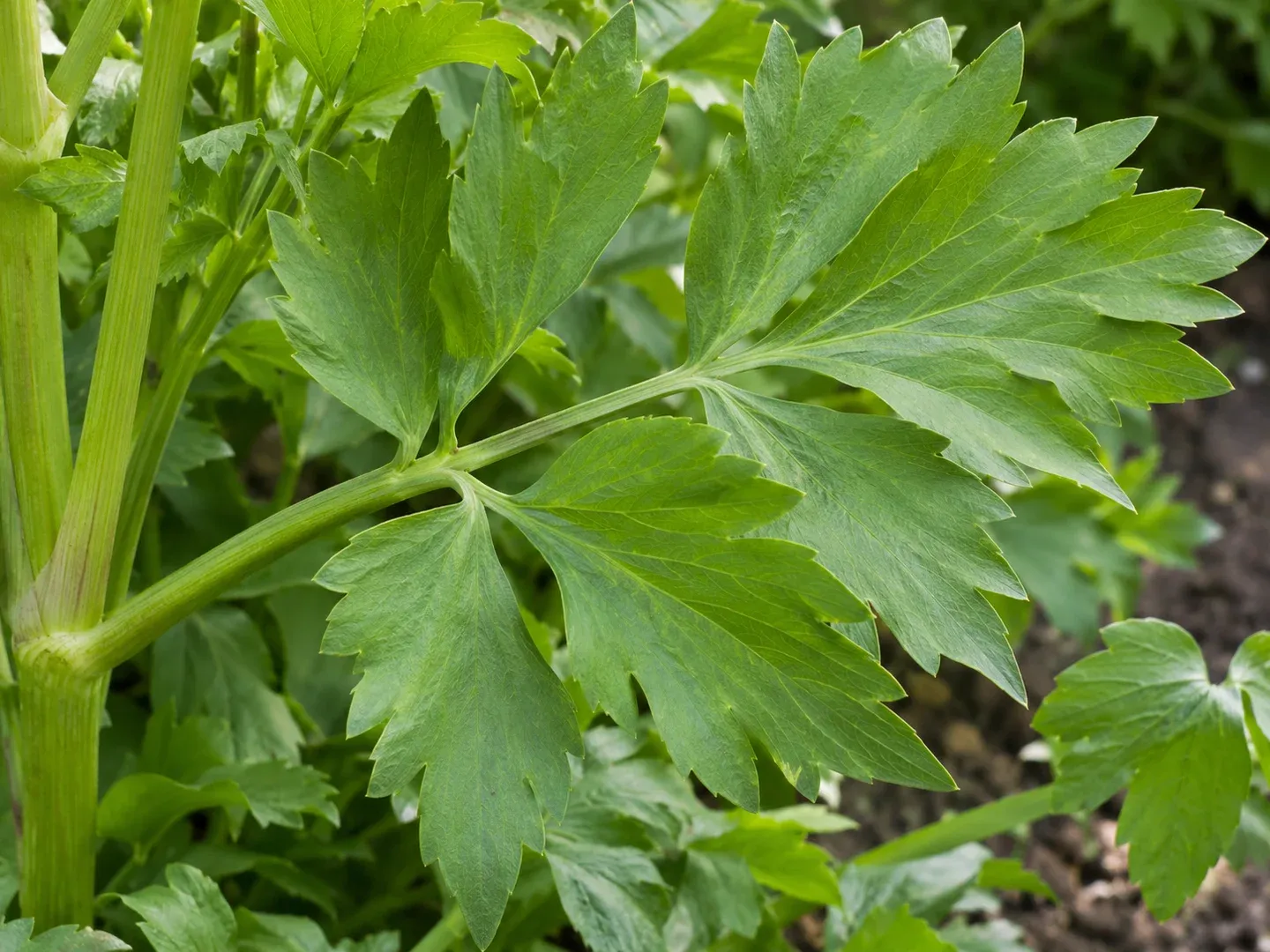
This guide covers Levisticum officinale, a large perennial herb with a flavour similar to celery but stronger. Purchase identified seeds or a plant; a leaf’s resemblance to celery is not a reliable identification method for foraging. Illinois describes stalks of yellow flowers in summer and vigorous growth. Illinois
The clump can reach 1 metre in width and 2 metres in height. Allow this much space from the start, in a border or at the edge of the vegetable garden, with access for harvesting. Small plants spaced for initial growth do not reflect their final size. NC State
Sowing, planting, or dividing
A small spring sowing
The RHS describes a spring start in pots or seed trays filled with seed compost. Sow only a few seeds. Before raising more plants, check that you can give each clump room to reach its mature width of about one metre. Follow the seed packet for how deeply to cover the seeds and what temperature to use; this source gives no lovage-specific figures, so none should be invented.
Monitor the sowing closely, then transfer seedlings to individual pots once they grow vigorously. Move plants outdoors when they are well-rooted and actively growing, after hardening off those raised indoors. The RHS suggests planting out in late spring or early summer within its British context; prioritise the growth stage and favourable establishment conditions over a national date. An initial spacing of 30 to 45 cm cited by this source is not the permanent space for a mature clump: reduce numbers or plan for relocation.
The RHS advises waiting until the second year for the first small harvests from seed-grown plants. A purchased plant can be harvested lightly sooner if it is growing vigorously. RHS
Dividing an established crown
The RHS recommends dividing large clumps in spring. Carefully loosen and lift a healthy crown with a garden fork, then divide it into sections with healthy roots and shoots. Replant promptly and water to aid establishment; monitor for drying out. The RHS’s general perennial division method details this process: it does not justify fragmenting a young crown or propagating a declining plant.
Prefer deep, fertile soil that remains moist without waterlogging. Full sun is suitable; Illinois notes the benefit of light shade for foliage quality. RHS, Illinois
Can it be grown in a pot?
Its vigorous growth is better suited to the ground. For a single plant, the RHS specifies a heavy pot with drainage holes, at least 30 cm wide and deep, filled with loam-based potting compost. Plan for repotting and for keeping the tall stems stable: this minimum is not a final pot size. RHS
Watering, feeding and choosing what to harvest
Water during establishment, then during prolonged droughts; for pots, keep the mix moist. Mature garden compost on the surface helps retain moisture; a vigorous plant in the ground does not require systematic additional fertiliser. RHS
The decision to water should stem from the condition of the root ball, soil, and weather; the watering guide helps observe these factors together.
To extend leaf harvests, remove flower stalks as they appear. To harvest seeds, allow some to develop. RHS
NC State recommends harvesting during growth to renew leaves, then removing old foliage at the end of the season. Monitor seed maturation to limit new seedlings around the plant. The plant’s condition matters more than a fixed date. NC State
Harvesting leaves or saving seeds
Pick young, more tender leaves and use them fresh in soups, sauces, or cooked dishes. Leaves can also be dried. If your primary goal is to maintain a productive crown, focus harvests on foliage rather than uprooting. Illinois
For seeds, Illinois advises cutting heads when they begin to brown, letting them dry in a paper bag, then separating seeds before storing in a sealed container. Label batches separately and record their origin: seeds for cooking must come from a plant whose identity is certain. Illinois
Winter dormancy or cultivation issue?
The foliage is deciduous. Cut away the withered growth once it has died back and mark the crown’s location to avoid digging it up. Seasonal leaf loss does not indicate plant death. RHS
The RHS lists slugs, snails, celery leaf miner, and leaf spots among potential issues. Inspect young leaves for grazing, possible tunnels, and the distribution of spots; a dry edge or yellow leaf does not provide a definitive diagnosis. Also check soil moisture before considering a health issue. RHS
Document persistent damage using the vegetable garden diseases guide. This multi-year planting does not follow an annual vegetable rotation: keep it away from areas turned over each season. When renewing, the history of a confirmed issue should guide site selection. Companion planting decisions should first consider space, shade, and competition for water.
Key points for this crop
Practical guidance
- Identity
- Levisticum officinale, a culinary perennial in the Apiaceae family
- Mature size
- The clump can reach approximately 1 metre in width
- Soil
- Deep, fertile, moist yet well-drained soil; full sun or light shade
- Winter
- Deciduous foliage; the crown may regrow in spring
Sources and references
- How to grow lovageRoyal Horticultural Society, in English Accessed on 18 October 2026.
- Levisticum officinale — lovageRoyal Horticultural Society, in English Accessed on 18 October 2026.
- Lovage — Levisticum officinaleUniversity of Illinois Extension, in English Accessed on 18 October 2026.
- Garden Lovage — Levisticum officinaleNorth Carolina State University Extension, Plant Toolbox, in English Accessed on 18 October 2026.
- Perennials: dividingRoyal Horticultural Society, in English Accessed on 8 November 2026.