
The vegetable garden notebook / Crops
Growing lemon balm: planting, containing and harvesting the leaves
Lemon balm forms a large perennial clump and can self-seed freely. Allow for this vigour when choosing its position, then decide how to cut it back according to whether you want leaves or flowers.
Adapt this guidance to your garden’s climate and conditions.
Which lemon balm to choose and where to plant it?
This guide covers Melissa officinalis, the lemon-scented culinary lemon balm. Start from seeds or an identified plant. It does not spread in exactly the same way as mint: Illinois particularly highlights its many self-sown seedlings. A pot limits the space taken by the clump but does not prevent seeds from falling around it. Illinois
Allow approximately 45 to 60 cm between plants, a rounded conversion of Utah’s 18 to 24 inches; stems can reach about 60 to 90 cm in height. Choose full sun or light shade and soil rich in organic matter that retains moisture while draining excess water. Light shade may produce more tender leaves. USU
Reserve an accessible spot for pruning and monitoring new seedlings. This perennial does not fit into an annual rotation; choose its neighbours according to their space and water needs, without assuming that lemon balm will protect them from pests. The companion planting guide helps you plan around these constraints.
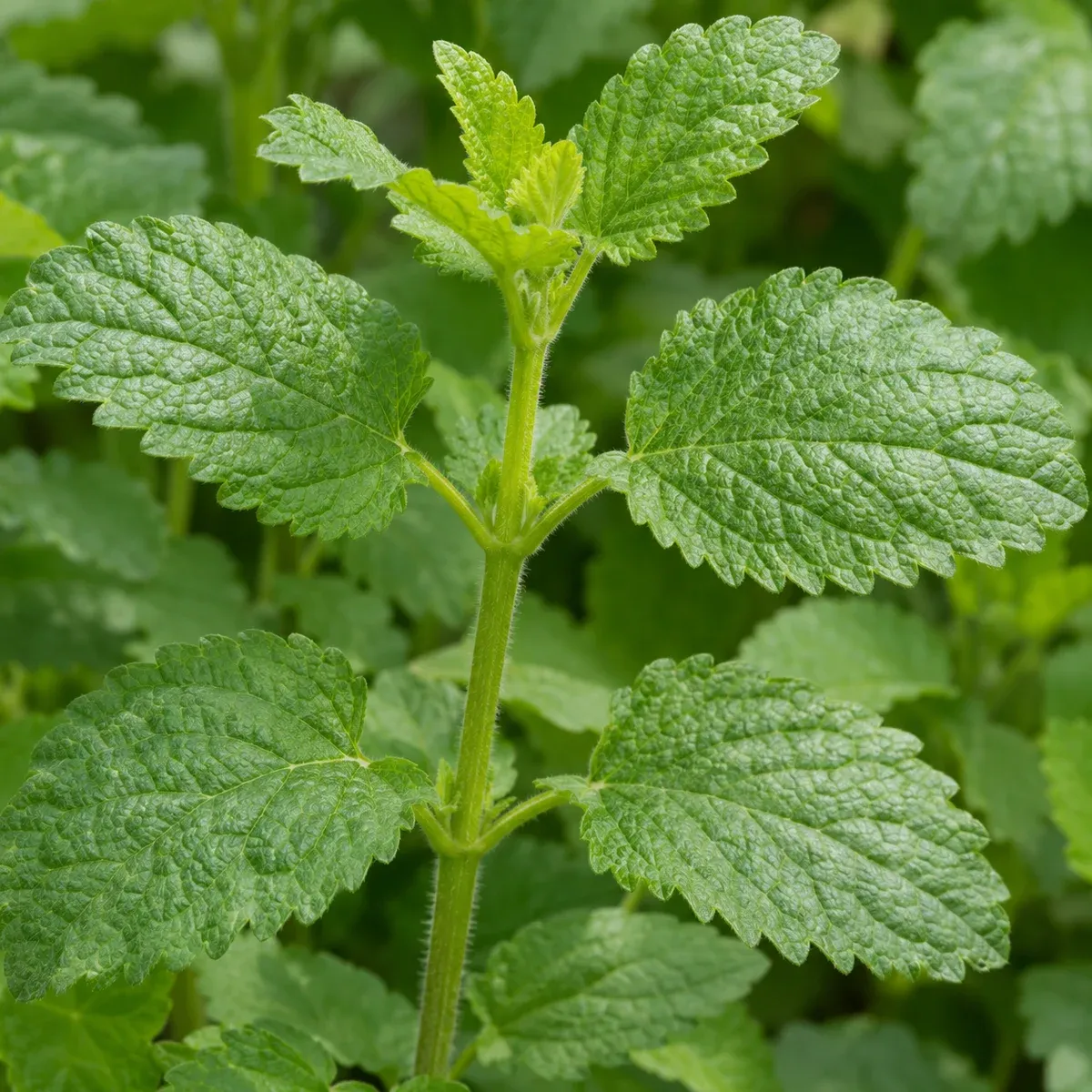
Sowing, planting or dividing a clump
Choose the starting method based on your goal:
- A labelled plant allows you to establish an identified lemon balm, particularly a specific variety not always sold as seeds.
- Dividing a known clump is the preferred choice to preserve the variety’s characteristics. The RHS describes division in spring or autumn; start with a healthy crown and conditions favourable for regrowth.
- Sowing allows you to begin with Melissa officinalis seeds, but the offspring of a named variety may differ from the parent. Do not rely on collected seeds to exactly reproduce a varietal leaf type or fragrance. RHS, selection and propagation
Planting a young plant or a division
Prepare the location and spacing described above. Before moving an indoor-grown plant outdoors, harden it off gradually; plant when the soil is workable and conditions allow it to establish. For division, separate the clump into sections and replant them. Cuttings from young shoots offer another vegetative propagation method. RHS
In a pot, the RHS recommends at least 25 cm in width and depth, with a loam-based potting compost. Plan to renew a clump that fills its container, then monitor its moisture after planting as explained below.
Starting from a few seeds
Sow a small number of seeds under a very thin layer of seed compost, in a bright, moderately warm place. Cover the container with a transparent lid or bag, keep slightly moist, then remove the cover once seedlings emerge. The sowing months in the British guide should not be treated as sowing dates for France. Before moving outdoors, the seedlings need the same hardening off as a purchased plant raised under cover. RHS
Watering without waterlogging and feeding in moderation
After planting, monitor the root ball; in pots, checks must remain regular. Utah advises moist soil without saturation, mulching to limit evaporation, and moderate fertilisation: excessive inputs encourage abundant growth at the expense of fragrance. Do not automatically add fertiliser after each pruning. USU
Observe actual moisture before watering, particularly after rain. The watering guide offers a method to account for soil, weather and container type.
Grow for leaves or let it flower?
The small summer flowers feed bees. If you leave them, remove faded flower spikes before seeds form to limit new lemon balm plants. Periodic division also helps control the clump’s size. RHS
To renew foliage that has become less pleasant, Illinois suggests cutting back about half the height and watering after pruning. Thinning a few stems also opens the clump to air. Adjust the cutting back to the plant’s vigour: a newly planted specimen needs different treatment from a large clump. Illinois
Harvesting, preserving and watching for regrowth in spring
Pick stems as needed, preferably before flowering. Use leaves fresh or freeze some. Illinois
To dry the harvest, separate species and spread them in a dark, dry and well-ventilated space. Only store them once completely dry, in a labelled container kept away from light. The SNHF booklet explicitly lists lemon balm among herbs suitable for drying. SNHF
Foliage naturally dies back with cooling temperatures; the crown regrows in the next season. Cut back dead stems before new growth. Cold, waterlogged soil remains unfavourable despite the plant’s hardiness. RHS
Whitened leaves or a weakened plant: what to check?
Utah mentions powdery mildew, root rot, aphids and mites among possible issues. White deposits or wilting do not alone identify the cause: check moisture, drainage, the undersides of leaves and the progression of marks before intervening. Photograph signs and have persistent damage assessed; the guide to vegetable plant diseases helps compile these observations. USU
Key points for this crop
Practical guidance
- Identity
- Melissa officinalis, perennial with lemon-scented leaves
- Planting
- Full sun or light shade; moist, well-drained soil
- Spacing
- Approximately 45 to 60 cm between plants
- Expansion
- Cut back faded flowers before seed formation
Sources and references
- How to grow lemon balmRoyal Horticultural Society, in English Accessed on 18 October 2026.
- How to Grow Lemon Balm in Your GardenUtah State University Extension, Hyrum Gillespie and Dan Drost, May 2020, in English Accessed on 18 October 2026.
- Lemon Balm — Melissa officinalisUniversity of Illinois Extension, in English Accessed on 18 October 2026.
- Aromatic plants: a world of flavours within reachSNHF, vegetable and fruit section, April 2023 Accessed on 18 October 2026.