
The vegetable garden notebook / Crops
Growing garden cress: sowing, leaves and harvest
Garden cress quickly produces peppery leaves for cooking. It can be grown in soil, in the garden or in containers: several small sowings in succession and consistent moisture are more useful than a large area sown all at once.
Adapt this guidance to your garden’s climate and conditions.
Which cress and which harvest to choose?
Check Lepidium sativum on the seed packet: garden cress, or garden pepper cress, is an annual in the Brassicaceae family. This guide covers rooted plants from which leaves are picked. Watercress requires different management; its water needs are not a model here. Sainte Marthe RHS
Choose plain- or curly-leaved forms according to the foliage you want. Plan small areas to avoid having the entire harvest ready at once. Growing a dense crop on cotton wool and cutting it at the seedling stage serves a different purpose: it does not replace the soil and space needed to maintain leafy plants. Utah Sainte Marthe
Sow directly in successive batches
In France, Sainte Marthe recommends outdoor sowing from April to September, taking account of cold weather in your area and your ability to keep the soil moist. Sow directly, covering the seeds only lightly, without transplanting. For a harvest of young leaves, their guideline is 15 cm between rows, then thinning to 2–3 cm when the plants have four leaves. This density targets early cuts, not large seed-bearing plants. Sainte Marthe
Sainte Marthe indicates germination at 18–20 °C and very rapid emergence, from one to three days under good conditions. Keep the surface moist from sowing and monitor it daily. Sainte Marthe
Make another small sowing every two to three weeks while conditions are favourable. Stagger sowings to replace rows that bolt, during periods when the temperature suits cultivation. Note the emergence and first cut dates to adjust the next batch to your garden. Utah Sainte Marthe
Prepare moist soil or a container
Choose light, humus-rich, well-drained soil, with partial shade in hot conditions. Keep the soil moist between waterings. In containers, use potting compost and a container with drainage holes: roots grow in this substrate, without permanent waterlogging. A bright location and the ability to monitor moisture matter more than proximity to another herb. Sainte Marthe Utah
Water to keep the soil moist, by checking its moisture below the surface. A container dries out faster; adjust for rain, wind and heat. Weed gently, as shallow roots are easily damaged. This short-lived crop needs little fertiliser: do not add a dose with each watering, and follow the substrate instructions before any additional feed in pots. Utah
Harvest the leaves then replace flowering plants
Pick well-developed leaves, leaving the young leaves and growing centre intact so the plant can keep growing. The wait for the first harvest is a matter of weeks, depending on conditions; watch the foliage rather than relying on a fixed deadline. Use the leaves promptly in the kitchen. Cutting the entire shoot yields a different harvest: do not assume it will regrow. Utah
Flowering marks the progression of the annual cycle and the flavour becomes stronger. Harvest preferably before this stage; for tender leaves, move on to the next sowing. Keeping a few plants to observe flowers and then seeds means forgoing their regular cuts. Store the harvest in a cool place for a short time: it wilts quickly, so do not expect it to keep for several weeks. Sainte Marthe
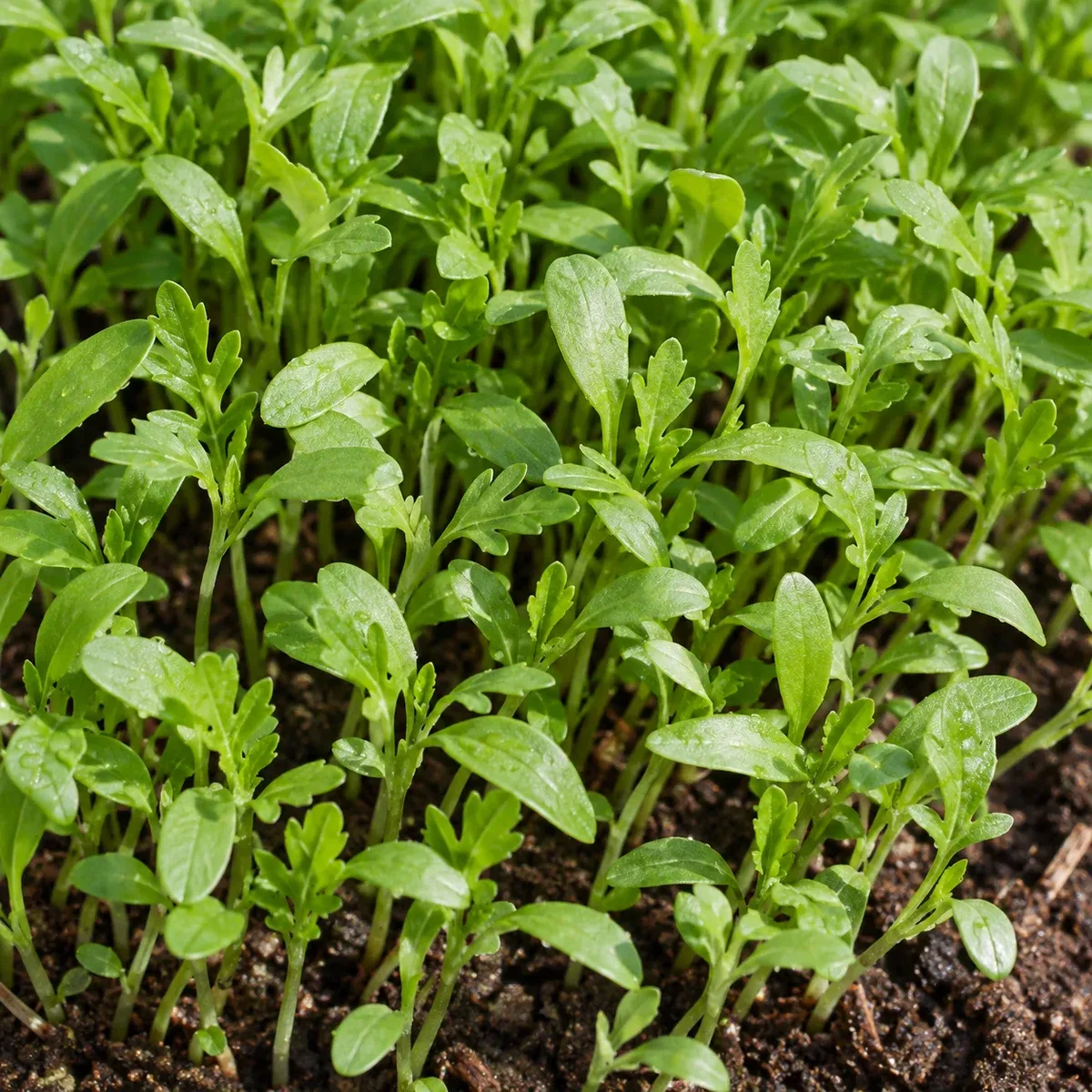
Leaves with holes or weak plants: what to observe?
Small holes accompanied by tiny beetles that jump when approached suggest flea beetles, noted on this crop. A single hole does not identify the culprit. Examine both sides of the leaves before acting; insect-proof netting can protect exposed young rows. Sainte Marthe RHS, flea beetles
If wilting occurs, check the substrate moisture, the root collar and roots of an affected plant. Photograph the changes and seek an assessment if the plant continues to decline. Blindly adding water or fertiliser does not help identify the cause. Utah
Plan the end of the season and the next crop
Grow garden cress as an annual. If you bring a container indoors into good light, care for it according to its growth; outdoor timings are no guarantee of leaves all winter. The temperature, available light and moisture determine whether another sowing is worthwhile. Sainte Marthe Utah
Include this short cycle in the vegetable garden plan: Lepidium sativum counts as a member of the Brassicaceae family, even when harvested small. Keep this information to organise succession with radishes, rocket and cabbages. No protective effect from a neighbouring plant is necessary for this method. RHS, identity
Key points for this crop
Practical guidance
- Species
- Lepidium sativum, an annual in the Brassicaceae family
- Crop covered by this guide
- Leaves of plants rooted in soil or substrate
- Location
- Moist, well-drained soil; partial shade in hot weather
- Harvest
- Young leaves before flowering; staggered sowings
Sources and references
- Growing garden cress successfullyLa Ferme de Sainte Marthe, seed supplier Accessed on 18 October 2026.
- How to Grow Garden Cress in Your GardenUtah State University Extension, Bonnie Allan and Dan Drost, April 2020, in English Accessed on 18 October 2026.
- Lepidium sativumRoyal Horticultural Society, in English Accessed on 18 October 2026.
- Flea beetles on brassicas and allied plantsRoyal Horticultural Society, in English Accessed on 18 October 2026.