
The vegetable garden notebook / Crops
Growing chicories: frisée, escarole, sugar loaf and radicchio
Frisée, escarole, sugar loaf and radicchio are harvested directly from the garden. Start with the variety name and desired harvest: young leaves and mature heads require different planning, without forcing roots to produce witloof chicory (Belgian endive).
Adapt this guidance to your garden’s climate and conditions.
Which chicory to choose, without forcing the roots?
Salad chicories belong to two species of Asteraceae, as distinguished by the SNHF. They are not limited to a single winter salad.
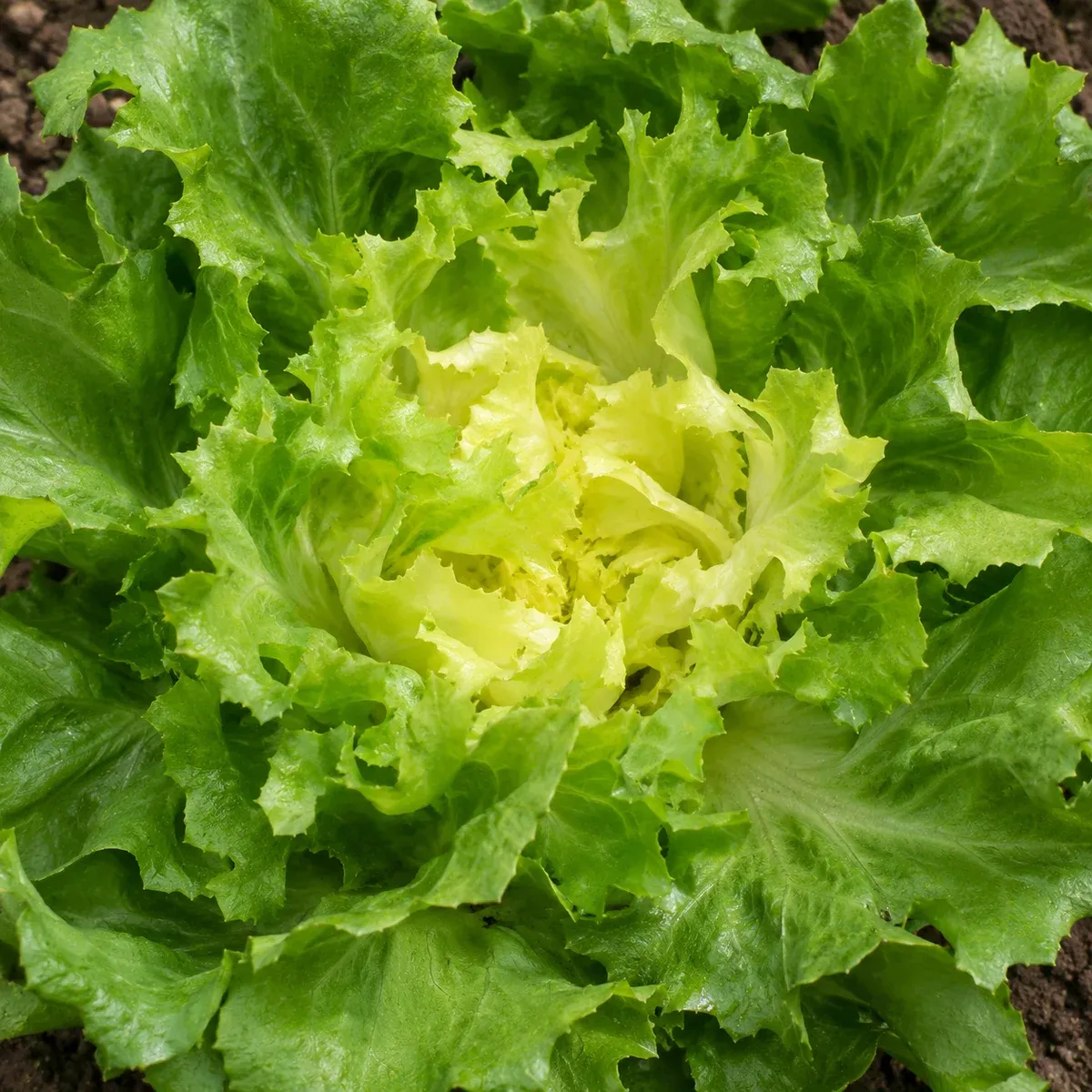
- Frisée and escarole: Cichorium endivia. Frisée has deeply divided leaves; escarole has broad leaves. Choose a variety suited to the season and your objective: young leaves or the whole plant. The English word endive used by the RHS refers to these chicories.
- Sugar loaf and radicchio: Cichorium intybus. Sugar loaf forms an elongated head; radicchios include Italian chicories, notably red varieties, with varying shapes and seasons. The RHS distinguishes them from forcing types.
- Witloof chicory (Belgian endive): a different process. This also belongs to C. intybus, but its head, or chicon, is produced by forcing roots in darkness. The direct harvest of leaves or heads described here does not cover this forcing.
Choosing the period based on variety and harvest
Keep three pieces of information from the seed packet: sowing window, target harvest and stated cold resistance. A label of “chicory” or “winter” is not enough to set a common date.
Two French examples show why the name must be specified. For its ‘Pain de sucre’ sugar loaf chicory, Sainte Marthe indicates direct sowing from April to August. For its Rouge de Vérone, the seed supplier distinguishes a spring sowing for leaves to cut in autumn, and an autumn sowing for heads in late winter. These instructions apply to those particular varieties and need to be checked against conditions in your garden; they do not apply to all red chicories.
For frisée or escarole, likewise choose a variety intended for your season. The RHS states 20 to 22 °C as the ideal germination temperature and warns of the risk of bolting after young plants have been exposed to cold. A sheltered propagation space can help maintain suitable conditions; plants must then be hardened off before planting out. Our sowing guide details the care of young plants.
Preparing the space and planting out young plants
Prepare deep, moist and fertile soil, with mature garden compost and no waterlogging. The SNHF recommends a sunny exposure; the RHS allows partial summer shade for frisée and escarole. Keep access for watering and harvesting.
Sow in a nursery bed or directly in place, maintaining moisture during the emergence period. For frisée and escarole, the RHS describes approximately 1 cm of soil cover; follow the depth on the packet for your variety. Thin out as plants develop and do not let them compete until harvest.
For a harvest of mature plants, the SNHF recommends transplanting at the 4 to 5 leaf stage, at about 30 cm in the row and 30 to 35 cm between rows. These are general guidelines from its factsheet, to be adjusted for more or less vigorous varieties. Radicchio and sugar loaf heads are also spaced 30 cm apart in the RHS method. A harvest of young leaves uses a different density: do not keep all these closely spaced plants to later form large heads.
In pots or under cover, what harvest are you aiming for?
The RHS describes radicchio and sugar loaf chicories in a container at least 30 cm in width; its frisée and escarole factsheet suggests a container of 40 cm to accommodate several plants. These widths do not define a universal depth or volume. Adjust the number of plants to their growth and chosen spacing; a starter pot is not necessarily the harvest pot.
Fill with potting mix and monitor moisture more frequently than in open ground. For autumn and winter, the RHS also describes growing young leaves or escarole under cover: choose the variety and desired stage before planting out.
Managing watering, soil fertility and spacing
Keep soil evenly moist without waterlogging. Lack of water can increase bitterness and encourage bolting, notes the RHS. Check the soil before watering; the watering guide helps adjust this practice. Weed and mulch established plants to limit competition and evaporation.
Soil prepared with compost does not automatically require additional fertiliser. The RHS chicory and endive factsheets distinguish open ground from containers, where fertility may need supplementing: consider the potting mix used and its instructions.
For this leaf harvest, the useful propagation method is sowing: no formative pruning or staking is necessary. Organise neighbours according to their size and needs, then note the Asteraceae in your crop rotation.
Should frisée, escarole and heading chicories be blanched?
Blanching here means depriving part of the leaves of light to make them more tender and less bitter. This is not forcing roots to produce witloof chicory (Belgian endive). Sugar loaf and heading radicchios generally blanch their hearts with outer leaves: the RHS does not recommend systematically covering them.
For frisée or escarole you wish to blanch, wait for a well-grown plant and dry foliage. Gather the leaves loosely with a soft tie, then check the heart. The RHS describes about two weeks, or longer in cool weather; the pale, tender state matters more than the time. Blanch only a few plants at a time, to be used quickly. Inspect under the tie or cover: moisture, rot and slugs can compromise the harvest.
Holes in leaves, brown edges or flower stalk: what to observe?
Look for slugs and snails around seedlings and in leaf folds; do not assume their presence from a single hole. The SNHF also emphasises the importance of air between plants to limit leaf edge and root problems. Check density, moisture and the base before interpreting browning. Persistent rot warrants confirming its cause.
A lengthening flower stalk signals bolting, which ends the harvest of tender salad. The RHS chicory and endive factsheets cite heat, drought and early cold among possible factors. Note the conditions and variety for the next trial; cutting the stalk does not guarantee a return to a well-formed head. Flowering may provide seeds, but self-sown seedlings will not guarantee the same harvest as your chosen variety.
Harvesting leaves or heads and preparing for winter
Harvest young, still-tender leaves as needed or cut the well-grown plant at its base, removing damaged outer leaves. The SNHF gives two to three months after sowing as a general timeframe: observe mainly the growth and texture of your variety. Harvest small quantities for fresh use, particularly after blanching.
To overwinter, choose a variety explicitly intended for this harvest and check its condition after cold and wet spells. The SNHF suggests a protective cover to extend harvests. Chicories do not all share the same hardiness: the RHS advises harvesting or protecting its non-forcing types before frost, whereas some French varieties are intended to form heads later. Follow the precise instructions for your variety and local conditions, without treating a summer escarole like a storage chicory.
Key points for this crop
Practical guidance
- Selection
- Type, variety and season before sowing
- Objective
- Young leaves or whole head, without forcing the roots
- Soil
- Fertile, moist and well-draining, with space between plants
- Blanching
- Optional and varies by type
Sources and references
- Escarole, frisée and chicoriesSNHF, Jean-Daniel Arnaud, Vegetable and Fruit Gardens Section Accessed on 18 October 2026.
- How to Grow ChicoryRoyal Horticultural Society, in English Accessed on 18 October 2026.
- How to Grow EndiveRoyal Horticultural Society, in English Accessed on 18 October 2026.
- Broad-leaved chicory Sugar Loaf ABLa Ferme de Sainte Marthe, seed supplier, reference 1339A Accessed on 18 October 2026.
- Broad-leaved chicory Rouge de Vérone ABLa Ferme de Sainte Marthe, seed supplier, reference 1743A Accessed on 18 October 2026.