
The vegetable garden notebook / Crops
Growing chervil: sowing, cool conditions and leaf harvest
Common chervil produces its best leaves on young plants grown in cool conditions. Small successive sowings are more useful than a single large sowing that flowers all at once in the heat.
Adapt this guidance to your garden’s climate and conditions.
Start with identified common chervil
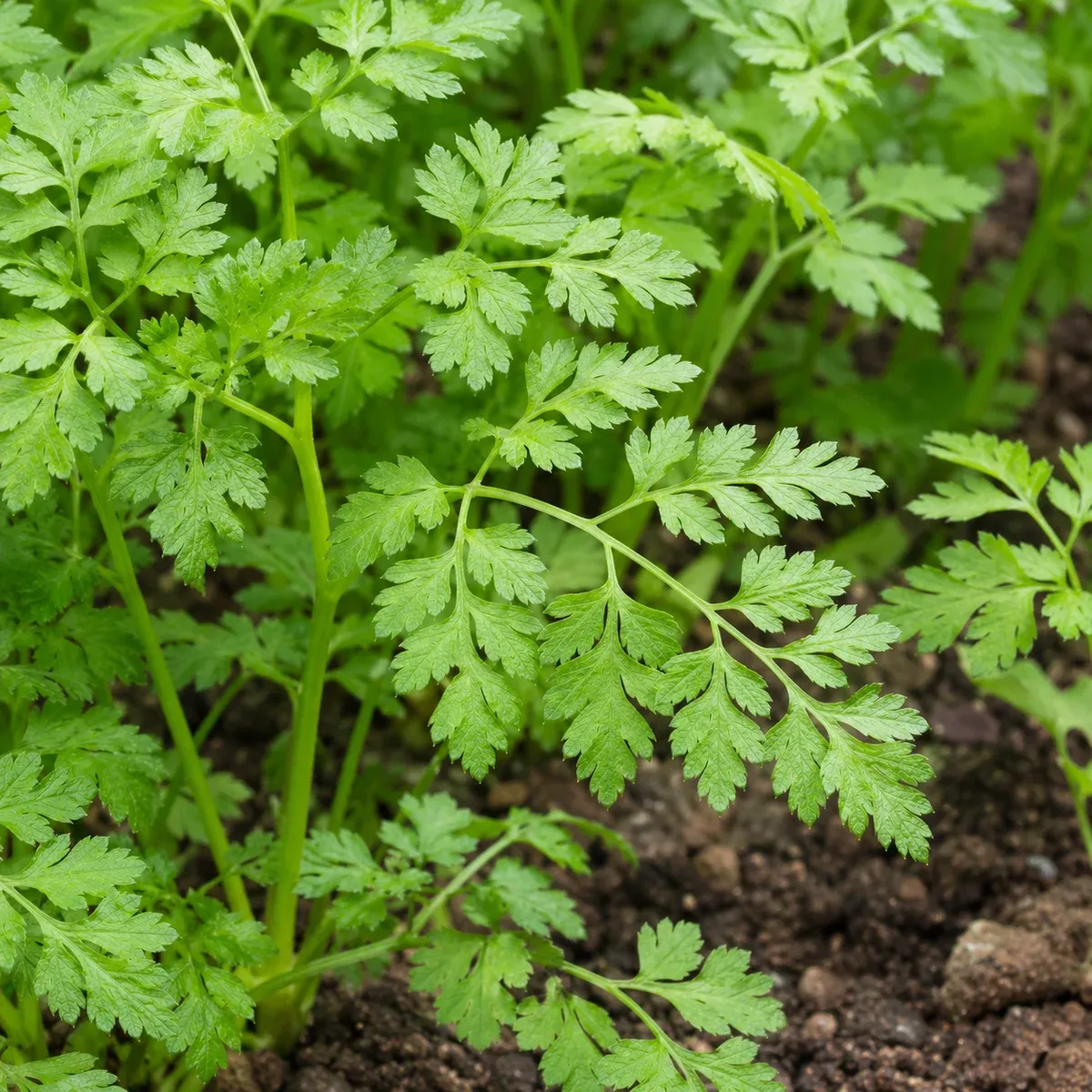
This guide covers cultivated common chervil, Anthriscus cerefolium, purchased as labelled seed or plants. Both flat-leaved and curly-leaved forms belong to this aromatic crop. The name “chervil” found on a wild plant is not sufficient to link it to this guide: do not harvest an unknown plant based solely on its resemblance to the leaves illustrated on a seed packet. This guide does not provide a foraging key. SNHF
Chervil is managed here as an annual to be renewed for its leaves. The University of Illinois describes this annual cultivation; the RHS classifies it as a biennial generally grown as an annual. In both cases, do not rely on an established plant for several years of harvests. University of Illinois, RHS
Choose the season and a cool location
The SNHF booklet places French sowings from April to September, with a warmer spot in spring and a cooler one in summer. This guideline is not an obligation to sow during a heatwave: adjust if you cannot maintain cool conditions. Choose light, humus-rich, well-drained soil, with light shade during hot periods. SNHF
A container that can be moved helps adapt exposure. Use a pot with drainage holes at least 25 cm wide and deep; after the seedlings emerge, maintain approximately 15 cm between plants, or 30 cm between rows in the garden. RHS
Sow in place and plan succession
The University of Illinois recommends direct sowing as seedlings transplant poorly. Sow thinly on a fine seedbed, barely cover the seeds, and water gently to avoid displacing them. The source emphasises their need for light to germinate: do not bury them deeply. Keep the surface moist until the seedlings emerge. University of Illinois
Use fresh seeds: the RHS notes that seed viability is retained for about one year. If nothing emerges, check the packet’s age, moisture, sowing depth, and temperature before retrying; outdoors, seedlings may take up to three weeks to emerge. RHS
To stagger harvests, the University of Illinois suggests small sowings every three to four weeks during the favourable period. Adjust the number of plants to your actual harvest; sowing more densely does not replace succession planting. If purchasing plants, plant them out while young with the root ball intact, after acclimatisation if they were under cover. University of Illinois, RHS
Care for the plants while allowing for their natural life cycle
Water according to soil conditions to keep it moist without saturation, especially in pots. Heat and drought accelerate bolting. Removing flower buds, as suggested by the SNHF, may help extend the harvest. Plan the next sowing as soon as the first batch begins to age. SNHF, RHS
Keep the area clear for watering and harvesting; remove competing weeds while they are small, avoiding disturbing the seedlings. If a plant yellows or stops growing, first check the root ball, water received, and exposure. This isolated symptom does not indicate a fertiliser deficiency.
The RHS notes possible aphid infestations. Inspect shoots rather than assuming their presence from a deformed leaf; if the issue spreads or remains unexplained, request identification based on the plant and its context. No systematic preventive treatment is necessary for the cultivation method described here. RHS
Harvest leaves and replenish your seed supply
Pick fully opened leaves a few at a time while they are still tender, instead of waiting for the entire plant to flower. Use them fresh; the SNHF also mentions freezing to preserve a surplus after washing and drying. University of Illinois, SNHF
To produce your own seeds, allow a few identified cultivated plants to flower and set seed. Keep these seed-bearing plants separate from those still intended for leaf harvest. The RHS advises sowing harvested seeds within the year: an abundant harvest does not justify storing seeds for many seasons. RHS
What to keep in autumn and winter?
A late-summer sowing may extend harvests under cloches, cold frames, or in a greenhouse; a productive container can be moved to shelter. Results depend on local cold and plant condition: this does not guarantee a continuous harvest throughout winter. RHS
At the end of the cycle, clear unused spaces and note sowings for succession. Chervil belongs to the Apiaceae family, like carrot and parsley: include it in your crop rotation plan, especially if an identified problem has recurred.
Key points for this crop
Practical guidance
- Cultivated plant
- Anthriscus cerefolium, common chervil (flat and curly-leaved forms)
- Recommended start
- Direct sowing; fresh seeds
- Location
- Moist, humus-rich, well-drained soil; light shade in summer
- Spacing
- Guide: 15 cm between plants, 30 cm between rows
Sources and references
- Culinary herbs: a world of flavours within reachSNHF, vegetable and fruit section, April 2023 Accessed on 18 October 2026.
- How to grow chervilRoyal Horticultural Society, in English Accessed on 18 October 2026.
- ChervilUniversity of Illinois Extension, in English Accessed on 18 October 2026.