
The vegetable garden notebook / Crops
Cultivating Pot Marigold: Sowing, Flower Harvesting, and Renewal
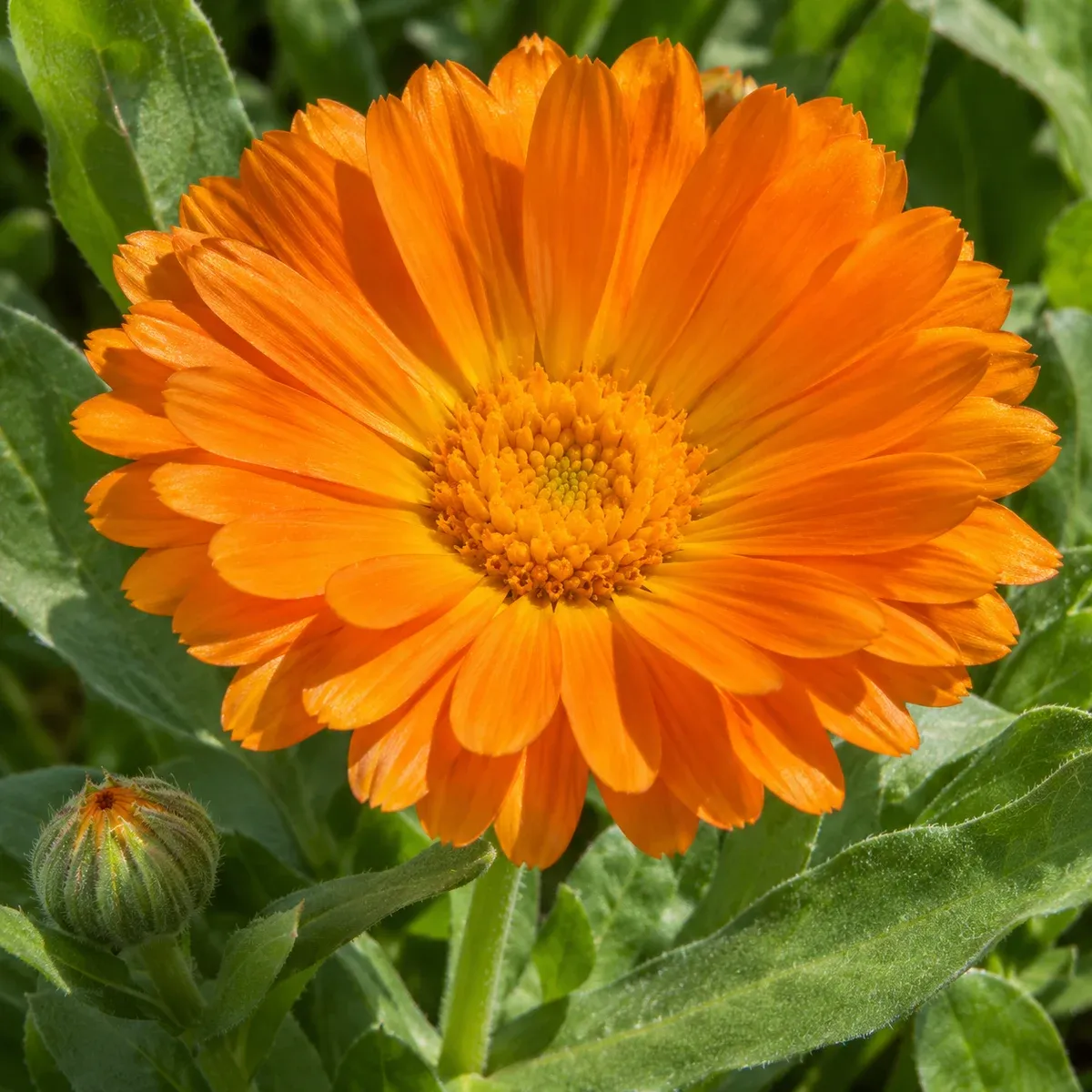
Pot marigold offers flowers for the garden and petals for the kitchen. This annual renews itself through sowing: its value in the vegetable garden goes beyond promises of protecting vegetables.
Adapt this guidance to your garden’s climate and conditions.
Choosing Calendula officinalis for Petal Harvest
Look for the name Calendula officinalis on the seed packet or label. “Souci”, “souci d’Inde”, and the English word marigold may lead to different purchases: this guide concerns the identified Calendula, without extending its use to Tagetes or wild marigolds. The SNHF distinguishes several Calendula species; the RHS specifically names C. officinalis among culinary flowers.
Choose seeds or plants intended for food cultivation from the outset. A flower purchased for decoration, with unknown origin or treatments, does not become suitable for kitchen use with a simple rinse. The RHS’s food safety advice emphasises identification and potential residues from ornamental plants. RHS
For small containers, compare sizes: Fiesta Gitana is among the compact selections, while Indian Prince can reach 50 cm to 1 metre in height. Flower colour alone is not enough to predict mature size. RHS Calendula
Sowing in Spring and Thinning According to Variety
The simplest start is direct sowing in place. The SNHF recommends March to May; the Officinal varié blend from Sainte Marthe is advised for April–May. In a cold garden, wait until excess water has drained from the soil and the last frosts have passed, following the packet’s instructions rather than adhering to March everywhere. Kokopelli
Rake the surface smooth, sow approximately 1 cm deep as per the SNHF, cover, and keep the area moist while seedlings emerge. Johnny’s reports 7–14 days at 21 °C for its Orange Button batch: this is not a fixed timeline in cold soil. For a few plants raised in pots, transplant with their root ball intact. SNHF, Johnny’s
Thin crowded seedlings. Sainte Marthe recommends 20 cm along the row for its blend; the SNHF reserves 40–50 cm for fully developed plants. Follow the spacing for your chosen variety, then allow air between clumps without combining these figures as a universal grid. To extend harvests, a second small sowing two to three weeks after the first is an option described by Johnny’s; its flowering will depend on the remaining season. Sainte Marthe, SNHF, Johnny’s
Planting in Sun, Borders, or Pots
Choose light, well-draining soil in full sun or light shade. The RHS advises against very wet or overly fertile soils; deep shade limits flowering. Avoid filling the planting hole with rich fertiliser to boost petal production. RHS, RHS Calendula
Pots are suitable. Use a container with drainage holes, wide enough for the stated size, and a substrate that allows water to drain. Monitor the root ball, which is more exposed to drying than a border in the ground: water when it begins to dry, then allow excess to drain. An optimal volume and daily frequency are not established here. Kokopelli, RHS
In the vegetable garden border, maintain access to vegetables and prevent their leaves from covering the pot marigolds. Available space, light, and water should guide this arrangement; no neighbouring plant is essential for their success.
Maintaining Flowering Without Forcing the Plant
Monitor moisture during establishment and dry periods, especially in pots. Prioritise watering the substrate; Kokopelli advises against excessively wetting the foliage. It classifies water needs as moderate, which does not set a fixed quantity for every season. Kokopelli
Regularly remove faded flowers if the goal is continued flowering and petal harvest. The RHS also suggests pinching the tips to encourage a bushier habit. No division is required for this annual crop: sowing ensures renewal. RHS
Harvesting Petals and Limiting Storage
For culinary use, pick fully open flowers, then detach the petals; discard the calyx and centre as per Johnny’s. Do not confuse this harvest with the tighter bud stage suitable for bouquets. Petals primarily add colour and flavour to salads or dishes, as described by Sainte Marthe and the RHS. Johnny’s, Sainte Marthe, RHS
Harvest clean, healthy flowers, preferably for immediate use. Petals can also be dried, a use confirmed by the RHS. Prepare small quantities; do not store batches that remain damp or mouldy. This guide does not cover oil infusions or medicinal preparations. RHS
Preparing a Small Dried Harvest
The Utah fact sheet on Calendula describes drying in a well-ventilated place, out of direct sunlight, or using a food dehydrator. For appliance methods, follow its instructions for herbs and flowers; do not apply settings intended for large vegetables. Utah
Before sealing the container, check that drying is complete: the NCHFP states that for herbs, the material should be dry and brittle, crumbling easily. This general criterion does not provide a precise duration for these petals. NCHFP
Once the small batch is completely dry, store it in a container that keeps moisture out, in a cool, dark place, as indicated by Utah. If the batch remains damp or degrades, do not keep it. Utah
Observing Leaves and Preparing for Renewal
If no seedlings appear, first check sowing depth, moisture and temperature. For established plants, assess soil condition and the location of damage before adding water or fertiliser. Aphids, powdery mildew, and rust are noted by the SNHF: a single yellow leaf does not indicate any of these. Also inspect the undersides and young shoots; do not use affected flowers for cooking. SNHF
You may leave a few flower heads to mature if you accept self-seeding; if you wish to harvest seeds, prepare sorting and storage with the seed harvesting guide. Alternatively, remove faded flowers to limit self-seeding. Autumn sowing mainly concerns mild regions and requires protection, as per Kokopelli. For a first trial elsewhere, simply plan a new spring sowing: do not rely on the plant surviving the entire winter. Kokopelli
Pot marigold thus has its place for its flowers and petals. Its presence does not eliminate the need to monitor vegetable pests: the growing guides themselves note that it can host aphids. No yield increase or automatic nematode protection is promised. RHS, SNHF
Key points for this crop
Practical guidance
- Identity
- Calendula officinalis, grown as an annual
- Simple Start
- Direct sowing in spring, once excess water has drained from the soil
- Location
- Full sun or light shade, well-draining soil without excessive fertility
- Culinary Harvest
- Petals from open flowers, on a crop intended for consumption
Sources and references
- CalendulaSNHF, fact sheet by Thierry Cardot Accessed on 18 October 2026.
- Calendula officinalisRoyal Horticultural Society, in English Accessed on 18 October 2026.
- Calendula — Genus GuideRoyal Horticultural Society, in English Accessed on 18 October 2026.
- ‘Officinal varié’ organic pot marigold mix, reference 2405ALa Ferme de Sainte Marthe, seed supplier Accessed on 18 October 2026.
- Pot Marigold, A0151Association Kokopelli, seed supplier Accessed on 18 October 2026.
- Orange Button — Calendula SeedJohnny’s Selected Seeds, seed supplier, United States, in English Accessed on 18 October 2026.
- Edible flowersRoyal Horticultural Society, in English Accessed on 18 October 2026.
- How to Grow Calendula in Your Garden — Harvest and StoreUtah State University Extension, Liz Braithwaite and Dan Drost, in English Accessed on 8 November 2026.
- Herbs — DryingNational Center for Home Food Preservation, University of Georgia, in English Accessed on 8 November 2026.