
The vegetable garden notebook / Crops
Watering aubergines: monitoring the soil, flowers and fruit
Aubergines love warmth and require consistent moisture to grow and fruit. Decide on each watering by observing the soil around the roots, with particular attention after planting, during flowering and in pots.
Adapt this guidance to your garden’s climate and conditions.
When to water your aubergine
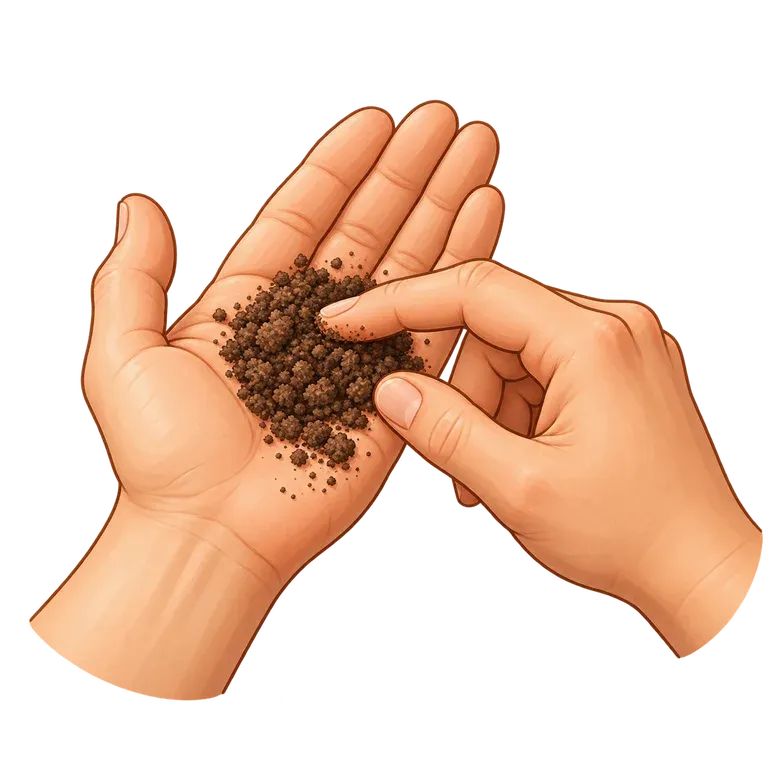
Move the mulch aside and examine the soil beneath the surface, beside the plant without damaging its roots. The RHS advises checking moisture in the root zone: a dry surface does not reflect the entire available water reserve.
- The soil is drying around the roots: apply water to moisten this area.
- It remains moist: delay watering and monitor its condition.
- It is waterlogged: stop watering and investigate what is preventing water from draining.
Water needs vary with soil type and growth stage, notes the RHS. A set number of litres per plant or a fixed interval cannot replace this observation.
From planting to the last aubergines
At planting, moisten the root ball before removing it from the pot, then water after planting, following University of Minnesota guidance. Continue checking moisture around the young plant during establishment.
Keep checking throughout flowering and fruiting. The RHS explicitly lists aubergines among crops that benefit from regular watering during these phases. This does not mean automatically increasing the amount at the first flower: if the soil remains moist, it does not need immediate watering.
Ensuring water penetration, then retaining moisture
Water the soil around the base of the plant. Minnesota Extension advises against overhead watering and repeated shallow waterings. Apply water slowly enough for it to soak in: in heavy soil, a rapid flow may cause runoff. Very sandy soil may require more frequent applications.
Once the water has soaked in, check the soil again beside the plant, in the root zone. If only the top is wet and the soil beneath remains dry, continue slowly; if it is moist, stop watering. Checking how deep the water has reached, as recommended by the RHS, helps you adjust the next watering rather than relying on a fixed volume.
Mulching helps retain moisture, according to the RHS aubergine factsheet. However, wait until the soil has warmed before mulching, as specified by Minnesota. Continue examining the soil beneath the cover: the mulch alone does not tell you when to water again. The mulching guide provides further details on selection and application.
In pots, adjust monitoring to the weather
Aubergines in containers dry out more easily; the RHS states that daily watering may become necessary in hot weather. This is a possibility to verify, not a mandatory schedule.
Check each pot beneath the surface. Heat and wind increase water loss; light rain may only moisten the top of the potting compost, explains the RHS container guide.
In an ordinary pot with drainage holes, pour water slowly onto the potting compost. Stop just before, or as soon as, the first drops appear at the drainage holes. Empty any water remaining in the saucer a few hours after watering to prevent saturation, following the same source. For a self-watering container, follow its specific instructions.
Drooping leaves or little fruit: should you add water?
Drooping leaves in hot weather do not prove that a plant needs water. The University of Maryland describes temporary wilting as possible even in sufficiently moist soil, particularly in hot winds. If the soil is still moist, observe the plant as temperatures drop; if it is also dry, water.
A plant wilting in waterlogged soil, however, requires drainage checks: Maryland Extension explains that roots may lack oxygen. If the problem persists, investigate its cause before increasing watering.
Finally, an aubergine producing little fruit may not necessarily lack water. The RHS also cites a location that is too cold or an unfavourable summer. Check growing conditions with the aubergine factsheet; to adjust your practices, consult the general watering guide.
Key points for this crop
Practical guidance
- Before watering
- Check the soil beneath the surface
- Key periods to monitor
- Establishment, flowering and fruiting
- In pots
- Watch for drying out in hot weather
- Objective
- Consistent moisture, drainage maintained
Sources and references
- Watering vegetables and fruitRoyal Horticultural Society (RHS), in English Accessed on 16 October 2026.
- Growing eggplant in home gardensUniversity of Minnesota Extension, Marissa Schuh and Cindy Tong, in English Accessed on 16 October 2026.
- How to grow auberginesRoyal Horticultural Society (RHS), in English Accessed on 16 October 2026.
- How to water containersRoyal Horticultural Society (RHS), in English Accessed on 16 October 2026.
- Wilting of Vegetable PlantsUniversity of Maryland Extension, in English Accessed on 16 October 2026.