
The vegetable garden notebook / Crops
Growing angelica: fresh seeds, open ground, and harvest
For culinary angelica, start with identified Angelica archangelica. Its large rosette and later its flower stalks take up space for several seasons; plan to replace the plant after it sets seed.
Adapt this guidance to your garden’s climate and conditions.
Choosing identified culinary angelica
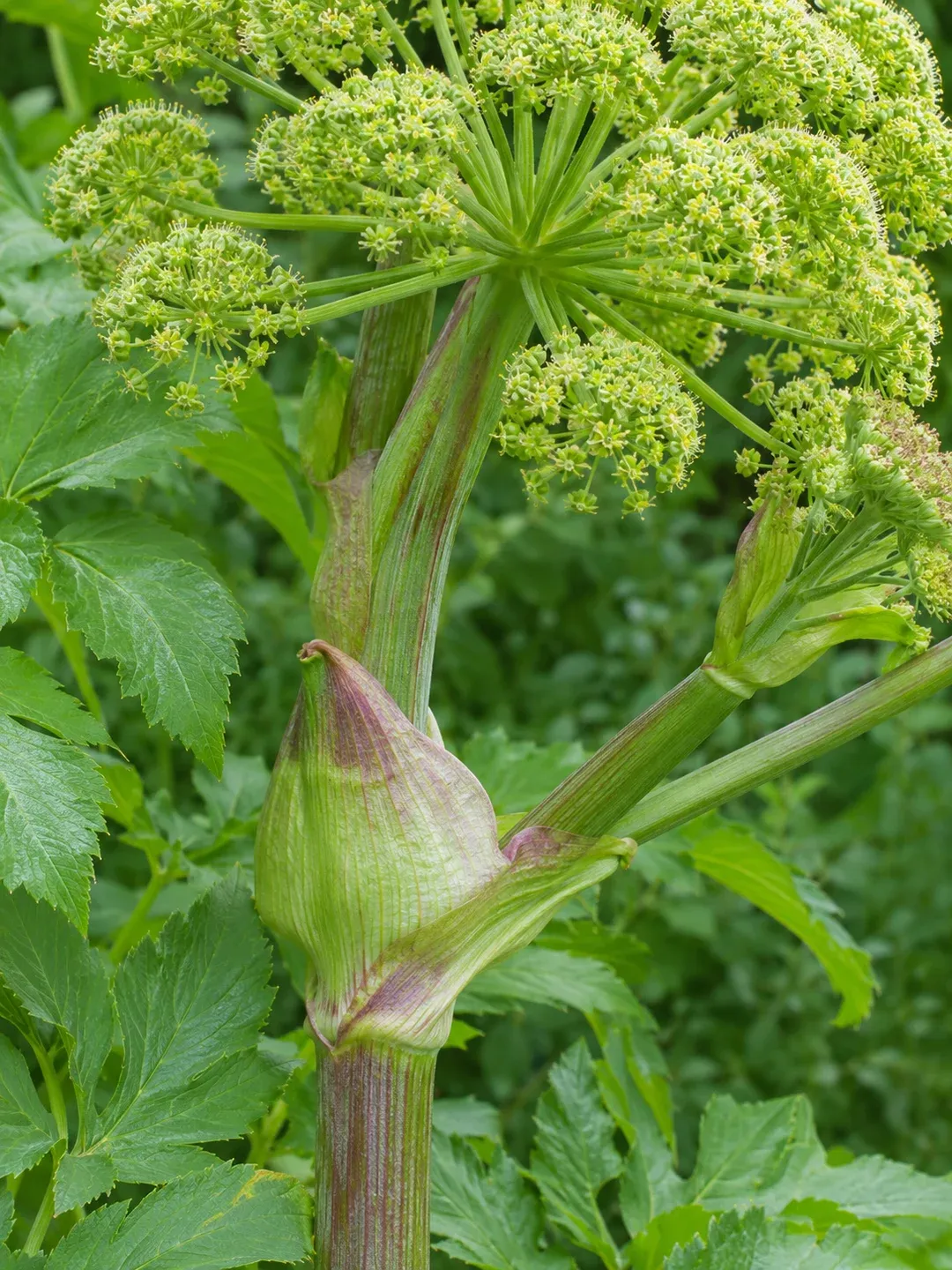
Look for Angelica archangelica labelled as such, as seed or a young plant. The RHS recommends it for its tender stems and leaves. This guide covers plants of known identity: an umbel or a scent alone cannot identify a wild plant as safe to pick. RHS, guide
NC State highlights its resemblance to toxic plants, including hemlock, as well as potential dermatitis and sun sensitivity after contact. Do not consume any plant of uncertain identity. When cutting your cultivated angelica, wear gloves and clothing that covers your skin to prevent contact with the sap. NC State
Planning a permanent place in open ground
Choose deep, fertile, and moist soil, in partial shade; avoid a hot location that dries quickly. Sun is suitable if moisture remains available. The RHS fact sheet states 1.5 to 2.5 metres tall and 1 to 1.5 metres wide: ensure access for cutting and consider the shade cast on smaller neighbours. RHS, species, NC State
The RHS recommends 60 to 90 cm between plants, with decomposed organic matter and watering at planting. This planting distance does not mean the mature plant will stay within that space. Plant a young plant at the same depth as it was growing in its pot, in soil that is neither frozen nor waterlogged. Long-term pot cultivation is discouraged by the RHS due to the deep taproot; a seedling pot remains a temporary container. RHS, guide
Sowing with fresh seeds
Check the batch date: seeds do not keep well. The RHS advises sowing fresh ripe seeds on the surface, without covering as they require light, in a well-draining seed compost kept moist. Keep the sown container in a cool place; this method gives 10 to 13 °C as a guide. Seedlings may take one to three months to emerge. RHS, guide
For dry seeds, the RHS protocol requires four to six weeks at 4 °C, mixed with moist compost in a sealed box, before sowing. Do not confuse dormancy with loss of viability in an old batch. RHS, guide
Johnny’s confirms the need for light and moisture. At the first true leaf stage, the RHS advises transferring to deeper pots for the taproot: these remain temporary. Plant out small specimens in open ground after hardening them off, with minimal disturbance. The sowing guide explains the general steps. Johnny’s, RHS, guide, RHS, species
Keeping the soil moist and supporting the flowering stems
Water during droughts to keep plants growing. Mulching on moist soil limits drying; keep foliage clear. In prepared soil, the RHS does not call for routine fertiliser and suggests well-rotted organic matter in early spring. RHS, guide
In exposed locations, support the flowering stems before they collapse. Monitor their development rather than increasing fertiliser to hasten flowering. RHS, species
Harvesting leaves or reserving a plant for seeds
Harvest leaves sparingly from the first year, without damaging the main stem. Young stems for culinary use are harvested while still tender, before the flowering stems form; use fresh leaves for preparations that require them. A plant reserved for seeds must be allowed to complete its cycle. Johnny’s, RHS, guide, NC State
After flowering, the RHS advises bagging the flower heads to collect ripe seeds. Sow some of the seed promptly to grow replacement plants, rather than keeping it for several years. Remove the flower heads before maturity if you wish to prevent self-seeding. RHS, guide
Overwintering and renewing the crop
The absence of flowers in the first season is normal: the plant first develops its foliage. Flowering often occurs in the second year, sometimes later; after the seeds ripen, the plant typically dies. A new seedling nearby is not the original plant growing again. NC State, RHS, species
According to the RHS, the foliage dies back and the rootstock is hardy. Mark its location in winter. Removing flowers before seed formation may prolong its lifespan. Johnny’s also mentions dividing an established plant; however, sowing fresh seed means you do not have to rely on an old rootstock surviving. RHS, species, Johnny’s
No seedlings or marked leaves: what should you check?
If no seedlings emerge, first check the seed batch, light, moisture, and cold treatment protocol. On young plants, the RHS lists slugs, snails, aphids, and leaf miners; powdery mildew is also possible. Look for pests, leaf mines or a coating before naming the problem. Yellowing alone does not establish a disease or nutrient deficiency; also check the soil and the base of the plant with the vegetable disease guide. RHS, species
Key points for this crop
Practical guidance
- Species
- Angelica archangelica, a cultivated culinary member of the Apiaceae family
- Soil
- Deep, fertile, and moist; avoid hot and dry conditions
- Space
- RHS reference: 1.5 to 2.5 metres tall, 1 to 1.5 metres wide
- Life cycle
- Often biennial; the plant typically dies after seed maturation
Sources and references
- How to grow angelicaRoyal Horticultural Society, in English Accessed on 18 October 2026.
- Angelica archangelicaRoyal Horticultural Society, in English Accessed on 18 October 2026.
- Angelica archangelicaNorth Carolina State University, Extension Gardener Plant Toolbox, in English Accessed on 18 October 2026.
- Angelica — Key Growing InformationJohnny’s Selected Seeds, seed producer, in English Accessed on 18 October 2026.