
The vegetable garden notebook / Getting started
First Vegetable Garden Mistakes: What to Correct First?
A difficulty in your first vegetable garden does not reflect your gardening ability. Describe what is happening, check the growing conditions, then choose an adjustment whose effects you can monitor.
Adapt this guidance to your garden’s climate and conditions.
- Describe
Note the crop, the symptom, and when it appeared.
- Check
Compare soil, depth, spacing, and moisture to the needs of this crop.
- Adjust
Choose a correction suited to what you have actually observed.
- Monitor
Keep a record of the action and the progress; ask for help if the cause remains unclear.
Which Problem to Address First?
Start with the observation you are making today:
- Seedlings are not emerging or are too crowded: begin with seedling emergence then, if seedlings have appeared, with density.
- You are hesitant to water a plant: review the checks before watering.
- A plant is spotted or damaged: start with observations before treatment.
- You are preparing for the next crops: revisit project organisation and soil condition.
In each section, “First Adjustment” helps you choose the immediate action; the “To Observe” notes prepare for the next check and decisions in the following cycle.
You Can No Longer Keep Track of All the Crops
Tasks accumulate, some rows go unnoticed, and you start new sowings. The project may simply exceed your available time. The RHS recommends rationalising quantities and crop choices based on space, time, and the work required.
First Adjustment: pause new starts and choose which existing crops you can manage. For the next cycle, reduce the area or the number of crops. The vegetable garden plan helps make this choice concrete.
To Observe: can you locate each crop, identify its needs, and carry out the planned tasks? There is no ideal area that suits everyone.
You Are Working Soil That Is Still Muddy
After rain, the soil sticks and deforms under tools. Persisting or making multiple passes can compact the soil. The University of Maryland advises against working or walking on wet soil.
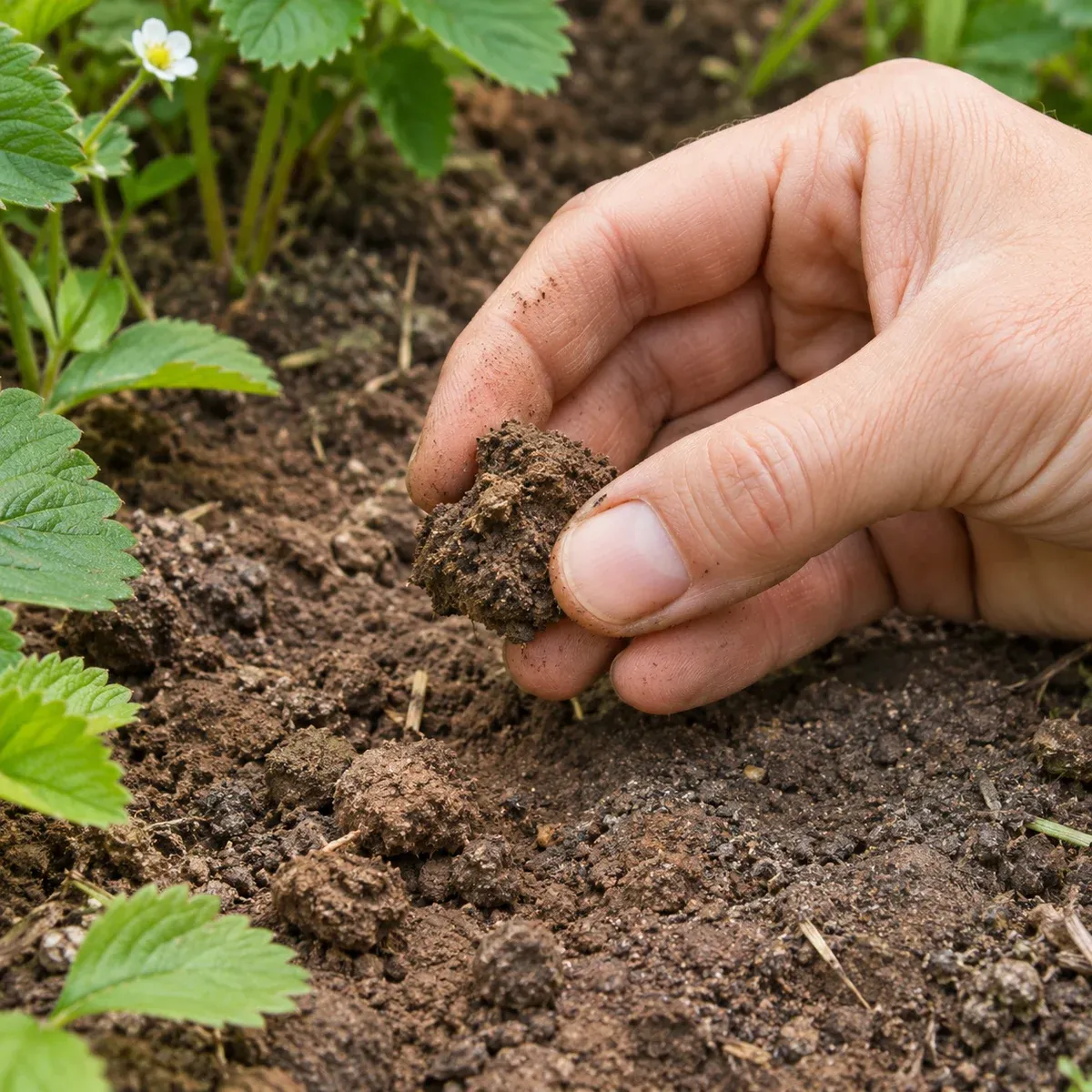
First Adjustment: postpone bed preparation. Once the soil has drained, take a small handful of surface soil, gently squeeze it, then let it bounce in your palm: the source suggests its breakdown into small pieces as a sign to resume work. If it remains a sticky mass, wait longer.
To Observe: does the soil become crumbly? This indicator concerns the ability to work the soil; it does not measure its fertility or all drainage issues.
Nothing Is Emerging: You May Have Sown Too Early or Too Deeply
The absence of shoots is not enough to identify a cause. The University of Maryland describes slow or irregular emergence when the soil is too cold for the crop, and compromised emergence due to excessive burial. Seed vigour or soil condition may also play a role.
First Adjustment: note the date, variety, and depth used. Compare them with the packet instructions and the crop sheet. Check the expected time to seedling emergence before concluding failure, as recommended by the RHS. The relevant temperature is that of the soil; the requirement varies by vegetable.
If a new sowing is necessary, wait for suitable conditions and measure the indicated depth. A single depth for all seeds would be misleading. The sowing guide details the steps.
To Observe: record the new date and the appearance of the first shoots, without expecting the same timeframe for each attempt.
You Are Keeping All the Seedlings from a Very Dense Sowing
A row in which seedlings have emerged well may contain too many young plants for their development. The RHS states that overcrowding can hinder growth and increase susceptibility to disease.
First Adjustment: measure the actual spacing between seedlings and compare it to the recommended distance for the crop. If thinning is necessary, remove excess seedlings while they are still small, gently to limit disturbance to neighbours.
To Observe: do the remaining seedlings have the targeted spacing? Do not replace the crop-specific guideline with a fixed number of seedlings to remove per row.
You Water Out of Habit or as Soon as the Leaves Wilt
A dry surface does not alone indicate the condition of the soil below. The RHS recommends checking moisture in the root zone and adjusting watering to the crop, its stage, and the soil. Freshly sown seeds and young seedlings require consistent moisture: do not apply a guideline meant for established plants.
First Adjustment: check the soil beneath the surface, near the roots without damaging them, before adding water. If it is dry, water to moisten the root zone, then verify that the water has reached it. The watering guide expands on this check.
A wilted plant may also suffer from waterlogged soil: roots then lack oxygen. In high heat, temporary wilting can occur even if the soil remains sufficiently moist, explains the University of Maryland. In this case, observe the plant again in the evening. Persistent wilting requires further checks, not automatic watering.
You Choose a Treatment Before Identifying the Problem
A spotted, yellowed, or nibbled leaf draws attention, but the first insect seen is not necessarily responsible. The University of Maryland recommends placing symptoms within the plant’s history and keeping multiple hypotheses open.
First Adjustment: photograph the entire plant and take a close-up of the affected part, check the underside of leaves, note recent watering and interventions. Determine if the problem affects one plant, several neighbours, or different species. These observations help find a suitable fact sheet for the plant rather than applying a random remedy.
To Observe: are symptoms spreading, appearing on new leaves, or affecting other plants? If the cause remains unclear or damage progresses, seek advice with your photos and notes. Young seedlings may require quicker decisions: observing does not mean waiting indefinitely. To prepare this search or request for advice, continue with the vegetable garden disease diagnosis guide.
Sources and references
- Planning a vegetable gardenRoyal Horticultural Society (RHS), in English Accessed on 16 October 2026.
- Common Soil ProblemsUniversity of Maryland Extension, Jon Traunfeld, in English Accessed on 16 October 2026.
- Poor Germination of Vegetable SeedsUniversity of Maryland Extension, in English Accessed on 16 October 2026.
- How to sow seeds outdoorsRoyal Horticultural Society (RHS), in English Accessed on 16 October 2026.
- Watering vegetables and fruitRoyal Horticultural Society (RHS), in English Accessed on 16 October 2026.
- Wilting of Vegetable PlantsUniversity of Maryland Extension, in English Accessed on 16 October 2026.
- IPM – Prevent, Identify, and Manage Plant ProblemsUniversity of Maryland Extension, in English Accessed on 16 October 2026.