
The vegetable garden notebook / Techniques
How often should you water the vegetable garden?
A regular visit to the vegetable garden can be used to check the soil without automatically triggering watering. The right frequency is built on your observations and then adjusted as conditions change.
Adapt this guidance to your garden’s climate and conditions.
Practical steps
- Separate
Check pots, sowings and established crops separately during your rounds.
- Check
Examine moisture at the depth relevant to the crop and its growth stage.
- Decide
Water based on observed need, not because a set date has arrived.
- Adjust
Increase checks if drying accelerates and reassess after rainfall.
Should you water every day or once a week?
Neither of these schedules suits the entire vegetable garden. Schedule a check, then decide whether to water. The RHS distinguishes needs based on the plant, its growth stage, and the soil; for containers, it explicitly rules out a fixed schedule. RHS — pots
You can keep a convenient time for your rounds. The outcome might be “water this pot”, “recheck this sowing sooner”, or “do not water this bed”. The general watering guide details the process once the decision is made.
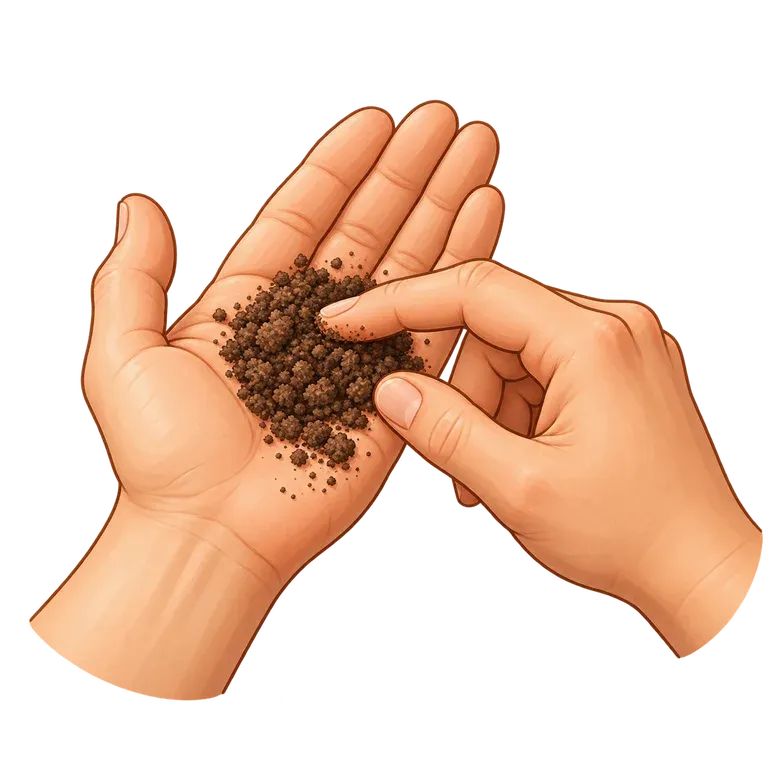
Organise rounds by growth stage and location
Separate your observations instead of treating the garden as a single unit:
- Sowings and young plants: monitor moisture around the seeds and developing roots. They require consistent moisture; checking a deeper layer does not replace monitoring this zone. RHS
- Established crops: examine the root zone, not just the surface. The growth stage also matters: tomatoes, for example, need consistent watering during flowering and fruiting. RHS The dedicated watering guide provides further details.
- Pots: check each container. The RHS suggests testing the growing medium at about one-third of the depth from the top. Heat and wind warrant extra vigilance; a small shallow pot dries out at a different rate than a large container. RHS
- In-ground beds: watering may need to be more frequent in fast-draining sandy soil than in clay soil. This difference guides monitoring but does not replace checking moisture levels. Jardiner Autrement
Decide after checking, then set the next visit
Check below the surface layer: if still moist, delay watering; if drying out, adjust according to the crop; if waterlogged, do not add water. Saturation can prevent roots from functioning properly. After watering, also check moisture at depth. Jardiner Autrement
To refine your routine, note the location, growth stage, zone checked, and your decision. If a sowing or pot is too dry at each visit, increase the frequency of checks. If a bed remains moist, do not continue watering out of habit.
A wilted leaf calls for a check, but do not immediately assume a lack of water. Heat or wind can cause temporary wilting despite moist soil; poorly drained soil may also be the cause. University of Maryland If wilting persists, identify the cause before increasing watering.
After rain, resume observations
Record rainfall measurements in the garden: Jardiner Autrement recommends regular readings from a rain gauge. In pots, a brief shower may leave the growing medium dry underneath. RHS A note of “rain” in your log does not, on its own, determine the next action.
For your next visit, keep a brief note: “pot still moist, no watering” or “check sowing sooner”. These are observations to update, not the start of a new automatic countdown.
Consider local restrictions
Before planning watering, consult VigiEau to check restrictions that apply to you. The ministry presents this service for household uses, including garden watering. This page does not set any permitted hours or exceptions valid everywhere.
Sources and references
- Watering vegetables and fruitRoyal Horticultural Society (RHS), in English Accessed on 16 October 2026.
- How to water containersRoyal Horticultural Society (RHS), in English Accessed on 16 October 2026.
- Water-efficient irrigationJardiner Autrement, Société Nationale d’Horticulture de France Accessed on 16 October 2026.
- Wilting of Vegetable PlantsUniversity of Maryland Extension, in English Accessed on 16 October 2026.
- Launch of the VigiEau platform to provide information on drought restrictionsMinistère de la Transition écologique Accessed on 16 October 2026.