
The vegetable garden notebook / Techniques
Indoor Permaculture: Designing a Realistic Small Vegetable Garden
Before placing pots in the kitchen, observe the light reaching the leaves and the space available for maintenance. A few well-chosen herbs or lettuces make for an easier first attempt.
Adapt this guidance to your garden’s climate and conditions.
Practical steps
- Observe the room
Identify the light received, temperature variations and water access.
- Choose the crops
Select a few plants compatible with the available conditions and space.
- Set up the pots
Provide a suitable growing medium, water drainage and access to each container.
- Adjust the trial
Monitor growth, moisture and resources used before expanding.
Relate the project to your home and needs
A pot of herbs does not become permaculture simply by being present in the house. David Holmgren describes a design framework based on observation and the relationships between the elements of a place. The general presentation of the approach explains this distinction.
Indoors, start with a limited goal: having a few leaves for cooking while keeping the room practical to live in. Note the space, time, water, growing medium and any electricity you can dedicate to it.
Check the light where the leaves will be
Look at the future location at different times of the day: does the sun reach the plants, or only another part of the room? Curtains, roof overhangs and obstacles can alter the exposure. A south-facing window alone does not guarantee sufficient light. The University of Minnesota recommends assessing natural light before choosing plants.
For indoor herbs, Iowa State University generally suggests about eight hours of direct sunlight per day, while noting that some tolerate less. The University of Maryland suggests a window providing at least five hours of sunlight, with additional lighting in winter. Count the hours when the sun actually reaches the pot, not the entire daylight duration as direct sunlight.
Reassess this when the season changes. Stems that elongate and thin may indicate a lack of light; scorched or discoloured leaves may accompany excess light. These signs suggest what to check, but are not enough to establish a diagnosis. A room that is pleasant to the eye is not necessarily a good location for growing vegetables.
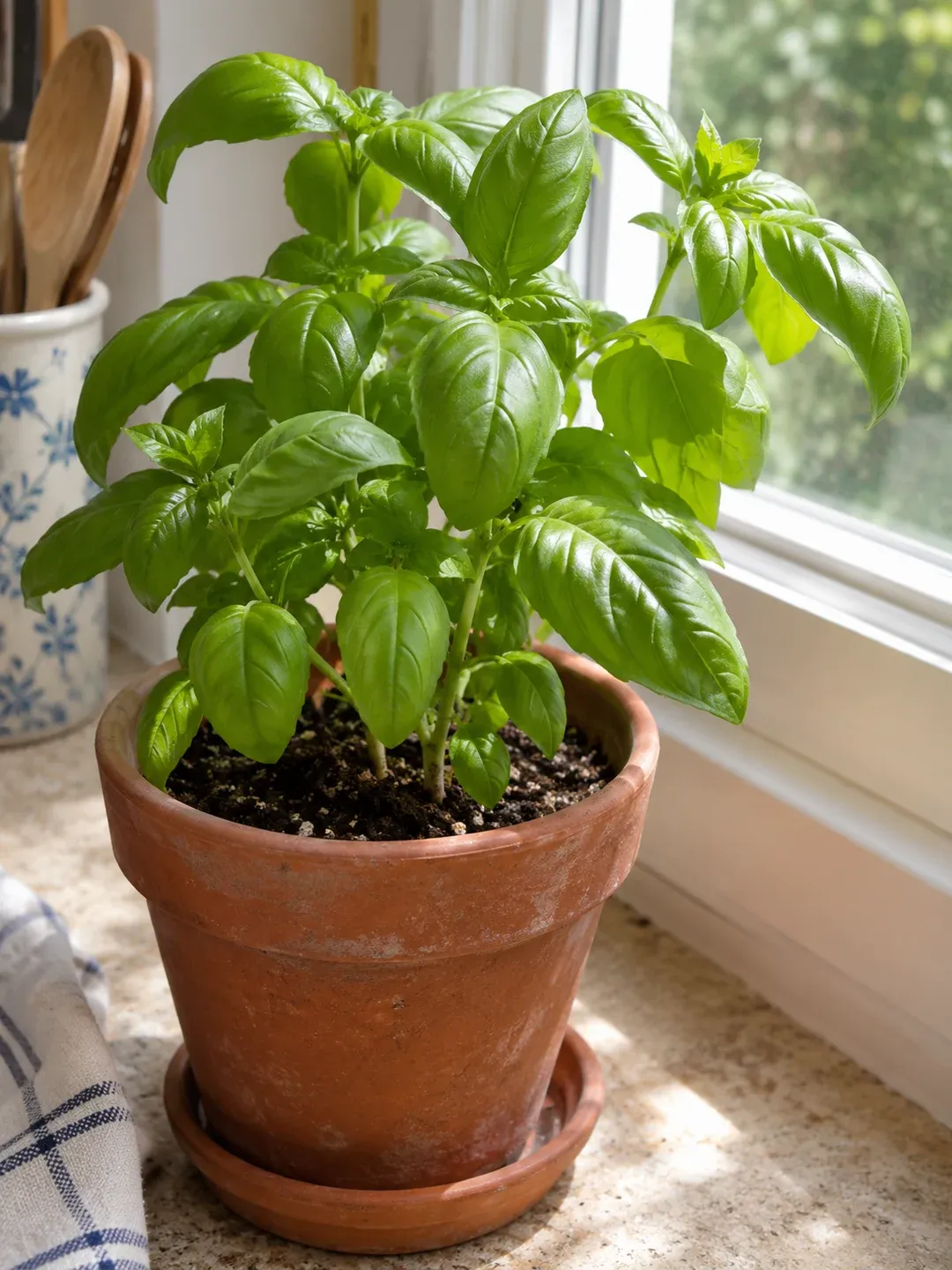
Choose crops after this initial assessment
- A few herbs: Parsley, chives and mint are among the species recommended by Iowa State University for starting indoors. However, they still need light. Keep each species in its own pot to tailor its care.
- Lettuces: The University of Illinois presents them as less demanding in light than other edible plants and suited to cooler temperatures. This does not make them suitable for a dark corner. The lettuce guide details its general requirements.
- Compact tomatoes: These are possible in pots with strong light but require more space and monitoring of pollination indoors, according to the University of Illinois. For a first attempt, reserve this option for a location whose conditions you have verified and for a variety whose mature size you know.
First trial: one parsley plant, one pot, one window
Parsley is among the starter herbs recommended by Iowa State University. To test your home, start with a single labelled young plant in a pot with drainage holes, sized to suit its root ball, with potting compost. Choose the sunniest of the observed locations, away from heating. This initial choice limits the trial; it does not prove that all windows are suitable.
Record the hours of direct sunlight and observe new leaves. If new stems elongate and thin, first recheck the light and move the pot to a brighter location if available. If none is suitable, decide on appropriate lighting or postpone the trial. If growth remains compact and a few harvests are followed by new leaves, continue at this scale before adding more pots. These criteria use the signs of unsuitable light described by the University of Minnesota without promising a parsley yield.
A plant capable of surviving in the room does not necessarily provide regular harvests. If the location is too dark and you do not wish to equip it, postpone cultivation or find another location.
Keep pots accessible and monitor temperature
Choose a stable surface where you can reach each pot, inspect the leaves and empty saucers. Ensure space for the watering can and the fully grown plants without blocking the window opening. These practical checks are part of the plan before purchase.
For herbs, avoid draughts, hot, dry air from heating vents and extreme temperatures, as recommended by the University of Maryland. Also observe what happens near the window in sunlight and at night. The average room temperature does not necessarily describe the temperature at this location.
Prepare the container, growing medium and water drainage
Choose the pot based on root volume and the plant’s future size, considering its depth and total volume. For a standard pot, drainage holes must allow excess water to escape. In a cache-pot, remove the container for watering and let it drain before replacing it. Empty the water collected in the saucer. The University of Maryland notes that a layer of gravel at the bottom does not replace drainage; a container with a built-in water reservoir must be managed according to its design.
Use potting compost intended for container cultivation and suited to the chosen edible plants. Roots have a limited volume of growing medium that must provide air, water and nutrients; dense garden soil used alone may be unsuitable, explains the University of Maryland. The guide on choosing potting compost helps interpret its use and composition.
Decide if a lamp is useful
Horticultural lighting can supplement insufficient natural light. Its installation must match the plants and the cultivated area. Iowa State University advises following the instructions provided with the equipment and then observing growth to adjust the setup.
Follow the manual for assembly, distance from leaves and usage conditions; do not improvise any wiring near water. The lighting duration depends on the crop and the light already received: there is no single setting to copy. Also provide a dark period. Include the cost and daily use of this equipment in your decision before expanding the vegetable garden.
Adjust care to the observed plants
Feel the growing medium before watering, instead of filling all pots at a fixed time. Needs differ: the University of Maryland notes that the compost around thyme and oregano should dry between waterings and warns against excess water in all containers. Adapt care to the species and room conditions.
Record new leaves, the produce you actually use, watering and time spent. Use this record to decide whether to reduce the number of pots, move a crop or continue a trial that is working well. Your goal remains a setup you can maintain, with results observed in your own home.
Sources and references
- Essence of PermacultureDavid Holmgren, Holmgren Design, in English Accessed on 16 October 2026.
- Lighting for indoor plants and starting seedsUniversity of Minnesota Extension, in English Accessed on 16 October 2026.
- Indoor vegetable gardeningNicole Flowers-Kimmerle, University of Illinois Extension, in English Accessed on 16 October 2026.
- Growing Herbs IndoorsAaron Steil, Iowa State University Extension and Outreach, in English Accessed on 16 October 2026.
- Growing Herbs in Containers and IndoorsUniversity of Maryland Extension, in English Accessed on 16 October 2026.
- Types of Containers for Growing VegetablesUniversity of Maryland Extension, in English Accessed on 16 October 2026.
- Growing Media (Potting Soil) for ContainersUniversity of Maryland Extension, in English Accessed on 16 October 2026.
- How to Set Up Supplemental Lights for Indoor PlantsAaron Steil, Iowa State University Extension and Outreach, in English Accessed on 16 October 2026.