
The vegetable garden notebook / Techniques
Using Hemp Mulch in the Vegetable Garden: Application and Precautions
Hemp mulch can cover the soil between vegetables. To decide where to use it, first assess wind exposure, soil condition, and upcoming sowing.
Adapt this guidance to your garden’s climate and conditions.
Practical steps
- Select the area
Identify established plants, rows to be sown, and wind exposure.
- Prepare the soil
Remove weeds and wait if the soil is waterlogged or frozen.
- Apply to the surface
Spread the mulch without burying it or covering the base of plants.
- Check after application
Monitor mulch displacement and soil moisture beneath the cover.
What is hemp hurd?
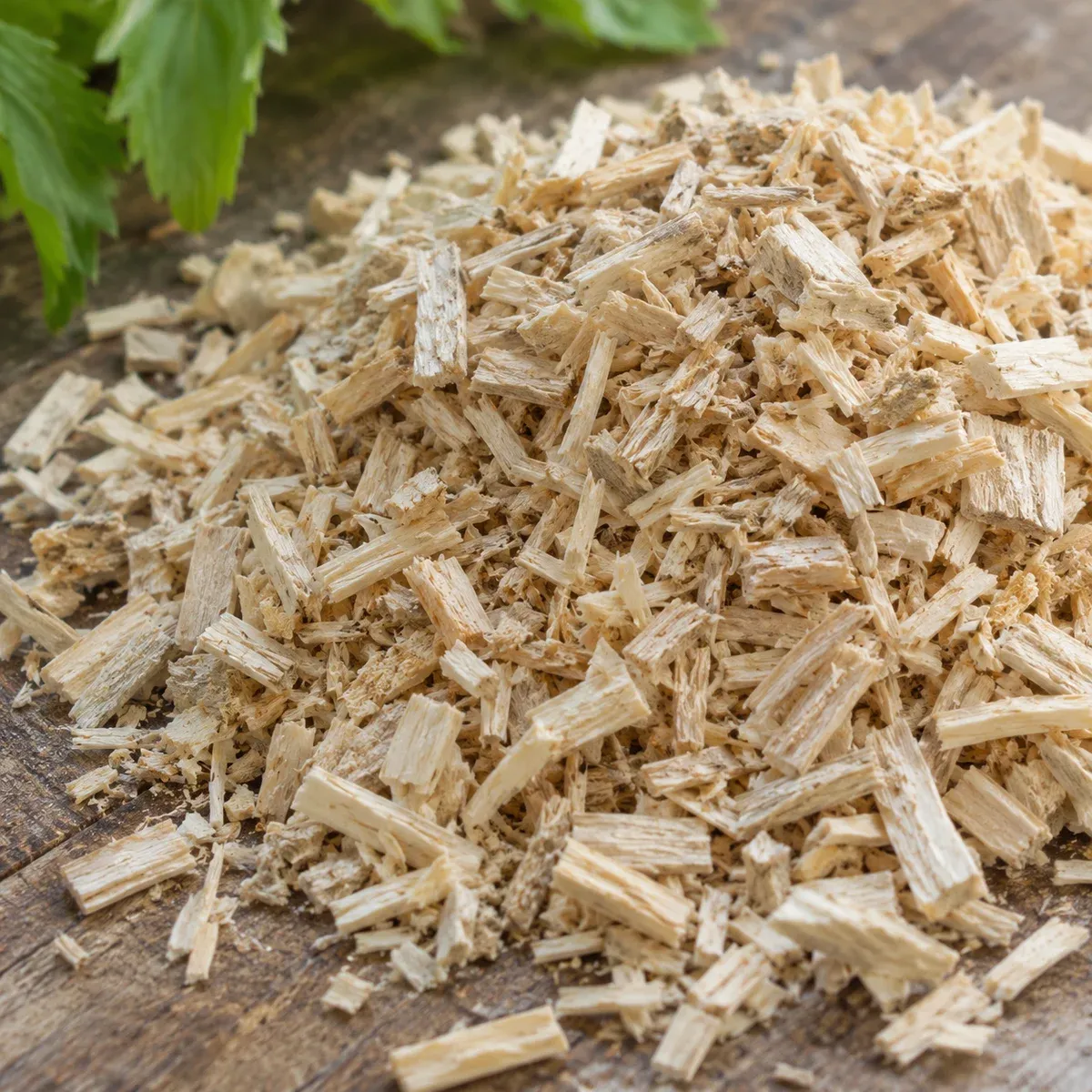
Hemp hurd is the woody core of the hemp stem, separated from the fibres during decortication. Jardins de France describes it as a lightweight, absorbent, and insulating material, commonly used as horticultural mulch. This guide focuses on this material in bulk; a hemp fibre mat is applied differently.
The material’s capacity to absorb water does not measure the watering savings achieved in your vegetable garden. Reducing evaporation and limiting weeds through lack of light are general effects of mulching. They do not demonstrate the superiority of hemp over other mulches.
Where can you try it in the vegetable garden?
Start between established plants, in an area that is easy to monitor. Keep future sowing rows accessible: repeated work on the bed needs to be taken into account with any mulch in the vegetable garden, as noted by Jardins de France.
If you plan to sow the entire bed soon, wait until the seedlings have emerged and young plants have developed before mulching between them. The general mulching guide helps you choose another material when your needs differ.
Preparing moist soil, without excess water
Remove weeds before application, including the roots and rhizomes of unwanted perennials. Mulch does not replace this preparation, according to Jardiner Autrement.
Next, examine the soil. The RHS recommends mulching moist soil; its application guide advises waiting if the soil is waterlogged or frozen. Do not automatically water a plot that is already very wet before applying hemp. Soil condition takes precedence over a fixed date.
Applying hemp and accounting for wind
Spread the material on the surface without incorporating it into the soil. Leave the root collar—the junction between stem and roots—uncovered, in line with the precautions from Jardiner Autrement.
Hemp is sensitive to wind. Jardins de France suggests watering after spreading to bind the particles. Apply during calm weather and check afterwards if the cover has shifted. On a very exposed plot, a limited initial trial allows you to observe its stability before covering more.
Read the bag before calculating quantity
Ensure it is indeed bulk hemp hurd intended for horticultural mulching, then note the particle size, bag volume, and the coverage area stated with its thickness. Hemp hurd also has other uses, such as bedding or construction: the material’s name alone does not describe the product, as shown by Jardins de France.
When purchasing, start with the thickness indicated for the exact product, rather than assuming the same as long straw stems. The geometric calculation is: area in m² × thickness in cm × 10 = volume in litres. Example calculation, without recommending a specific thickness: a 2 m² area covered to a depth of 3 cm requires 60 litres before settling. If the packaging directly states coverage at a given thickness, compare it to this same area.
The application guide links thickness to particle size; it does not provide a universal dosage for all hemp hurd. If the bag does not specify coverage, request the product instructions or limit the purchase to a measured trial. Note the volume used and the actual area covered, then observe settling and bare patches before adding more.
Keep sowing rows clear
For direct sowing, move the mulch aside without burying it. It could hinder seedling emergence. Jardiner Autrement advises waiting until seeds have fully germinated before mulching; then protect the shoots and their base. Also move the material aside when planting to avoid mixing it with the soil in the planting hole.
What should you monitor after application?
The soil beneath the mulch. A wet hemp surface does not guarantee water is reaching the roots. Occasionally move the cover aside to check the soil. The RHS emphasises that irrigation water must penetrate the mulch: adjust your watering based on actual moisture, using the watering guide for reference.
Young leaves. Mulch can harbour slugs and snails, particularly during the sowing period, according to Jardins de France. Do not rely on hemp as a barrier against these pests; inspect plants if damage appears.
The remaining cover. Biodegradable mulches decompose gradually, notes the RHS. Decide on additional mulch based on observed condition and the next crop, without assuming a fixed service life.
Sources and references
- Hemp in all its formsJardins de France, SNHF; Sylvie Hubin-Dedenys Accessed on 16 October 2026.
- Mulching garden bedsJardins de France, SNHF; D. Veschambre and Fabien Robert, Astredhor Accessed on 16 October 2026.
- The effects of mulching in the gardenJardiner Autrement, SNHF Accessed on 16 October 2026.
- How to mulch with organic matterRoyal Horticultural Society (RHS), in English Accessed on 16 October 2026.
- Mulches and mulchingRoyal Horticultural Society (RHS), in English Accessed on 16 October 2026.