
The vegetable garden notebook / Crops
Growing Mertensia maritima: sowing, pots and oyster-flavoured leaves
Mertensia maritima is grown for small harvests of oyster-flavoured leaves. Its spreading habit, uneven seedling emergence, and sensitivity to waterlogging require more attention than a simple mixed herb patch.
Adapt this guidance to your garden’s climate and conditions.
Which oyster plant to buy and where to place it?
Choose a plant or seeds labelled Mertensia maritima. The SNHF documents the use of its leaves, often eaten raw, for their oyster-like flavour. This advice applies to this cultivated and identified species; the name “oyster plant” alone is insufficient to identify a plant found outdoors.
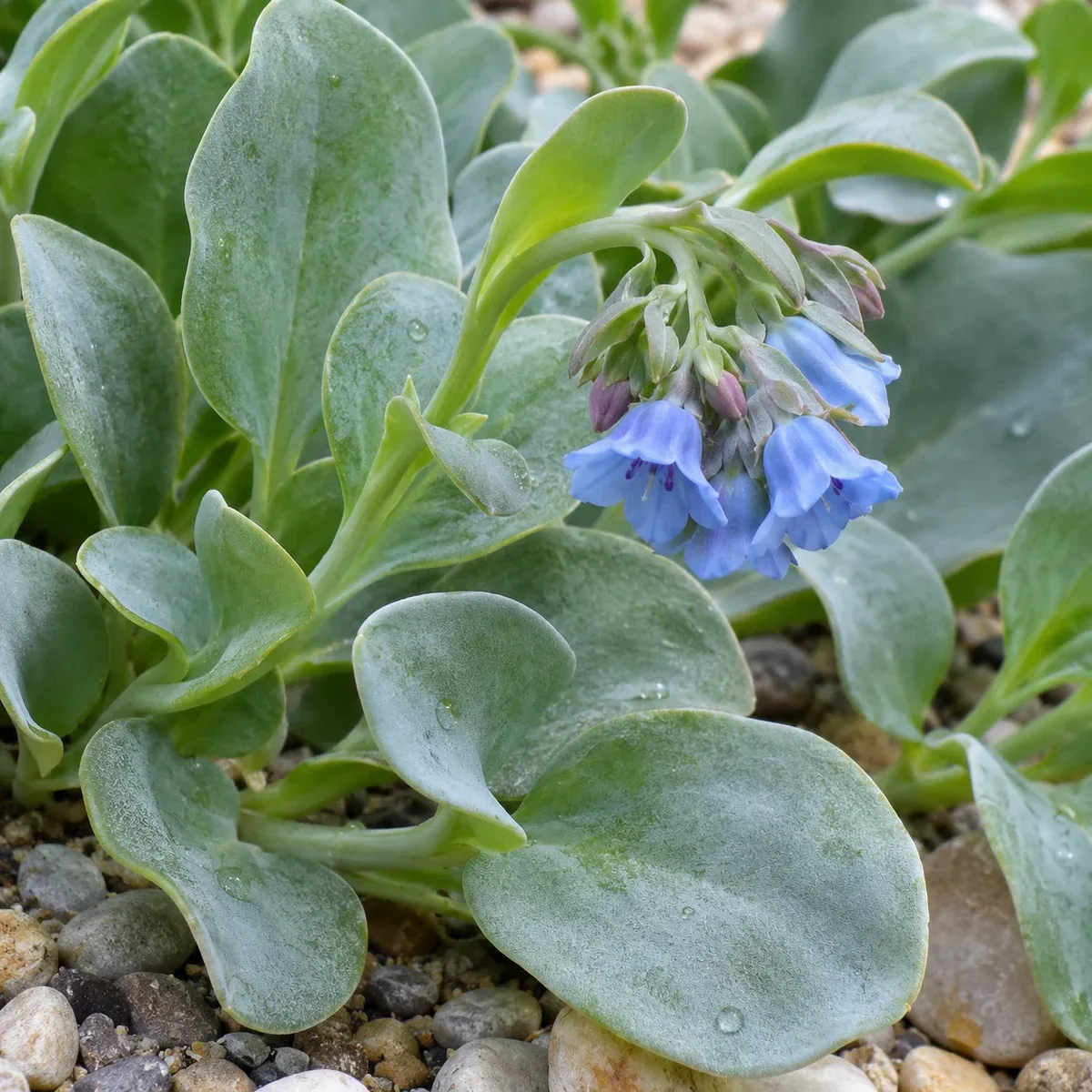
The RHS describes a spreading perennial, approximately 10 cm tall, spreading 10 to 50 cm, with blue flowers from pink buds in early summer. Plan for its horizontal growth, even if the purchased pot seems small.
Plant it alone in its container, or clear a space without competition in the garden. The SNHF emphasises the benefits of using a pot. The Sainte Marthe seed packet protocol suggests 60 cm between plants; this is a guideline from this supplier, not the minimum pot size.
Starting with a plant or preparing seeds with a cold treatment
A young plant avoids the germination stage. For sowing, use a seed tray or pots, a fine, well-drained substrate, a label, and a bright location protected from direct sunlight.
The Sainte Marthe seed sheet first describes storing seeds in the refrigerator for one month, then sowing. It does not specify moistening, stratification medium, or special packaging: do not infer that the sown compost should be kept waterlogged and cold for a month. Check the current batch instructions and ask the seed supplier for packaging details if missing before starting.
After this cold period, prepare the free-draining mix of potting compost and sand described in the seed information sheet, sow in a tray, cover lightly, and place at 15–20 °C, out of direct sunlight. The supplier suggests sowing windows in February–March or August–September. Keep the substrate moist without saturation and protect young plants from frost. Seedling emergence, expected at around twenty days, remains uneven: keep the sown tray or pots for longer if no seedlings appear straight away and follow the instructions for the purchased batch.
The RHS describes an alternative method: sowing in autumn in containers in a cold frame, then keeping young plants shaded and free from drying out. This British protocol is not a universal French calendar. Choose one complete method suited to the equipment you have, rather than adding together cold-treatment periods from different methods.
The Sainte Marthe guide transplants young, leafy plants while preserving the root ball, once the risk of frost has passed. To propagate an established crown, the RHS suggests careful division at the start of spring growth.
Ensuring drainage, moisture, and shade during hot hours
The RHS recommends a gritty, very free-draining soil of low fertility, in sun with midday shade. Avoid placing it in constantly waterlogged soil or over-fertilising to accelerate growth. RHS
In pots, choose a container with drainage holes and enough room for the spreading stems. Monitor water drainage and the actual moisture of the substrate. Sainte Marthe advises partial shade and a moist root ball, without waterlogging. Water as the substrate dries, without a daily automatic schedule. Sainte Marthe
Harvesting leaves and observing flowering
Pick a few leaves from a well-developed plant, leaving enough foliage to sustain growth. They do not keep well: the Sainte Marthe guide recommends consuming them on the day of harvest. The plant provides flavour; it does not provide a harvest comparable to a whole lettuce.
The RHS recommends cutting back after flowering: identify stems that have flowered before trimming, preserving the crown and new shoots. This maintenance cut does not mean uprooting or dividing the plant. On a young plant that is still small, keep cutting back modest and avoid taking a large leaf harvest at the same time. The source gives no cutting height and makes no promise of another harvest. Also inspect leaves for damage and the presence of slugs or snails, explicitly noted by this source. RHS
Overwintering without confusing dormancy with crown loss
The foliage dies back in winter. Sainte Marthe advises placing the pot in an unheated greenhouse or lightly heated conservatory to protect it from excessive rain. Losing its foliage in cold weather does not mean the plant has died. Sainte Marthe
Keep the planting spot labelled and monitor drainage until regrowth. If decline occurs during active growth, also examine the substrate and damaged tissues to check the crown’s condition.
Key points for this crop
Practical guidance
- Identity
- Mertensia maritima, herbaceous perennial with deciduous foliage
- Harvest
- Fresh leaves, picked as needed
- Soil
- Very well-drained, remaining moist during growth
- Space
- Spreading habit; grown alone to limit competition
Sources and references
- Aromatic plants: a world of flavours within reach — Mertensia maritimaSNHF, vegetable and fruit section, April 2023 Accessed on 18 October 2026.
- Mertensia maritimaRoyal Horticultural Society, in English Accessed on 18 October 2026.
- Mertensia maritima or oyster plant (NT)La Ferme de Sainte Marthe, seed supplier Accessed on 18 October 2026.
- Growing Mertensia maritima successfullyLa Ferme de Sainte Marthe, seed supplier guide Accessed on 18 October 2026.