
The vegetable garden notebook / Crops
Growing artichokes: plants, harvest and winter protection
Artichokes occupy their space long-term and are harvested before the flowers open. Start by checking available space, drainage and the variety’s cold resistance, then choose between plant, offshoot or seed.
Adapt this guidance to your garden’s climate and conditions.
Choosing the variety and starting method
The SNHF lists ‘Gros camus de Bretagne’, ‘Violet hâtif de Provence’ and ‘Gros vert de Laon’. Select based on your climate, mature plant size and intended use: large fleshy flower heads or small purple ones, a distinction also highlighted by the CTIFL. Colour alone does not indicate cold resistance.
A plant or an offshoot—a young shoot taken with a heel and roots—simplifies establishment. An offshoot from an identified clump retains its characteristics. Sowing seeds yields more plants, but their appearance and quality may vary: the RHS advises selecting the best rather than expecting replicas of the parent plant.
Planting at the right time, with adequate space
The SNHF recommends March–April or September–October. In France, prioritise spring if winters are cold or the soil is damp. Plant in autumn only where the site and climate allow good establishment before harsh winter weather. For young plants raised in warmth, wait until frosts are over and harden them off.
Set aside fertile, well-drained soil in full sun, sheltered from strong winds. Weed and incorporate mature garden compost before planting. A French guideline is 80 cm between plants and 1 m between rows. This plant can reach about 1.50 m in height: ensure access for harvesting and anticipate shade on neighbouring vegetables.
Plant at the same depth as before, firm gently and water. Sow the seeds about 2 cm deep in individual pots, in a warm, bright spot; keep the potting compost moist but not waterlogged. Transplant well-developed seedlings after hardening them off. These steps are detailed by the RHS.
In a large container, expect more intensive care
Open ground is better suited to this large plant. The RHS allows for cultivation in a container at least 45 cm wide and deep, with a suitable potting mix. Ensure water drainage and monitor regularly during dry periods. This minimum does not promise the same lifespan or harvest as a plant grown in the ground.
Watering, feeding and allowing the plant to establish
Pay close attention to watering during the first season and when flower heads form in hot, dry weather. Mulching reduces drying and weed competition; weed carefully around the roots. Consult the mulching guide to choose an appropriate material.
Soil prepared with garden compost does not automatically need repeated feeding. The RHS suggests extra feed particularly for plants that crop poorly or are grown in containers. First check for water shortage and review the plant’s age and the conditions in which it was planted. The Utah State University guide also highlights the importance of a cool period in triggering flowering for some artichokes: the absence of a head in the first year does not in itself indicate a deficiency.
To encourage rooting of a young plant, you may follow the RHS’s cautious approach: remove the first flower stems and begin harvesting in the second season. The first harvest depends on the plant material and conditions; do not assume it will occur in the planting year.
Harvesting before opening and short-term storage
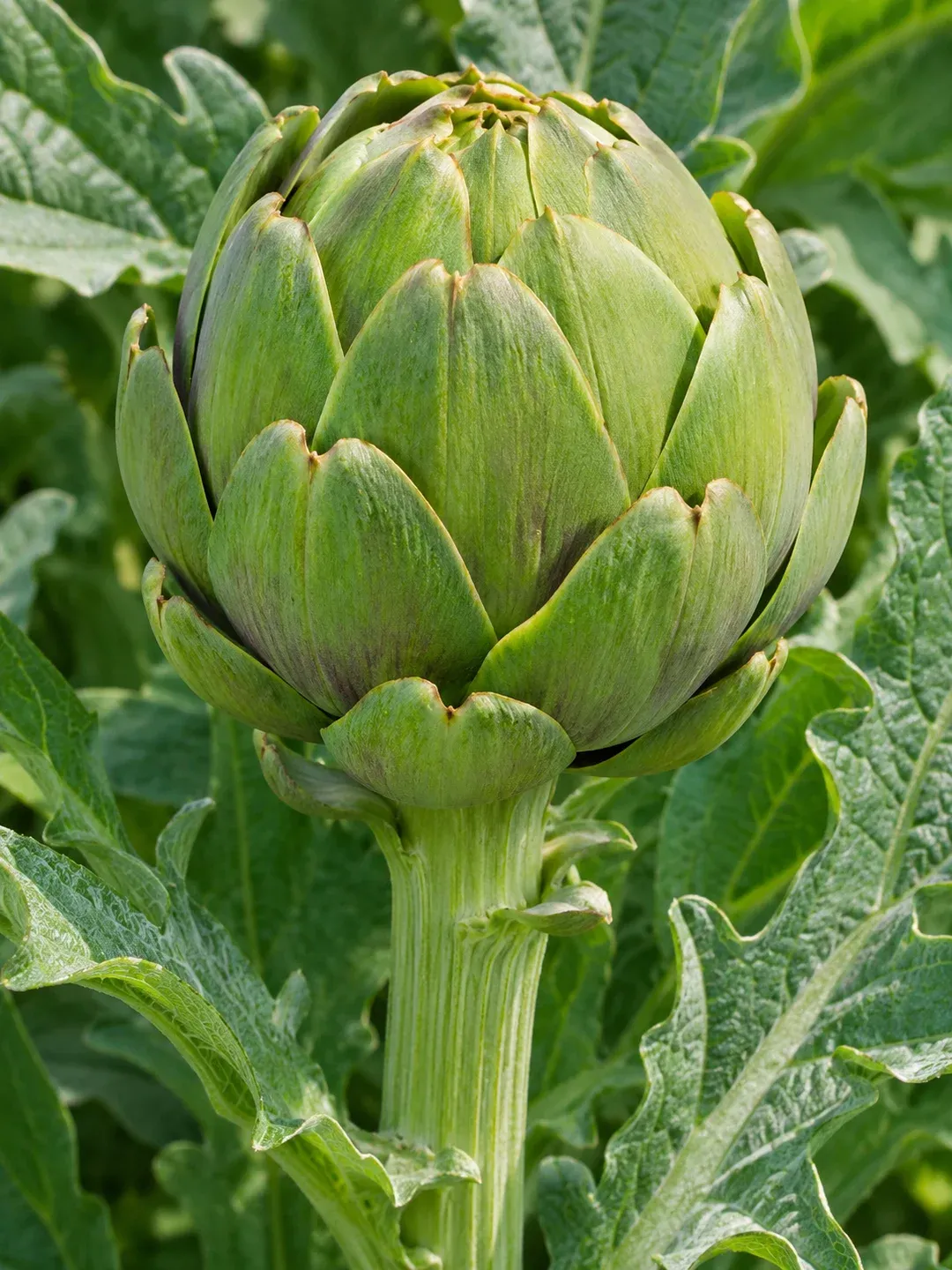
Pick flower heads when they reach full size but remain tightly closed. The SNHF places the harvest between June and September, adjusted for variety and region, and advises leaving about 15 cm of stem. Cut the main head first, then monitor smaller ones. A head left in place opens into a purple flower: it has passed the ideal culinary stage.
The CTIFL states three to four days in the refrigerator for a whole artichoke with its stem. Harvest according to your needs, rather than waiting for all heads to be ready at once.
Renewing the clump and preparing for winter
After harvest, remove the old flower stalks. In spring, look around a healthy clump for a vigorous young rosette 20 to 30 cm tall. The RHS, in its “Propagating” section, describes a vertical cut with a sharp knife, keeping a portion of root with the offshoot. Trim leaves to about 15 cm, then replant immediately in prepared soil. Detach a shoot with roots, not just a leaf. Water after planting as for other young plants. The RHS suggests dividing clumps every four to five years to renew plants; let their actual vigour guide when to replace them.
In autumn, the SNHF recommends earthing up around the base or using horticultural fleece. The RHS describes protective mulching, then adding a cloche or fleece during very cold spells; young, less established plants are most vulnerable. Prepare protection that can be lifted to inspect the crown and soil: this occasional extra protection does not mean the clump should be kept permanently enclosed. Avoid trapping water around the base: cold and excess moisture can compromise survival. There is no universal minimum temperature for all varieties and soils.
When a clump declines
Check soil moisture, the crown and the undersides of leaves. The SNHF lists aphids, downy mildew and powdery mildew; the Utah fact sheet also describes decline linked to root rot. Yellowing or slow regrowth does not distinguish between them. Photograph the clump and lesions, look for insects and seek identification before treating.
Globe artichoke is a perennial member of the Asteraceae family. Reserve its space for several seasons in the crop rotation plan, without moving it annually to follow a schedule. When replacing plants, take their pest and disease history into account.
Key points for this crop
Practical guidance
- Exposure
- Full sun, sheltered location
- Spacing
- Guide: 80 cm between plants, 1 m between rows
- Lifespan
- A perennial; replace clumps when they lose vigour
- Harvest
- Fully developed but tightly closed flower heads
Sources and references
- Globe artichokeFrench National Horticultural Society (SNHF) Accessed on 18 October 2026.
- How to grow globe artichokesRoyal Horticultural Society (RHS), in English Accessed on 18 October 2026.
- How to grow artichoke in your gardenUtah State University Extension, Dan Drost, in English Accessed on 18 October 2026.
- Globe artichoke — Sales guide for fresh fruit and vegetablesCTIFL Accessed on 18 October 2026.