
The vegetable garden notebook / Crops
Growing curry plant: fragrance, drainage, pruning and winter care
Curry plant forms a small silvery shrub with a curry-like scent. Its fragrance is an asset in the garden, but sources disagree about its use in cooking. This guide focuses on growing it for its scent and flowers for drying.
Adapt this guidance to your garden’s climate and conditions.
Identifying curry plant and deciding how to use it
Purchase a plant labelled Helichrysum italicum and retain the full taxon or variety name. The CNPMAI notes that immortelle nomenclature has caused confusion even in professional cultivation. Fragrance alone is not sufficient for identification.
The name “curry plant” here refers to the scent of the foliage. The SNHF reports its use to flavour dishes, while Indiana University advises against this and distinguishes it from the curry leaf tree, Murraya koenigii. These references do not support treating all parts of the plant as a common food. For this guide, focus on garden fragrance and flowers for drying, without inferring recipes or essential oil use from its name.
Planning for the mature shrub in sun, in the ground or in pots
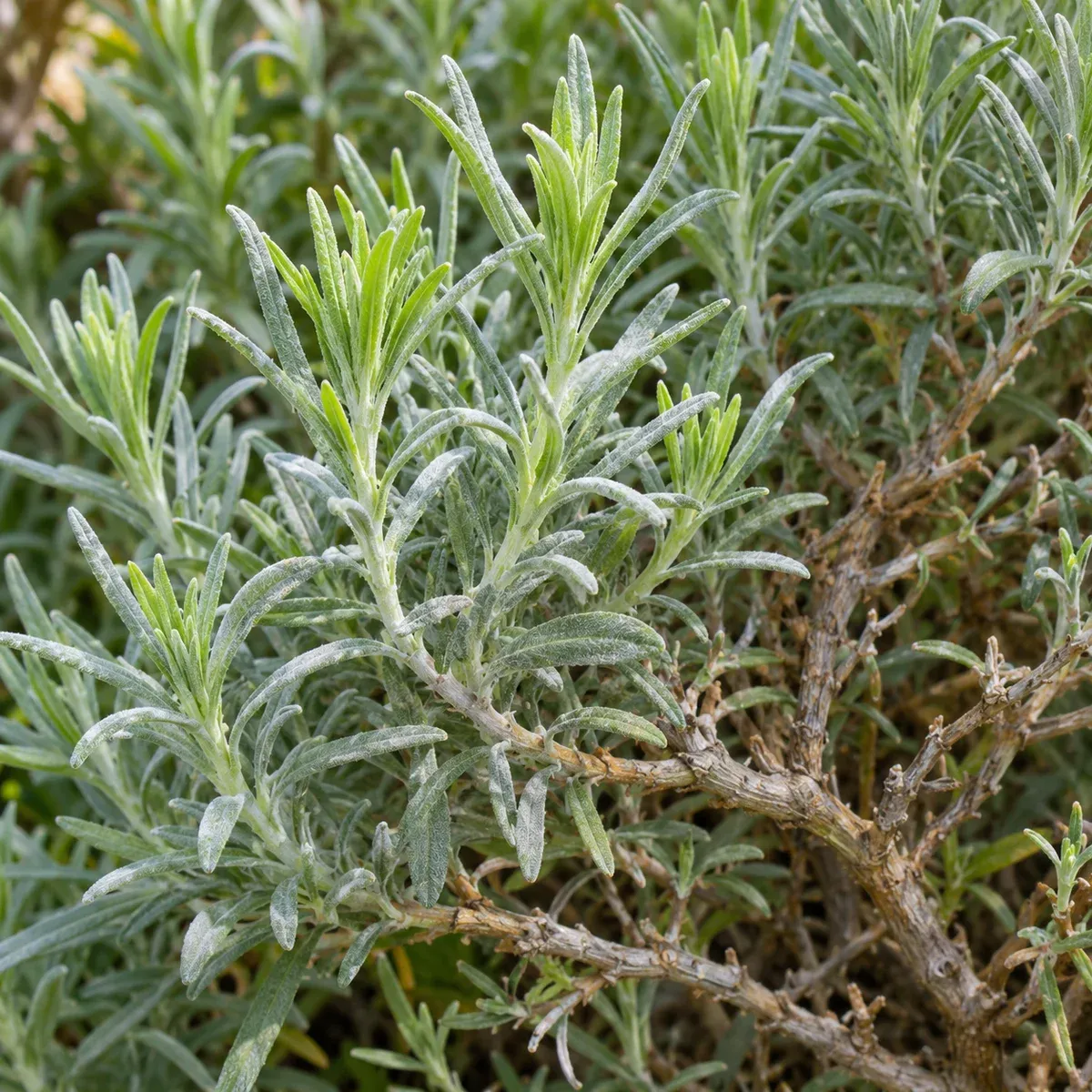
The RHS describes an evergreen subshrub 10 to 50 cm tall with a spread of 50 cm to 1 m. Allow for this width around the base according to the selected variety: this is not a small herb to be squeezed between seasonal vegetables.
Choose a position in full sun with very well-draining soil of low to moderate fertility. The RHS recommends neutral to alkaline soil for horticultural cultivation. There is no need to improvise liming based solely on the species name: the CNPMAI shows that different taxa do not all occupy the same natural soils. RHS, CNPMAI
Semailles confirms that it can be grown in a pot. Choose a stable container with drainage holes and room for the plant’s mature spread; the sources do not specify a pot volume that suits every plant. Preferably plant a young specimen once excess water has drained from the soil and frost is no longer a threat, keeping the top of its root ball at its original level. This makes establishment easier to monitor.
Sowing or propagating an identified plant
Starting with a ready-grown plant makes the first planting easier. For seeds, Semailles indicates 18 °C and seedling emergence in approximately 20 to 30 days, with only a very thin covering because the seeds are so small. Starting under cover in spring allows monitoring of young plants before planting out after frosts. Use a well-draining seed compost, kept moist but not saturated, and follow the packet’s instructions.
The RHS suggests semi-ripe cuttings in summer, to be overwintered frost-free. These are shoots beginning to firm up, not old dry stems. Keep propagated material labelled and protected during rooting. To prepare the cutting, follow the RHS semi-ripe cuttings method: take a healthy shoot of the current season, firm at the base with a still-soft tip, cut below a node, remove lower leaves and the tender tip, then place in a free-draining cutting compost. Keep moist, in light but not direct sun, and ventilate to prevent excess humidity. This general method complements species-specific guidance; frost-free overwintering remains as specified for this plant.
Adjusting watering and pruning as growth resumes
The low water requirement indicated by Semailles does not provide a watering frequency. Check the root ball of a young plant or one growing in a sunny pot; water when it dries, then let excess water drain away. An established plant in the ground requires different monitoring. If a plant turns brown, check the soil before automatically adding water.
Soil of low to moderate fertility is sufficient according to the RHS: no intensive fertiliser programme is justified here. For plants in pots, base any feeding on the compost used rather than on a promise of more flowers. RHS
The RHS guide refers to spring pruning. Its pruning guide recommends for this group shortening shoots that have flowered; prune as growth resumes, once severe frosts have passed. Group 10 describes cutting back flowered shoots, leaving 1.5 to 2.5 cm above the previous year’s wood. Identify this junction on the stem before cutting; this does not mean cutting the whole shrub down to 2 cm above the ground. Maintain a leafy structure and avoid turning this maintenance into severe cutting back of an old, bare plant. RHS, group 10
Harvesting flowers, monitoring symptoms and overwintering
Semailles places flowering in summer and into autumn under its conditions. Harvest some stems when the small yellow flowers are formed to dry in bouquets; the SNHF documents their colour retention. The exact timing varies with location and plant.
The RHS notes possible susceptibility to powdery mildew, downy mildew, and, where present, honey fungus. If a coating appears on the leaves or the plant starts to decline, examine several parts of the plant to determine the cause. RHS
In winter, protect the base primarily from persistent damp and cold desiccating winds. Move pots if necessary to a bright, sheltered spot away from rain, ensuring drainage remains clear. Adjust winter protection according to cold and exposure, even if the plant retains its leaves. RHS
Where frosts are prolonged and the plant’s local hardiness is unknown, the cautious choice is a pot that can be moved to a bright, frost-free place for winter. Do not plant a young, poorly rooted specimen outside late in the season and leave it to face its first winter there.
Key points for this crop
Practical guidance
- Identity
- Helichrysum italicum, evergreen subshrub
- Location
- Full sun and very well-draining soil
- Primary use
- Fragrant foliage in the garden, flowers for dried bouquets
- Caution
- Winter damp and cold desiccating winds
Sources and references
- Aromatic plants: a world of flavours within reach — curry plantSNHF, vegetable and fruit section, April 2023 Accessed on 18 October 2026.
- Helichrysum italicumRoyal Horticultural Society, in English Accessed on 18 October 2026.
- Pruning evergreen shrubs — pruning group 10Royal Horticultural Society, in English Accessed on 18 October 2026.
- Helichrysum or curry plantSemailles, seed producer, Belgium Accessed on 18 October 2026.
- Murraya koenigii — Fragrant plantsIndiana University Bloomington, Biology Building Greenhouse, in English Accessed on 18 October 2026.
- Clarification of the nomenclature of Helichrysum italicumConservatoire national des plantes à parfum, médicinales, aromatiques et industrielles, 2015 Accessed on 18 October 2026.
- Cuttings: semi-ripeRoyal Horticultural Society, in English Accessed on 8 November 2026.