
The vegetable garden notebook / Crops
Growing Monardas: Identifying Bergamot, Sowing, and Harvesting
Monardas are aromatic perennials with summer flowering. The name bergamot refers to several plants: check which species you are buying before choosing where to grow it and what to harvest.
Adapt this guidance to your garden’s climate and conditions.
Identifying Monarda and Selecting the Intended Use
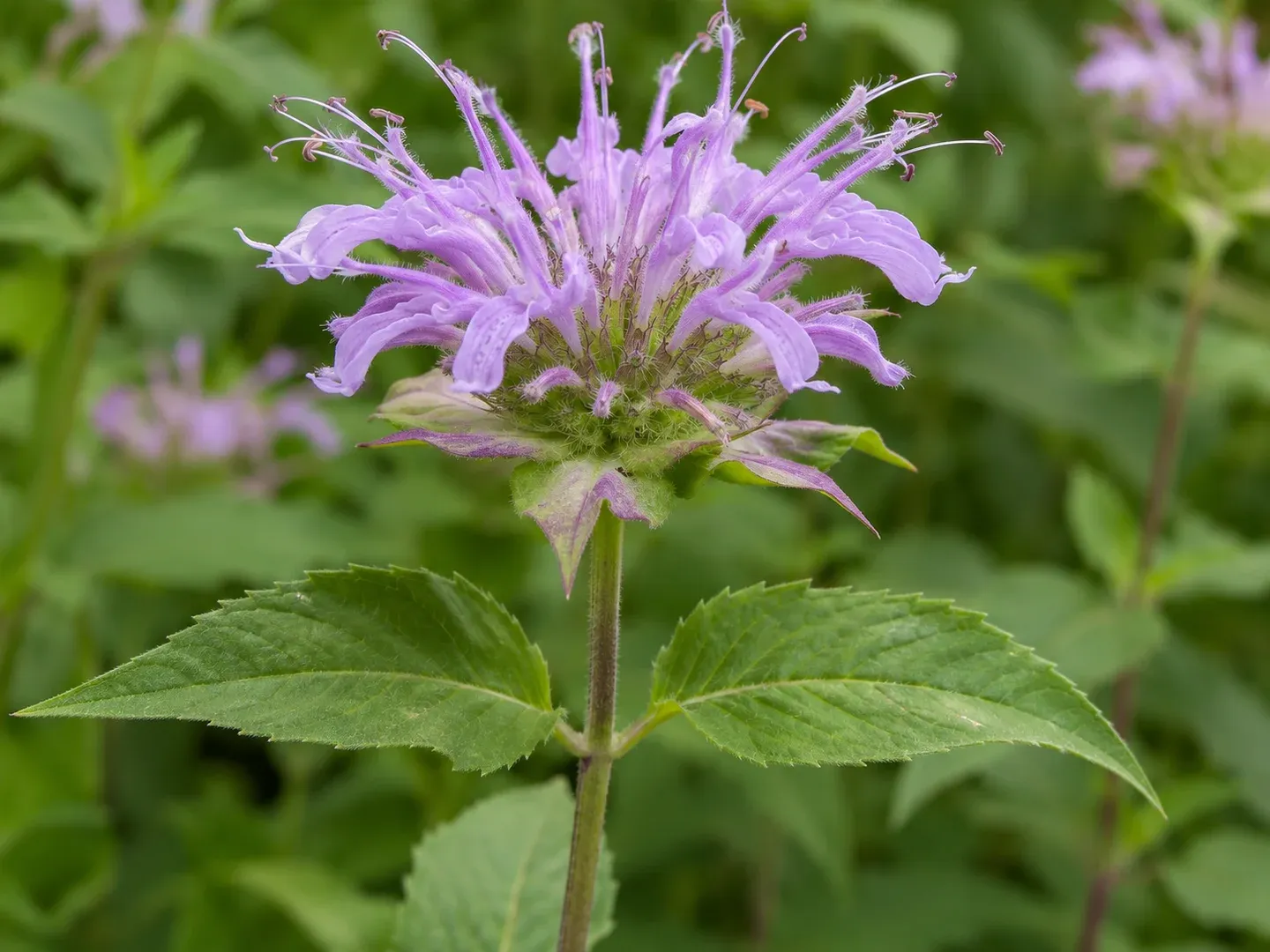
Wild bergamot is notably the name for Monarda fistulosa, as specified by Maryland Extension and the RHS. Monarda didyma is another monarda, commonly sold as bergamot or Oswego tea. Both belong to the Lamiaceae family; they are not the bergamot tree Citrus bergamia, the citrus that provides the Earl Grey fragrance. Maryland, RHS fistulosa, RHS Monarda
Uses are not based on this name similarity: the RHS documents the culinary and infusion uses of didyma, and Kokopelli describes the leaves and flowers of fistulosa for flavouring preparations. Choose a plant or packet labelled with the species and, if present, the variety; for harvesting, clarify the food use and any treatments. An unidentified ornamental monarda or a scented hybrid does not automatically share the same use. RHS, Kokopelli
Allocating a Permanent Spot and Adapting the Site to the Species
Plan for a perennial border rather than a gap between vegetables. The RHS indicates approximately 50 cm to 1 m in height for didyma, 1 to 1.5 m for fistulosa, with a spread that can reach 50 cm in its factsheets. Smaller selections have their own dimensions. For the Sainte Marthe didyma plant, the planting guideline is 40 cm between plants; also ensure access for harvesting and dividing. RHS didyma, RHS fistulosa, Sainte Marthe
For didyma, aim for moderately fertile, moist but well-drained soil, in full sun or light shade. The soil should retain moisture without becoming waterlogged. Deep shade results in few flowers. RHS didyma, RHS Monarda
For fistulosa, references differ: the RHS recommends a moist, humus-rich soil; Maryland, however, favours poor, rather dry soil to prevent stems from flopping. NC State describes tolerance to occasional drought but also increased powdery mildew on stressed plants. In the garden, start with well-drained soil without initially enriching it heavily; observe stem stability and drying before adjusting water or fertility. This cautious approach does not turn monarda into a plant to be left to wither in dry conditions. RHS fistulosa, Maryland, NC State
Avoid crowding it against other large clumps: air circulation matters, and didyma spreads via rhizomes. Choose neighbours with compatible space and water needs, without assuming mutual protection. Illinois
Starting with a Plant or Sowing an Identified Batch
Buying an identified plant avoids the wait involved in growing from seed and tells you which selection you have. For a first attempt, plant it in spring once excess water has drained from the soil, hardening it off first if it has been grown under cover. Water the root ball at planting and monitor its establishment; do not judge moisture by the surface alone.
Two seed protocols must remain distinct:
- For fistulosa, Kokopelli recommends sowing in small pots in a bright place under cover at 15–20 °C, eight to ten weeks before transplanting. Cover lightly, press down gently, keep moist without waterlogging, then transplant young plants about 10 cm tall. Its spring sowing window under cover runs from March to May; autumn is reserved for mild climates. Kokopelli
- For didyma Panorama Mix, Johnny’s suggests starting seven to nine weeks before planting, at 20–22 °C, with the seeds only lightly covered; seedlings are expected to emerge in 10–14 days. This timeline applies to its batch, to be compared with your seed instructions. Its spacing of 30–45 cm corresponds to this selection. Johnny’s
Do not expect abundant flowering in the first season of a perennial sowing. The Panorama factsheet indicates a long production cycle; a clump establishing itself is not necessarily failing. Johnny’s
Monitoring Water in Soil and Pots
For didyma, avoid prolonged summer drought as well as excess winter water. Water the soil around the clump when the earth dries; adjust the amount based on rooting and rainfall. The species factsheet calls for moderate fertility: a lack of vigour does not immediately justify fertiliser. RHS didyma
Kokopelli states that fistulosa can be grown in pots. Choose a perforated container that allows space for the root ball and the expected growth, with a well-draining substrate. You will need to check moisture more often than in the ground; ensure drainage works and the pot remains stable as the flowering stems grow. These home-gardening references do not establish a specific pot capacity in litres or fertiliser dose. Kokopelli
Harvesting Leaves or Allowing Flowers to Bloom
On a well-established plant, pick a few healthy leaves as needed and leave enough foliage to sustain growth. The leaves and flowers of didyma are described by Sainte Marthe for flavouring dishes; its culinary flowers are also confirmed by the RHS and Johnny’s. For fistulosa, the aromatic use of both parts is described by Kokopelli. These uses apply to identified cultivated plants, without any dosage recommendation or claim of therapeutic benefit. Sainte Marthe, RHS, Johnny’s, Kokopelli
Prefer small harvests used fresh. For storing leaves, the SNHF’s general method involves separating species and drying them in a dark, dry, ventilated place, then storing them only once completely dry, in a labelled container protected from light. This method does not establish a validated storage life specifically for monardas; discard any damp or mouldy batch. SNHF
Allow some flowering stems to bloom to enjoy the summer flowering and visiting insects. Removing faded flowers may prolong blooming; keeping seed heads means accepting potential self-seeding. You cannot aim for heavy leaf harvests and full flowering from the same shoots at once. RHS Monarda, Illinois
Dividing the Clump and Overwintering
An old, crowded, or less vigorous clump can be divided in spring, as growth resumes. The RHS suggests this renewal for fistulosa approximately every three years; Illinois indicates three to four years for didyma. Take healthy portions, replant, and monitor their moisture like young plants. The schedule depends on the plant’s condition, without waiting for an exact age if space is limited. RHS fistulosa, RHS didyma, Illinois
The foliage is deciduous: dry stems in winter do not alone indicate that the rootstock is dead. For didyma, the RHS advises cutting stems in autumn; for fistulosa, it also allows keeping dry heads over winter. Above all, ensure drainage remains free, including under pots. RHS didyma, RHS fistulosa
White Foliage, Eaten Shoots: Observe Before Acting
A white, powdery deposit may suggest powdery mildew, a documented issue in monardas. Check the clump’s density and actual moisture: drought stress can promote this problem, even if its name sometimes leads to reduced watering. Rust is also mentioned for fistulosa. Neither diagnosis follows from a single yellow leaf. NC State, RHS Monarda
For shoots nibbled in spring, look particularly for slugs, as cited by the RHS. Assess any lack of new growth when growth would normally resume, taking the condition of the root ball and crown into account. Avoid routine treatments; do not harvest diseased parts for consumption. RHS didyma, RHS fistulosa
Key points for this crop
Practical guidance
- Species Covered
- Monarda didyma and Monarda fistulosa, two distinct species
- Lifecycle
- Deciduous perennials, to be renewed by division if the clump weakens
- Objective
- Aromatic leaves or flowers from cultivated and identified plants
- Key Consideration
- Powdery mildew favoured by drought and overcrowded clumps
Sources and references
- Monarda — Genus GuideRoyal Horticultural Society, in English Accessed on 18 October 2026.
- Monarda didymaRoyal Horticultural Society, in English Accessed on 18 October 2026.
- Wild Bergamot, N0187Association Kokopelli, seed supplier Accessed on 18 October 2026.
- Wild BergamotUniversity of Maryland Extension, updated 17 July 2023, in English Accessed on 18 October 2026.
- Monarda fistulosaRoyal Horticultural Society, in English Accessed on 18 October 2026.
- Monarda fistulosaNorth Carolina Extension Gardener Plant Toolbox, in English Accessed on 18 October 2026.
- Beebalm — Monarda didymaUniversity of Illinois Extension, in English Accessed on 18 October 2026.
- Panorama Mix — Monarda SeedJohnny’s Selected Seeds, seed supplier, United States, in English Accessed on 18 October 2026.
- Edible flowersRoyal Horticultural Society, in English Accessed on 18 October 2026.
- Organic bergamot monarda — plant, Monarda didymaLa Ferme de Sainte Marthe, seed supplier Accessed on 18 October 2026.
- Herbs: a world of flavours at your fingertipsSNHF, vegetable and fruit section, April 2023 Accessed on 18 October 2026.